


When you start thinking about a wedding band, it really boils down to a few core ideas: your own personal style, what you do every day, and how it's going to look next to an engagement ring, if you have one.
The goal is to find a ring that feels like you, not just something that’s on-trend this year. Think about your daily life. Are you constantly working with your hands, or do you have a desk job? This simple question can steer you toward a super durable metal like platinum or something softer and classic like gold.
Starting Your Search for the Perfect Wedding Band
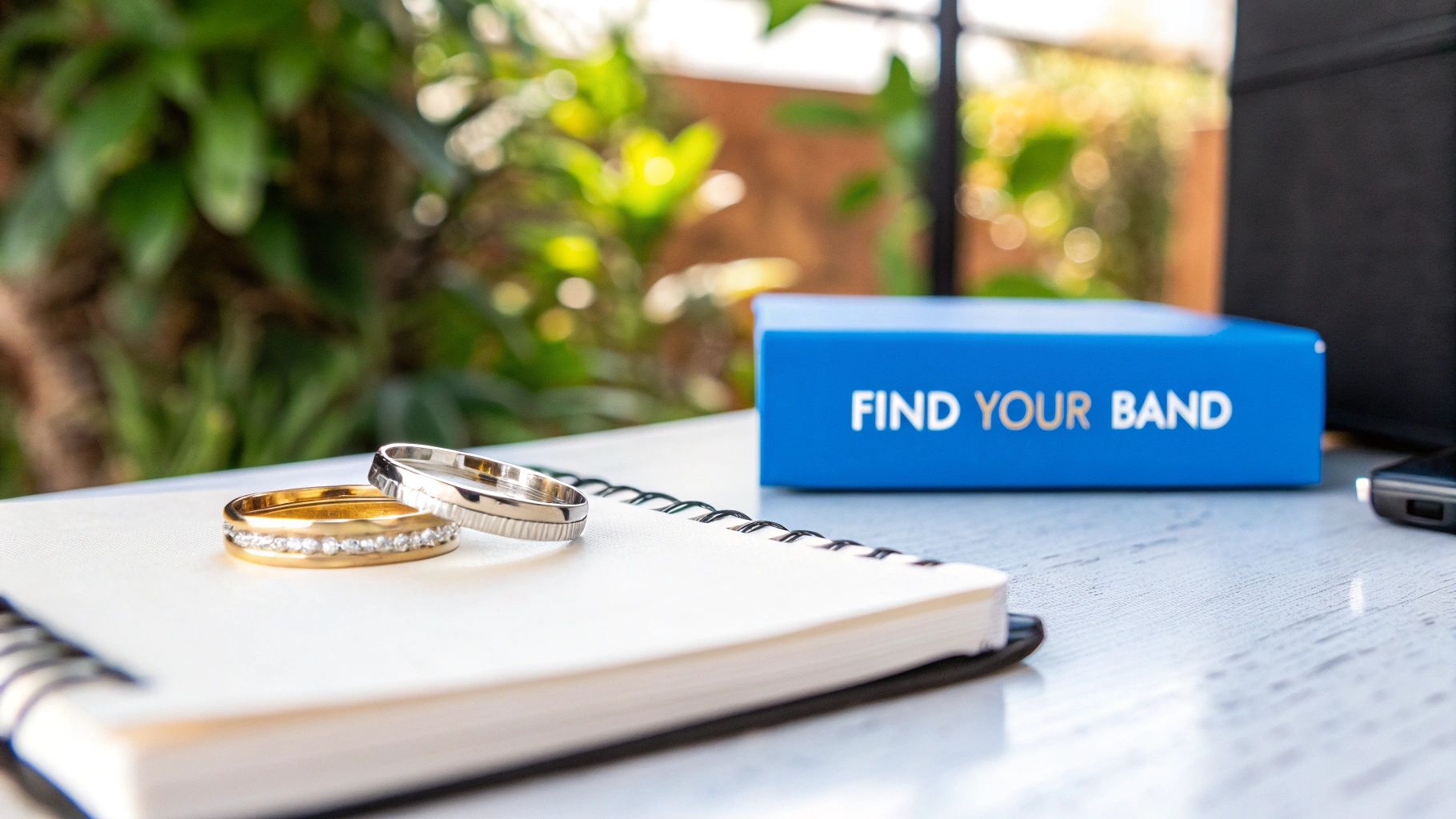
Choosing a wedding band is a big deal—it’s a symbol you’ll wear every single day. But that doesn't mean the process has to be stressful. If you focus on a few key areas, you can walk away feeling confident and with a piece you'll absolutely love for a lifetime.
Forget the pressure to find the one "perfect" ring. Instead, concentrate on what feels right for you and your partner. This is all about personal expression, not following rigid rules. In fact, that's where the whole industry is heading. The global wedding ring market is projected to hit $181 billion by 2034, with over 70% of couples saying customization is a top priority. This shift toward unique, personal symbols is completely changing how people shop for their rings. You can read the full breakdown of this trend in the wedding ring industry growth market analysis.
Your Wedding Band Decision Framework
To give you a solid starting point, let's walk through a few essential questions. Thinking about these will help you cut through the noise and narrow down the huge number of options out there.
| Key Element | What to Ask Yourself | Impact on Your Choice |
|---|---|---|
| Personal Style | Do I lean classic, modern, or more of a vintage vibe? What kind of jewelry do I usually wear? | This points you toward the right metal color, finish (like polished vs. matte), and overall design. |
| Daily Lifestyle | Am I really active, or is my job pretty low-key? Do my hands go through a lot each day? | This is huge for picking the right metal. An active lifestyle might call for platinum’s durability. |
| Engagement Ring | Do I plan to wear my bands together? Is it important that they match perfectly, or just look good next to each other? | This helps you decide if you need a straight band or a curved one that will sit flush against your engagement ring. |
Think of this table as your initial roadmap. As you start looking at different designs, keeping these answers in mind will make the whole experience much smoother and more fun.
Whether you're drawn to a classic, simple band or something more intricate, you can explore a wide variety of stunning wedding bands to find your perfect match.
How to Set a Realistic Wedding Band Budget
Before you even start scrolling through ring pictures, let's talk numbers. Setting a budget is honestly the most important first step you can take. This isn't about being restrictive; it's about being smart and focusing your search. Knowing what you're comfortable spending saves you from that overwhelming feeling of having too many choices and guarantees you'll find a ring you adore without any financial regrets.
So, what's a "normal" amount to spend? It varies wildly, but from what we see, most couples land somewhere between $500 and $2,000 for each ring. The biggest factor influencing that number is the metal you choose. A classic 14k gold band will keep you on the lower end, while something like a platinum eternity band packed with diamonds will naturally sit at the higher end of that range.
Smart Ways to Maximize Your Budget
You'd be surprised how a few small, strategic decisions can make a huge difference in the final price tag.
Think about the gold purity, for example. Just by choosing 14k gold instead of 18k, you could save hundreds. Sure, 18k gold has a slightly deeper, richer color because it has more pure gold (75% vs. 58.3%), but 14k gold is actually more durable and a fantastic, practical choice for a ring you'll wear every single day. For a lot of people, it's the perfect balance of beauty and value.
Exploring different materials and even gemstones is another great game plan. Here are a few ideas to get you started:
- Look at Alternative Metals: Palladium has that same cool, white shine as platinum but usually comes in at a much friendlier price point. Plus, it's super lightweight and hypoallergenic.
- Consider Lab-Grown Diamonds: If you have your heart set on a diamond eternity band, don't sleep on lab-grown diamonds. They are identical to natural diamonds—chemically, physically, and visually—but can cost 30-50% less. That's a game-changer that makes all that sparkle way more attainable.
- Time Your Purchase: Jewelers run sales just like any other retailer. Keep an eye out for deals around holidays like Valentine's Day or Black Friday. A little bit of planning can lead to some pretty sweet savings.
Your budget is personal. It should be a number that feels right for you and reflects what you value most. The whole point is to find a beautiful, meaningful ring that symbolizes your life together—without causing any financial stress. A smart budget is the foundation for a purchase you'll be happy with for years to come.
Ultimately, getting a handle on these cost factors puts you in the driver's seat. It lets you decide what's most important, whether that's a specific metal, the bling factor, or just finding a killer design that fits your financial comfort zone.
Choosing the Right Metal for Your Lifestyle
The metal you pick for your wedding band is a lot more than just a style choice—it’s the foundation of the ring. It’s what determines the look, how it’ll stand up to daily life, and the upkeep it’s going to need down the road. This is where you have to get really honest about your day-to-day.
A great place to start is thinking about your job. Let’s say you’re a nurse who is constantly washing their hands and using hand sanitizer. You’ll need something non-porous and incredibly durable. Platinum is a perfect match here because it’s super strong and resists corrosion. On the flip side, someone in construction might love tungsten for its extreme scratch resistance, but they need to know it can't ever be resized. It’s a trade-off.
This decision tree gives you a great visual for lining up different materials with priorities and budgets.
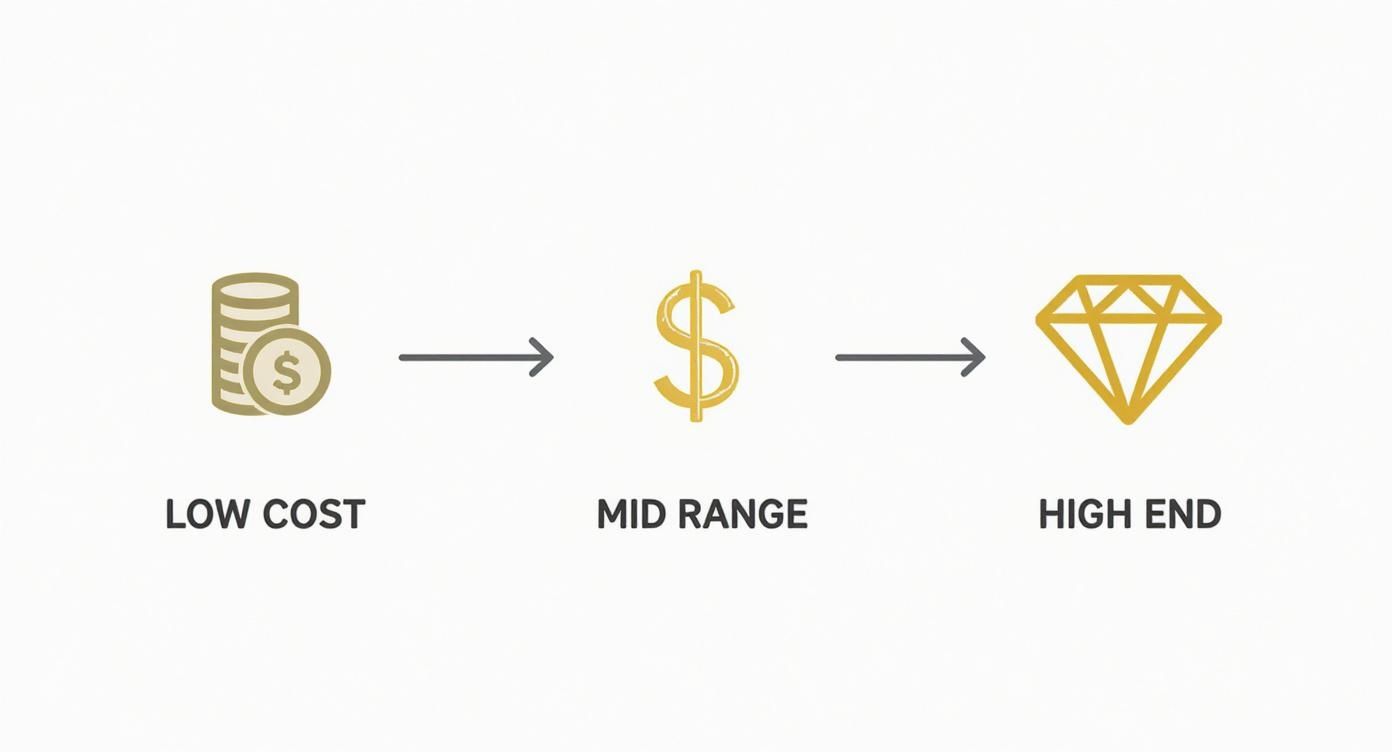
As you can see, it maps out a clear path from what you want to spend to the specific metal choices that make the most sense, cutting through a lot of the noise.
Comparing Classic Gold and Modern Metals
Gold is, without a doubt, timeless. It comes in yellow, white, and rose, so you can match just about any style or preference. 14k gold strikes that perfect balance between rich color and durability for everyday wear. If you want a deeper, more saturated color, 18k gold is fantastic, but just know it's a bit softer.
That said, the global wedding ring market—valued between $85.9 billion and $89.8 billion—is definitely seeing a big shift. More and more couples are checking out modern metals like lightweight titanium or rugged tungsten, often because of their unique features and more approachable price tags. You can dig into the numbers and read the full research on global ring market shifts if you're curious about the trend.
Picking the right metal comes down to matching its properties to your life. The table below breaks down the real-world pros and cons of the most popular options.
Real-World Wedding Band Metal Comparison
| Metal | Durability & Scratch Resistance | Typical Price Range | Ideal for This Lifestyle |
|---|---|---|---|
| Platinum | Excellent durability. Develops a patina over time but doesn't lose metal. Resists scratches well. | $$$$ (Premium) | Healthcare professionals, office workers, anyone wanting a low-maintenance, heirloom-quality ring. |
| Gold (14k/18k) | Good durability. Softer than platinum, so it will show scratches over time. | $$$ (Mid-to-High) | The classic choice, great for most lifestyles but may need occasional polishing to look its best. |
| Tungsten | Virtually scratch-proof. Extremely hard and brittle, so it can crack or shatter with a hard impact. Cannot be resized. | $ (Very Affordable) | Manual laborers, mechanics, or anyone with a very hands-on job who prioritizes scratch resistance over all else. |
| Titanium | Very strong yet incredibly lightweight. Resists scratches better than gold but not as well as tungsten. Hypoallergenic. | $$ (Affordable) | Active individuals, athletes, or anyone who isn't used to wearing jewelry and wants something comfortable and strong. |
Ultimately, the best choice is the one that won't get in your way.
Here’s a quick rundown of how these materials serve different needs:
- Platinum: Hypoallergenic, extremely durable, and keeps its white shine forever with very little polishing. It’s the top-tier choice if you want a worry-free ring that will last for generations.
- Gold (14k or 18k): The classic, do-it-all option. It works for both traditional and modern looks but is softer than platinum, so expect it to pick up some character marks over time.
- Tungsten: One of the hardest metals out there, which makes it nearly impossible to scratch. It's an incredible value, but the fact that it can't be resized is a huge factor to consider.
- Titanium: Unbelievably lightweight, strong, and hypoallergenic. A fantastic and comfortable pick for someone who isn't accustomed to wearing jewelry.
Your lifestyle is the ultimate test for your wedding band. Be honest about what your hands go through each day, from typing at a desk to working in a garden. This will guide you to a metal that not only looks incredible on your wedding day but continues to do so for decades.
Pairing a Band with Your Engagement Ring
Creating the perfect ring duo is an art, and honestly, there are no wrong answers. It really comes down to one big question: do you want a flawless, perfectly matched set or something more unique that makes a personal statement? Knowing your options is the key to creating a combination you’ll love seeing on your hand every single day.
The most traditional route is the bridal set, where the wedding band and engagement ring are literally made for each other. They're designed to sit perfectly flush, creating a single, seamless look. It’s a beautiful choice for anyone who values symmetry and a classic, cohesive aesthetic.
Finding the Perfect Match or Mismatch
On the other hand, a lot of couples are now embracing the "stack" philosophy. This is all about intentionally mixing metals, textures, and styles to build a curated and deeply personal look over time.
For instance, pairing a sleek, modern solitaire engagement ring with a vintage-inspired band featuring delicate milgrain detailing can create a stunning and unexpected contrast. It’s a combination that tells a unique story.
This trend toward personalization is reshaping the entire industry. The global wedding rings market, valued at approximately $3.9 billion, is seeing a major shift. While classics like gold remain popular, there's a clear move toward ethically sourced materials and custom designs, especially among younger couples seeking one-of-a-kind pairings. You can find more insights on this growing trend in the wedding band market.
Pro Tip: Pay close attention to the profile and height of both rings. If your engagement ring sits much higher than your band, it can cause uncomfortable rubbing and even premature wear. For maximum comfort, try to find rings with compatible heights.
Practical Tips for Pairing Your Rings
Whether you prefer a perfect match or a stylish contrast, a few practical considerations will ensure your final choice is both beautiful and wearable for the long haul.
- Mind the Gap: Some engagement ring settings, like low-profile or basket settings, won't let a straight band sit flush against them. If that's your ring, you'll want to look at a curved or "notched" wedding band, which is specially designed to fit snugly around the engagement ring's center stone.
- Metal Durability: Mixing metals like platinum and rose gold looks incredible, but remember that harder metals can wear down softer ones over time. A tough metal like platinum might scratch a softer 18k gold band if they're constantly rubbing together.
- Think About the Future: Are you dreaming of adding an anniversary band down the road? Planning for a future stack can influence the width and style of the wedding band you choose today. A slimmer band now leaves more room for additions later.
Ultimately, how you pair your rings is a reflection of your personal style. It builds on the decisions you made when you first started your search. If you're just at the beginning of that journey, our guide on how to choose the perfect engagement ring offers foundational advice that will help shape your entire bridal set.
Getting the Perfect Fit, Style, and Finish
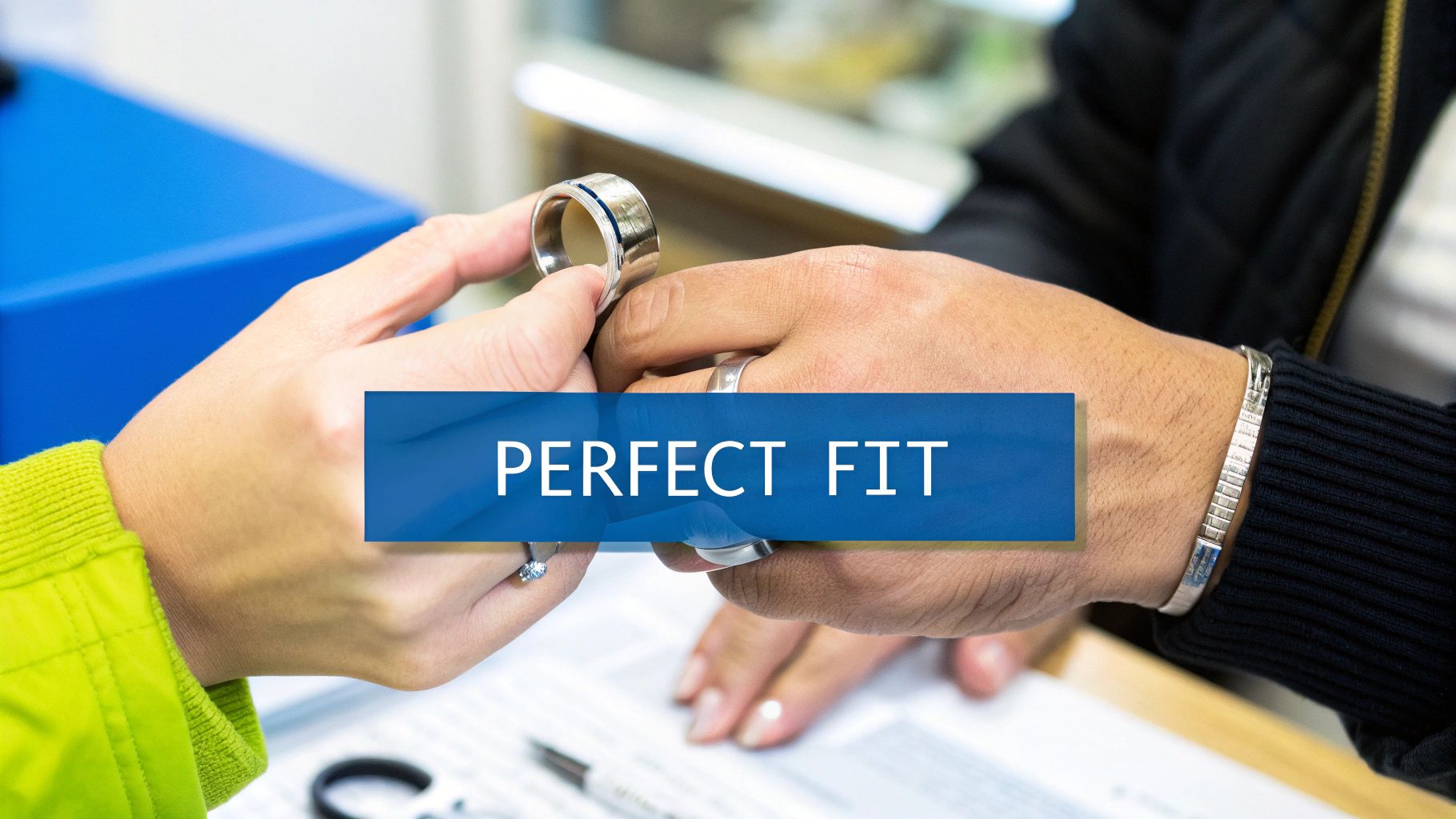
A ring you wear every single day has to be comfortable—that part is non-negotiable. Beyond the metal and the overall design, it’s the actual fit and finish that turn a beautiful object into something you barely even notice you're wearing.
Getting a handle on a few key details will help you find a ring that feels like it’s always been a part of your hand.
One of the first, and most important, decisions you'll make for comfort is about the interior shape of the band. It’s a small detail that dramatically changes how the ring feels, especially if you’re leaning toward a wider style.
Standard Fit vs. Comfort Fit
A standard fit band is pretty straightforward: it has a flat interior, meaning the inside surface sits flush against your finger. On the other hand, a comfort fit band has a slightly rounded or domed interior.
This simple curve means less metal is touching your skin. The result? The ring slides over your knuckle much more easily and sits more comfortably all day long. For wider bands, say 6mm or more, a comfort fit is almost always the way to go.
Pro Tip: Your finger size is not static; it changes throughout the day. For the most accurate measurement, get sized when your body temperature is normal and you're relaxed. Don't do it right after a workout, first thing in the morning, or when you’re really hot or cold, as swelling can throw the size off.
Choosing Your Ring Profile and Finish
The ring's profile—its cross-sectional shape—also plays a big part in its style and feel. A traditional domed profile is rounded on the outside, giving it that classic wedding band look. A flat profile offers a more modern, clean-lined aesthetic. Neither is better than the other; it’s all about your personal taste.
The finish is the final touch that really defines your ring's character. It’s all about how the surface of the metal is treated, and it can completely change the vibe of the piece.
Here are the most popular options you’ll come across:
- Polished: This is that classic, mirror-like shine you probably imagine when you think of a wedding band. It’s absolutely timeless but has a tendency to show scratches more easily.
- Brushed or Matte: This finish gives the metal a soft, non-reflective texture made up of fine lines. It’s fantastic at hiding minor scuffs and scratches, which makes it a really practical choice if you have an active lifestyle.
- Hammered: A truly unique, textured finish. An artisan uses a small hammer to create little dimpled facets across the surface, giving the ring a rugged, one-of-a-kind look that catches the light beautifully.
A Few Common Questions About Wedding Bands
Diving into the world of wedding bands can bring up a lot of questions. We've been there, and we've heard them all. To make your life easier, we've gathered the most common questions we get from couples to give you clear, straightforward answers. The goal is to help you finalize your decision with total confidence.
One of the first things people ask is when they should even start looking. We’ve found the sweet spot is about three to four months before your wedding day. This gives you plenty of time to explore different styles without feeling the pressure. It also leaves a comfortable buffer for any custom work or shipping, which can sometimes take up to eight weeks.
Do Our Wedding Bands Have To Match?
This is a big one, and our answer is always the same: absolutely not! The old-school idea that a couple's wedding bands must be a perfect match is just that—outdated. What matters most today is that each of you chooses a ring that truly fits your personal style, comfort, and day-to-day life.
That said, many couples like to create a subtle connection through complementary elements. This could be something as simple as choosing the same metal but in different widths or getting a shared, hidden engraving on the inside. It's all about coordination, not duplication.
The best rings are the ones that feel authentic to the person wearing them. Don't feel pressured into matching. Instead, focus on finding a piece you'll both genuinely love wearing every single day.
Another question that comes up a lot is about gold purity. What's the real difference between 18k and 14k gold? Well, 18k gold is 75% pure gold, which gives it that rich, deep color everyone loves. The trade-off is that this higher purity also makes it a bit softer and more prone to scratching.
On the other hand, 14k gold is 58.3% pure gold. That extra alloy content makes it significantly more durable, which is a huge plus for a ring you'll wear constantly. It's often the more practical choice, especially if you have an active lifestyle.
Finally, let's talk about insurance. A jeweler's warranty is great—it typically covers manufacturing defects—but it won't protect you from loss, theft, or serious damage. Adding your rings to your homeowner's or renter's insurance policy is a simple and inexpensive step that provides invaluable peace of mind.
For more detailed answers to these and other questions, our comprehensive fine jewelry FAQ page is a great resource.
At ECI Jewelers, we believe finding the perfect wedding band should be one of the most joyful parts of planning your wedding. Explore our curated collection of fine wedding bands or visit our NYC showroom to get personalized guidance from our experts. Find your forever ring with us today.


