


If you want to learn how to authenticate Rolex watch models correctly, start with a step by step inspection. The most reliable process includes checking the serial and model numbers, dial details, Cyclops magnification, weight, bracelet quality, and movement. Because modern counterfeit Rolex watches can look highly convincing, accurate authentication often requires both visual checks and expert verification.

Why Rolex Authentication Matters
The pre-owned Rolex market is thriving, but so is the fake market. Modern "super fakes" and "Frankenwatches" are far more convincing than cheap replicas from the past.
A Frankenwatch may use a genuine Rolex case with a counterfeit movement or other non-original parts. That means an exterior-only check is not enough.
Learning how to authenticate a Rolex helps you avoid a costly mistake and buy with more confidence. This guide walks through the main checks, step by step.
The Counterfeit Problem
The scale of fake watches is enormous. In the United States alone, an estimated 23.3 million fake watches are in circulation, and Rolex is the brand counterfeiters target most often.
A recent report from WatchPro also found that about 19% of consumers who have purchased a counterfeit item were tricked into buying a fake watch. That shows how often buyers think they found a bargain, only to end up with a worthless piece.
Your Authentication Workflow at a Glance
The best process is layered. Start with visible external details, confirm identifying numbers, then move to technical checks. Use the table below as a quick checklist.
Key Rolex Authentication Checkpoints at a Glance
| Checkpoint | What to Look For (Authentic) | Common Fake Watch Flaw |
|---|---|---|
| Serial & Model Numbers | Deep, precise laser engravings between the lugs or on the rehaut. | Shallow, acid-etched, or sloppy-looking numbers. |
| Weight & Feel | Substantial, solid feel due to high-quality 904L steel and precious metals. | Noticeably lighter, feels flimsy or hollow. |
| Movement | Smooth, sweeping second hand (no ticking); intricate, well-finished internal components. | "Ticking" quartz movement or a poorly decorated, generic automatic movement. |
| Cyclops Lens | 2.5x magnification, creating a distinct, large date window. | Weak magnification (1.5x) or a flat-looking date. |
| Micro-Etched Crown | Tiny, perfectly formed laser-etched crown in the sapphire crystal at 6 o'clock. | Missing, poorly etched, or easily visible to the naked eye. |
| Caseback & Hallmarks | Smooth, unadorned caseback (on most models); crisp, clear hallmarks on precious metals. | Engraved casebacks, logos, or blurry, poorly stamped hallmarks. |
Keep this checklist in mind as you inspect the watch.
Now, let's look at a more visual breakdown of the workflow.
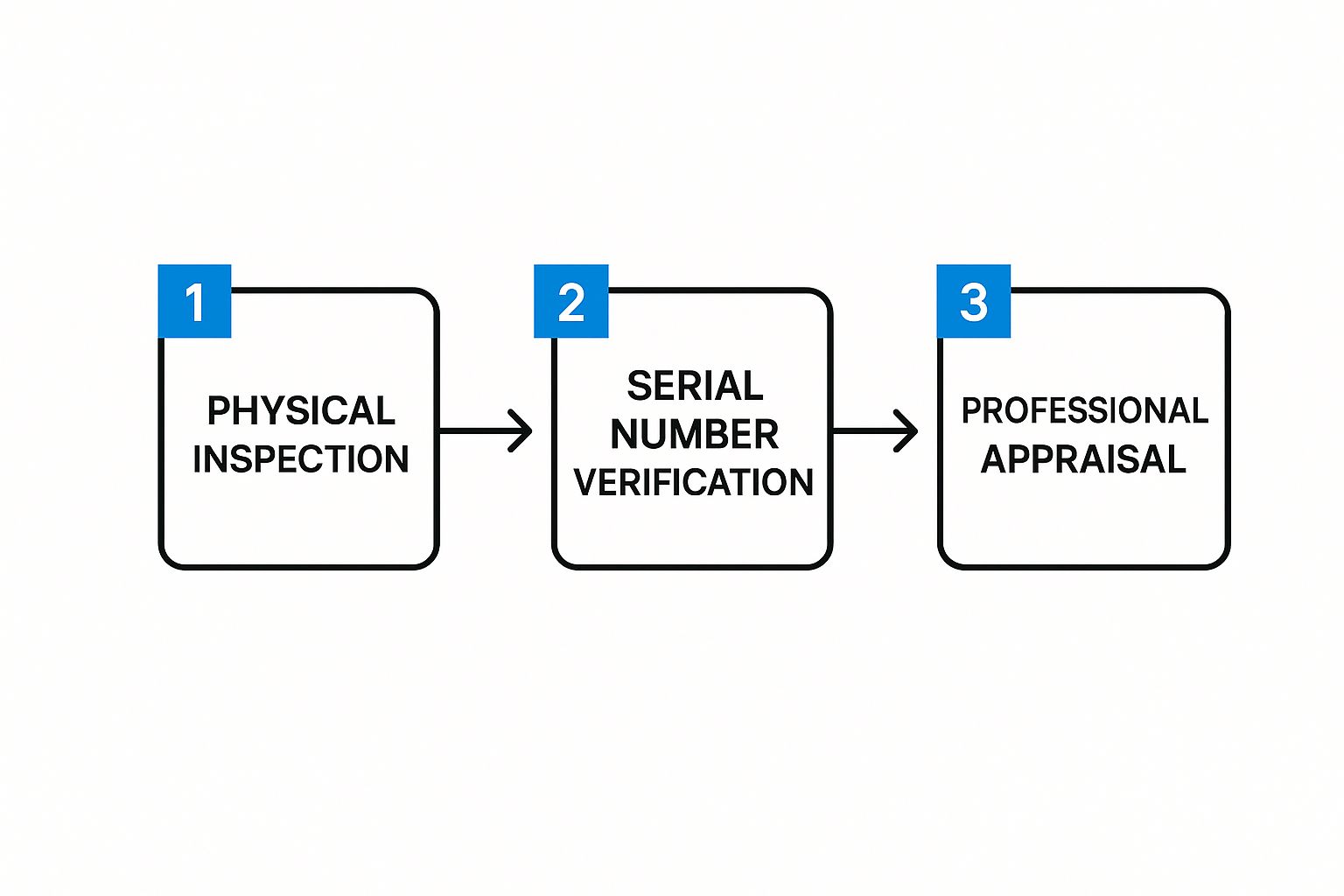
The workflow is simple: inspect the outside first, verify the watch data, then get professional confirmation if anything is unclear.
A genuine Rolex reflects precise engineering and refined craftsmanship. Counterfeits may copy the look, but they do not match the build quality or mechanical integrity.
This is part of what makes the brand so respected. Understanding why Rolex is the epitome of luxury watches also helps explain why these details matter. Your goal is not only to avoid a fake, but to recognize what makes a real Rolex valuable.
The following sections break down what to check.
Decoding Serial Numbers and Engravings
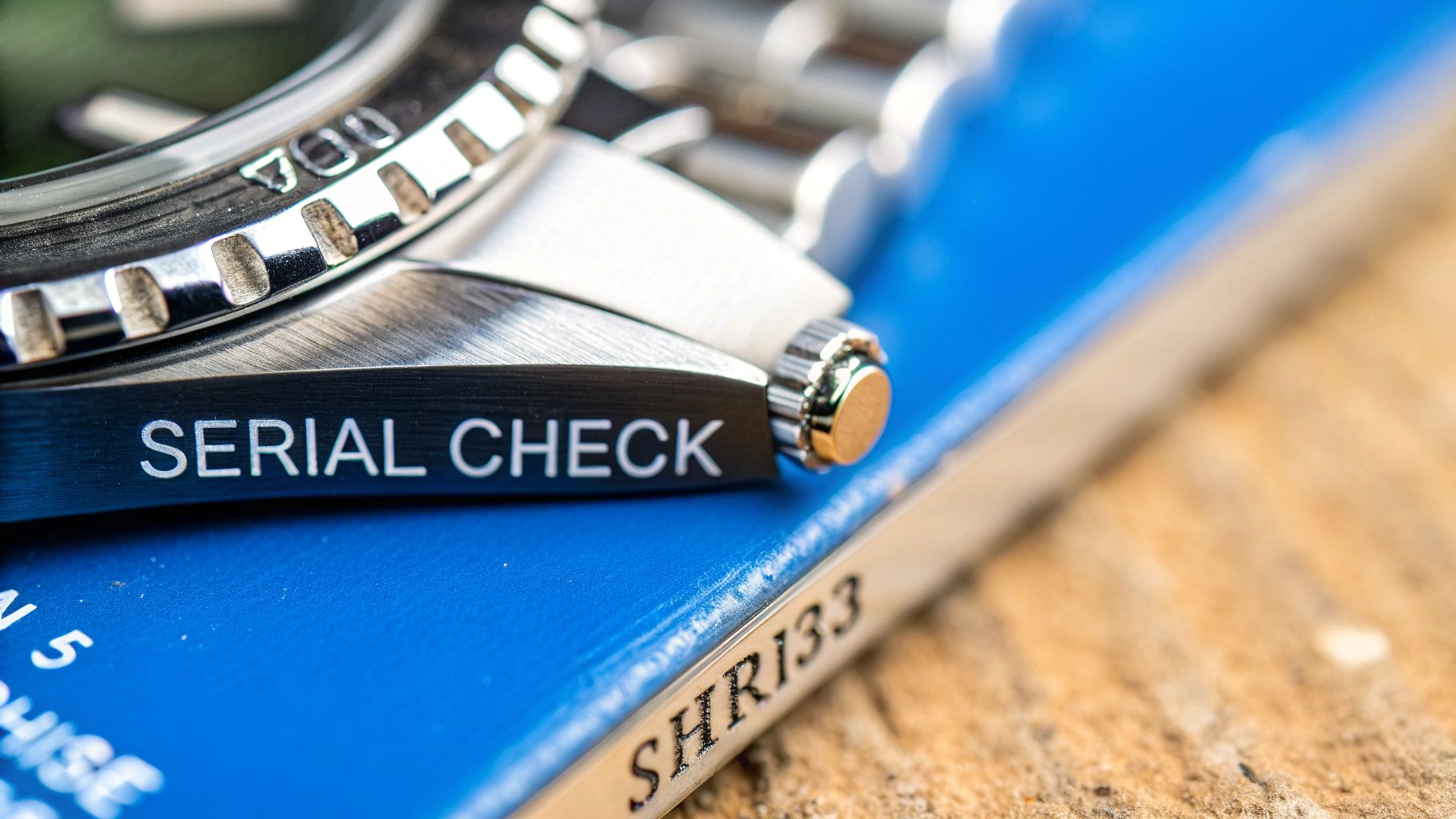
A Rolex's identity is etched into the watch itself. Serial and model numbers are among the first things to verify because their location, quality, and format can reveal a lot.
On older models, you need to remove the bracelet to see the engravings between the lugs. The model number sits at 12 o'clock, and the serial number appears at 6 o'clock.
Around 2008, Rolex moved the serial number to the inner bezel ring, called the rehaut, where it is visible through the crystal. This made verification easier and counterfeiting harder.
Examining the Quality of Engravings
Genuine Rolex engravings are precise, deep, and clean. They are cut sharply, and under angled light they often appear bright and crisp.
Fake engravings usually look shallow, grainy, blurry, or uneven. Many are acid-etched or made with less precise tools, so they lack the sharp edges seen on authentic watches.
Genuine Rolex engravings have visible depth and crisp edges. If the numbers look flat or printed onto the surface, treat that as a major warning sign.
Finding the Hidden Crown on the Crystal
Another useful detail is the micro-etched crown at 6 o'clock on the sapphire crystal. Rolex began adding this feature in the early 2000s.
It is very hard to see without magnification, so use a jeweler's loupe and check the crystal under different lighting angles.
Here is what to look for:
- Visibility: On many fakes, the crown is too large, too easy to see, or crudely etched.
- Composition: A genuine etched crown is formed with tiny, precise dots. On fakes, it often appears blurry or too solid.
The serial number location and this micro-etched crown are important timeline clues. If they do not match the watch's claimed production year, be cautious.
For a closer look at production years and serial timelines, our guide to Rolex serial and reference numbers is a useful resource.
Evaluating the Dial, Case, and Bracelet
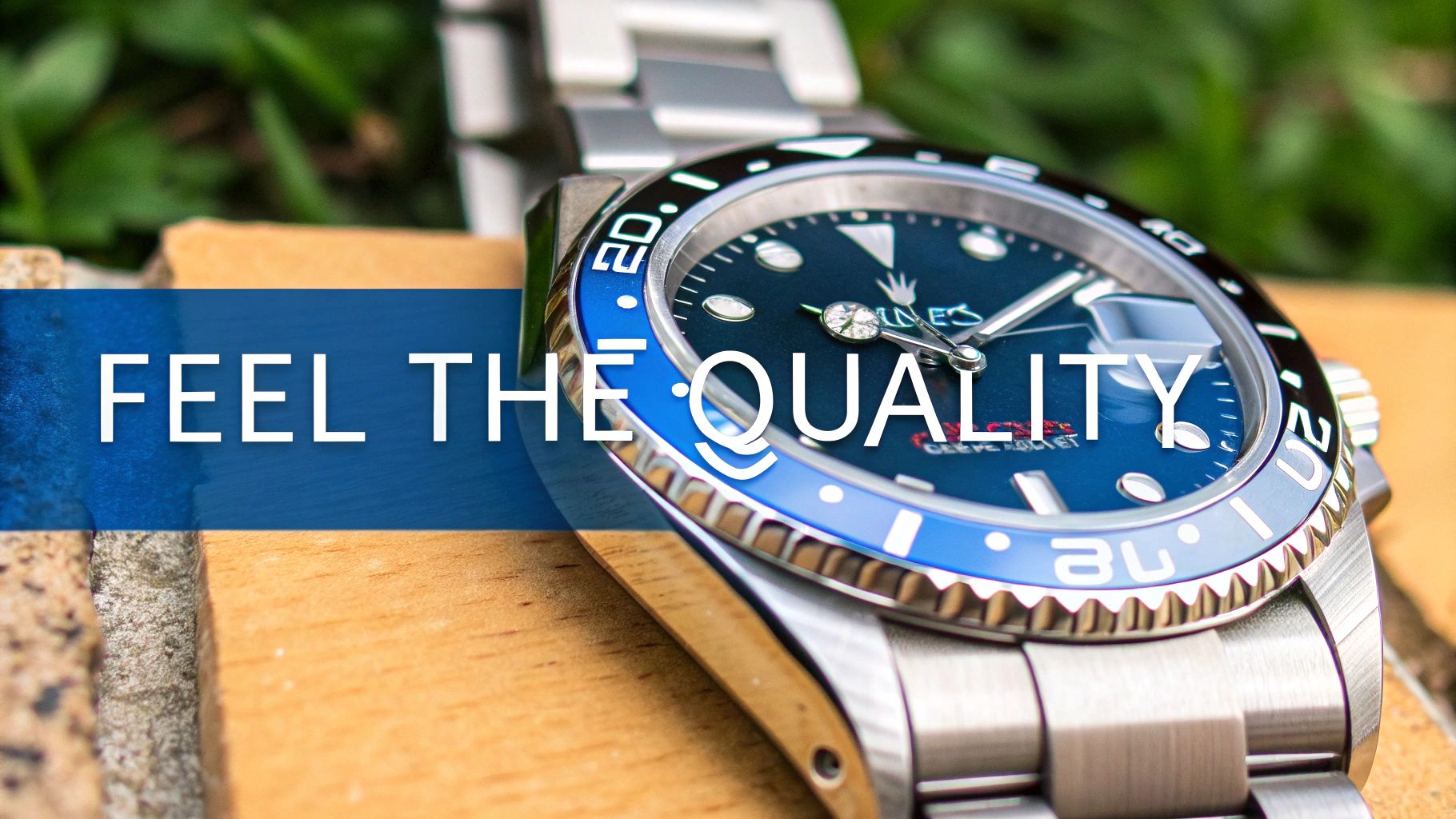 Engravings matter, but a real Rolex also feels different in the hand. It should feel substantial, solid, and balanced.
That comes partly from Rolex's use of 904L stainless steel, which is more corrosion-resistant and denser than the 316L steel common in many other watches and most replicas. A genuine Rolex usually has a noticeable heft without feeling awkward.
If the watch feels unusually light, flimsy, or hollow, take that seriously. Counterfeiters often cut costs with cheaper metals or hollow bracelet links.
Zooming In on the Dial Details
The dial is one of the easiest places to spot a fake under magnification. On a genuine Rolex, the text should be perfectly crisp, with sharp edges and even spacing.
On replicas, printing is often blurry, uneven, or slightly off in font and spacing. Also inspect the luminous markers. On a genuine watch, they should be applied evenly and glow consistently.
A genuine Rolex dial should look clean and exact. Sloppy printing, uneven markers, or visible dust under the crystal are strong signs of a fake.
Analyzing the Cyclops Lens
The Cyclops lens is iconic and often poorly copied.
Here is what to check:
- Magnification Power: A genuine Cyclops gives about 2.5x magnification, so the date appears large and easy to read.
- Alignment and Clarity: The lens should be centered over the date window and free of distortion.
- Common Fake Flaws: Many fakes only achieve about 1.5x magnification, so the date looks too small. The lens may also appear cloudy or slightly off-center.
Testing the Bracelet and Clasp
The bracelet should feel solid and well-made, whether it is an Oyster, Jubilee, or President. Links should move smoothly without rattling or large gaps.
The clasp should close securely with a clean snap. The Rolex coronet on the clasp should be well-defined, not lightly stamped or poorly etched. A loose or flimsy clasp is a common counterfeit giveaway.
Get a Look Inside at the Movement
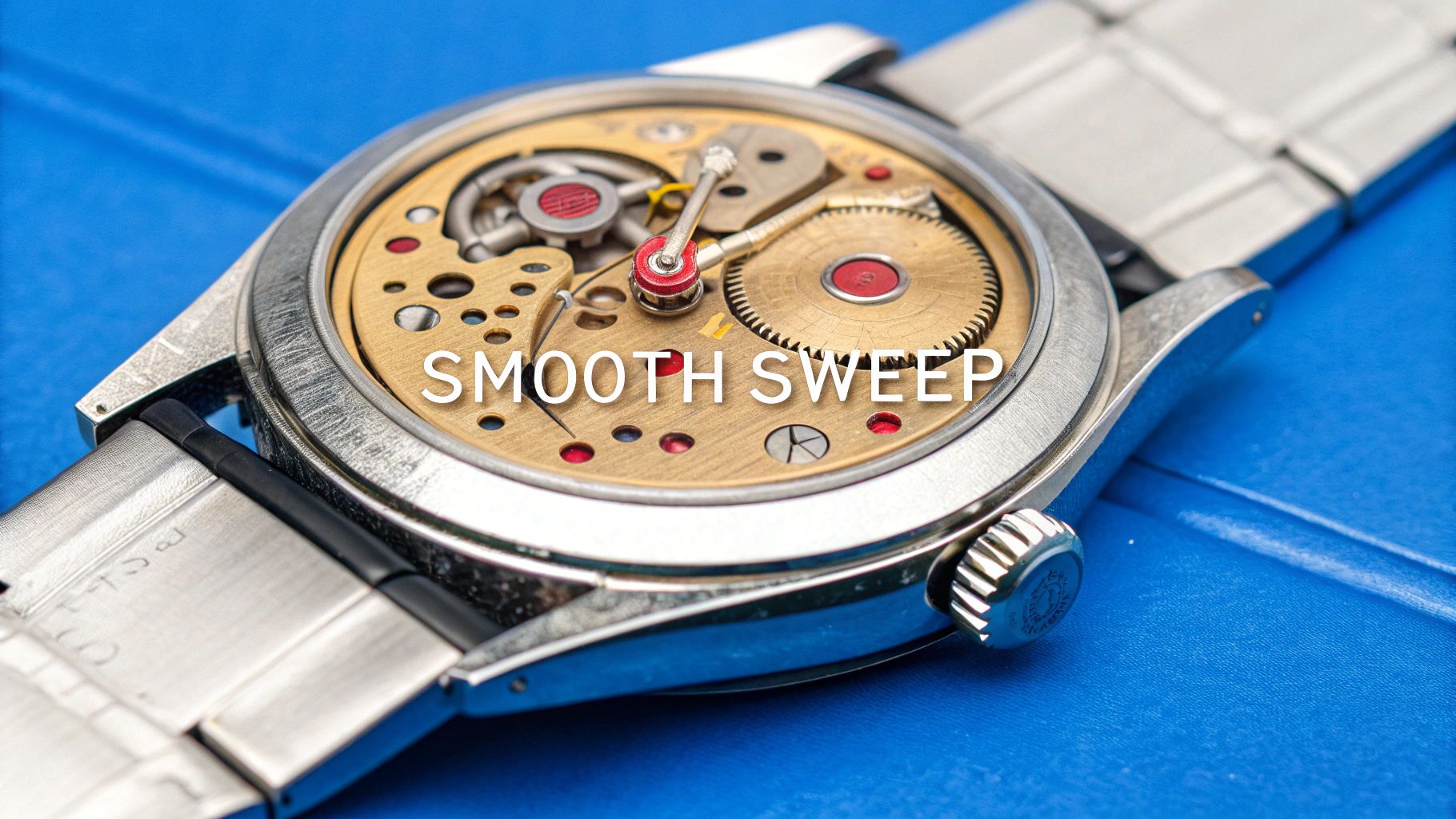
The movement is the most decisive authentication check. Counterfeiters can imitate cases and dials, but replicating a true Rolex caliber is much harder.
Opening a Rolex caseback is best left to a professional. It requires the right tools, and a mistake can damage the case or compromise water resistance. Even so, it helps to know what an expert looks for.
What Makes a Rolex Movement Special
A genuine Rolex movement is defined by clean finishing, high-quality components, and clear identifying marks.
Here are some signs of an authentic Rolex caliber:
- The Signature Red Reversing Wheels: Many modern automatic Rolex movements include red-anodized gears in the winding system.
- Impeccable Finishing: Bridges and plates should be cleanly finished and correctly engraved, often with decorative details like circular graining (perlage).
- Sharp Rolex Engravings: Movement engravings should be crisp and precise, not shallow or roughly stamped.
It also helps to understand the different Rolex movements used across models so you know what should be inside a given reference.
The Famous Rolex "Sweep"
Before the caseback is opened, the seconds hand can offer a useful clue. A genuine mechanical Rolex has a smooth, gliding seconds hand that moves about 8 times per second.
Most cheap fakes use quartz movements, which create a distinct once-per-second tick.
A choppy, ticking seconds hand is a strong counterfeit warning sign. Some better fakes can imitate a sweep, but a quartz tick is still an easy way to catch lower-quality replicas.
A trusted watchmaker can confirm whether the caliber matches the model and production period, and whether any non-genuine parts are present.
Knowing When to Seek Professional Verification
You can inspect many of the visible details yourself, but some counterfeit watches are too convincing to judge externally. This is especially true with Frankenwatches.
A Frankenwatch combines genuine and non-genuine parts. For example, it may have a real case, dial, and bracelet, but a counterfeit movement inside. That makes it hard to detect without opening the watch.
What an Expert Looks For
A certified watchmaker does more than a quick visual review. Their process typically includes:
- Movement Analysis: They open the caseback and confirm the caliber is correct for the model and year. They also inspect Rolex-specific details and finishing quality.
- Component Verification: They check whether major parts, from the dial and hands to bracelet components, are genuine Rolex parts.
- Pressure Testing: After resealing the watch, they test water resistance to confirm the case is secure.
Professional verification is not overkill. It is often the smartest way to turn uncertainty into a confident purchase.
The Importance of Third-Party Authentication
This level of scrutiny matters because the secondary market is full of sophisticated fakes. According to Bezel, the platform rejected 27% of watches submitted for authentication in a single year, and Rolex was the most commonly rejected brand.
These findings were highlighted in a watch market authentication report on Hodinkee, underscoring how many convincing fakes are still circulating.
Professional authentication also helps with insurance, resale, and peace of mind. A formal appraisal gives future buyers more confidence and supports the watch's long-term value.
Your Lingering Rolex Authentication Questions, Answered
Even after running through the checklist, a few common questions remain. Here are the most important answers.
Can I Authenticate a Rolex with Just the Serial Number?
No. A serial number is useful, but it is not enough on its own. Counterfeiters often copy valid numbers from genuine Rolex watches.
Use the serial number as one part of the process. Check whether its style and location fit the watch's claimed production year, then compare that with the dial, movement, case, and overall quality.
What Exactly Is a Frankenwatch?
A Frankenwatch is built from a mix of genuine and non-genuine parts. It may use a real Rolex case and bracelet, but hide a counterfeit movement or aftermarket components inside.
These watches are difficult to spot because many visible parts may be authentic.
The only way to be 100% sure a watch is not a Frankenwatch is to have a professional inspect the movement and internal components.
Does the “Tick vs. Sweep” Test Still Work?
Yes, but only as an initial screen.
A clear once-per-second tick usually means the watch is fake because genuine automatic Rolex watches do not use quartz movements. A real Rolex seconds hand should move with a smooth sweep at about 8 beats per second.
However, some high-end fakes now use automatic movements that mimic this motion. So while a ticking hand is a strong warning sign, a sweeping hand does not prove authenticity by itself.
If It Has the Box and Papers, It’s Real, Right?
Not necessarily. Original box and papers add value, but they are not a guarantee. Counterfeiters also produce convincing replica packaging and warranty cards.
Check the print quality, fonts, and any spelling errors. Most importantly, the serial and model numbers on the paperwork should match the engravings on the watch exactly.
At ECI Jewelers, we make buying a pre-owned luxury watch simpler and safer. Every timepiece in our collection goes through a rigorous multi-point inspection by our in-house experts to verify authenticity and performance. Whether you are an experienced collector or buying your first Rolex, you can shop with confidence.
Explore our curated selection of authenticated luxury watches today at https://www.ecijewelers.com.
Article created using Outrank


