

When your favorite gold jewelry starts looking a little dull, don't rush out for fancy cleaners. The simplest and most effective way to bring back its shine uses just two things you almost certainly have in your kitchen: warm water and a few drops of mild dish soap.
This gentle bath is perfect for cutting through the daily grime—oils from your skin, lotion, and dust—that builds up and hides your gold's natural brilliance.
The Simplest Way to Restore Your Gold's Luster
Before you try anything else, this is the most trusted, go-to method for making gold sparkle again. Over time, everyday life creates a thin film that dulls the finish on your most-loved pieces. Luckily, the fix is both easy and completely safe.
A quick soak in warm, soapy water is the ideal starting point for nearly all types of solid gold jewelry, from the rings you wear every day to those special-occasion necklaces.
Your Go-To Gold Cleaning Method at a Glance
We've broken down the essentials into a simple cheat sheet. This table gives you a quick look at the tools, the recipe, and the exact steps to restore your jewelry’s shine without any risk.
| Category | Details |
|---|---|
| Essential Tools | A small bowl, warm water, a few drops of mild dish soap (phosphate-free), a soft-bristled baby toothbrush, and a soft, lint-free cloth. |
| Cleaning Solution Recipe | Fill your bowl with warm—not hot—water. Add 2-3 drops of mild dish soap and gently stir to create a light, sudsy solution. |
| The Core Steps | Soak your gold jewelry for 10-15 minutes, gently scrub any crevices with the soft toothbrush, rinse thoroughly under clean water, and pat dry with the lint-free cloth. |
It's a straightforward process that safely lifts away buildup without any harsh chemicals or complicated tools.
The Expert-Approved Approach
This isn't just some old household trick; it's the standard practice recommended by the jewelry industry's top experts. The Gemological Institute of America (GIA) consistently confirms that warm water and mild dish soap are safe for most precious metals and even many gemstones.
Their guidance specifically warns against using harsh chemicals like household bleach or ammonia, which can permanently damage the metal alloys in your gold and harm certain stones.
The key is gentleness. Avoid vigorous scrubbing or abrasive materials. Your goal is just to lift the grime, not scratch the metal. A soft-bristled baby toothbrush is perfect for getting into detailed settings without causing any damage.
While this soak is fantastic for routine cleaning, sometimes it isn't quite enough for heavily soiled pieces or intricate designs with lots of nooks and crannies.
For those tougher jobs, a specialized jewelry cleaning solution might be what you need. To be ready for anything, consider keeping a professional-grade watch and jewelry cleaner kit at home. It ensures you always have the right tools on hand to protect your investment and keep it looking its best for years to come.
Adapting Your Cleaning Method for Different Jewelry
Not all gold jewelry is created equal, and grabbing the first cleaning method you find online can be a recipe for disaster. What works wonders on a heavy, solid gold chain might strip the finish from a delicate gold-plated bracelet or ruin a ring set with porous gemstones.
The key to keeping your jewelry looking its best is to know what you're working with. The biggest factor? Its basic construction. Solid gold, whether it’s 10k, 14k, or 18k, is much more forgiving than gold-plated or vermeil pieces. While solid gold can handle a gentle soak and scrub, plated items need a much lighter touch to avoid damaging their thin outer layer.
This little decision tree can help you quickly figure out the safest path forward for your specific piece.
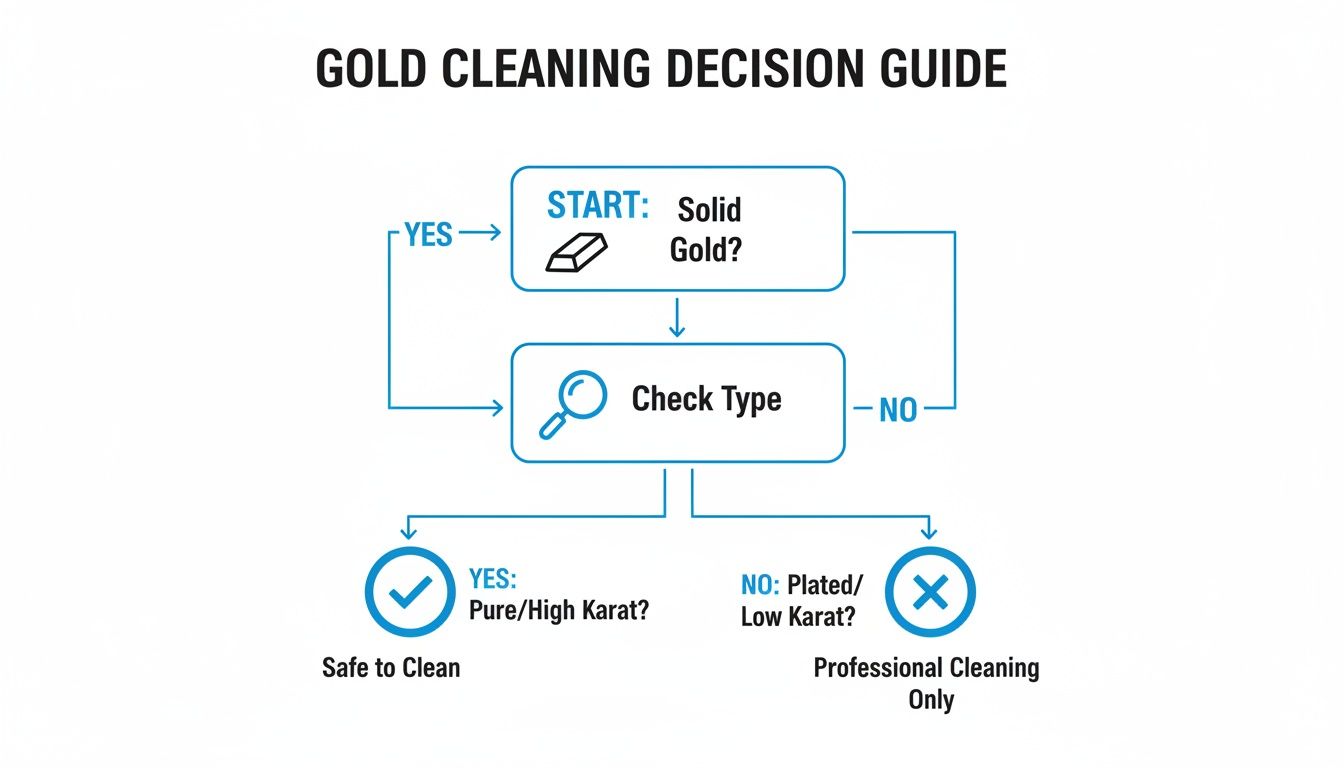
As you can see, the first question is always whether your jewelry is solid gold or something more fragile. That single detail changes everything.
Caring for Solid Gold vs. Gold-Plated Pieces
Solid gold jewelry—the kind you see in high-quality gold chains and wedding bands—is built to last. Because the gold alloy runs all the way through the piece, you can confidently clean it with the mild soap-and-water method without worrying about wearing away the surface.
Gold-plated and vermeil jewelry are a different story. They're made by bonding a very thin layer of gold to a base metal like sterling silver or brass. Aggressive scrubbing or repeated soaking can literally wear this gold layer off, exposing the metal underneath and ruining the piece.
For these more delicate items, you have to be much more careful:
- Don't Soak It: Never leave plated jewelry submerged for more than a minute or two. A quick dip is all it takes.
- Use a Soft Touch: Gently wipe the surface with a soft, damp cloth and the smallest drop of mild soap. A brush is way too harsh.
- Clean Less Often: Only clean plated jewelry when it's visibly dirty, not as part of a weekly habit.
Navigating Jewelry with Gemstones
When gemstones enter the picture, things get even more complicated. Every stone has its own unique properties, and a cleaning method that's perfectly safe for a diamond could destroy a pearl.
Hard, durable stones like diamonds, sapphires, and rubies can typically handle the same warm, soapy water and soft brush cleaning you'd use for solid gold. In fact, a good cleaning is essential for them—it removes the everyday oils and lotions that block light and make them look dull.
On the other hand, soft or porous stones need a completely different approach. This group includes:
- Pearls: Never, ever submerge pearls in water. The liquid can weaken the silk thread they're strung on and permanently damage their delicate luster. Just wipe them with a soft, damp cloth after wearing them.
- Opals: Opals naturally contain water. Soaking them can cause them to dry out and crack once they are out of the water. Like pearls, a gentle wipe with a damp cloth is the only cleaning they should get.
- Emeralds: Most emeralds on the market are "fracture-filled" to improve their appearance. Harsh chemicals or ultrasonic cleaners can damage these fillings, so a quick rinse and a soft wipe is the only safe bet.
When in doubt, always play it safe. If you're not 100% sure about a gemstone's durability, a simple wipe-down with a damp, soft cloth is always the best option.
Just as different types of gold require specific care, so do other materials. For example, if you own other precious items, you might want to learn how to effectively cleanse crystal jewelry, as those pieces also have unique needs. The most important takeaway is to match your cleaning technique to the material you're working with.
Household Cleaners to Use and Avoid
When you notice a favorite piece has lost its luster, it’s tempting to reach for whatever cleaner you have under the sink. But hold on—your kitchen cabinet is a minefield of both friends and foes to your gold jewelry.
Knowing the difference is absolutely critical to protect your treasured items from irreversible harm. The best solutions are often the simplest and gentlest ones you already have.
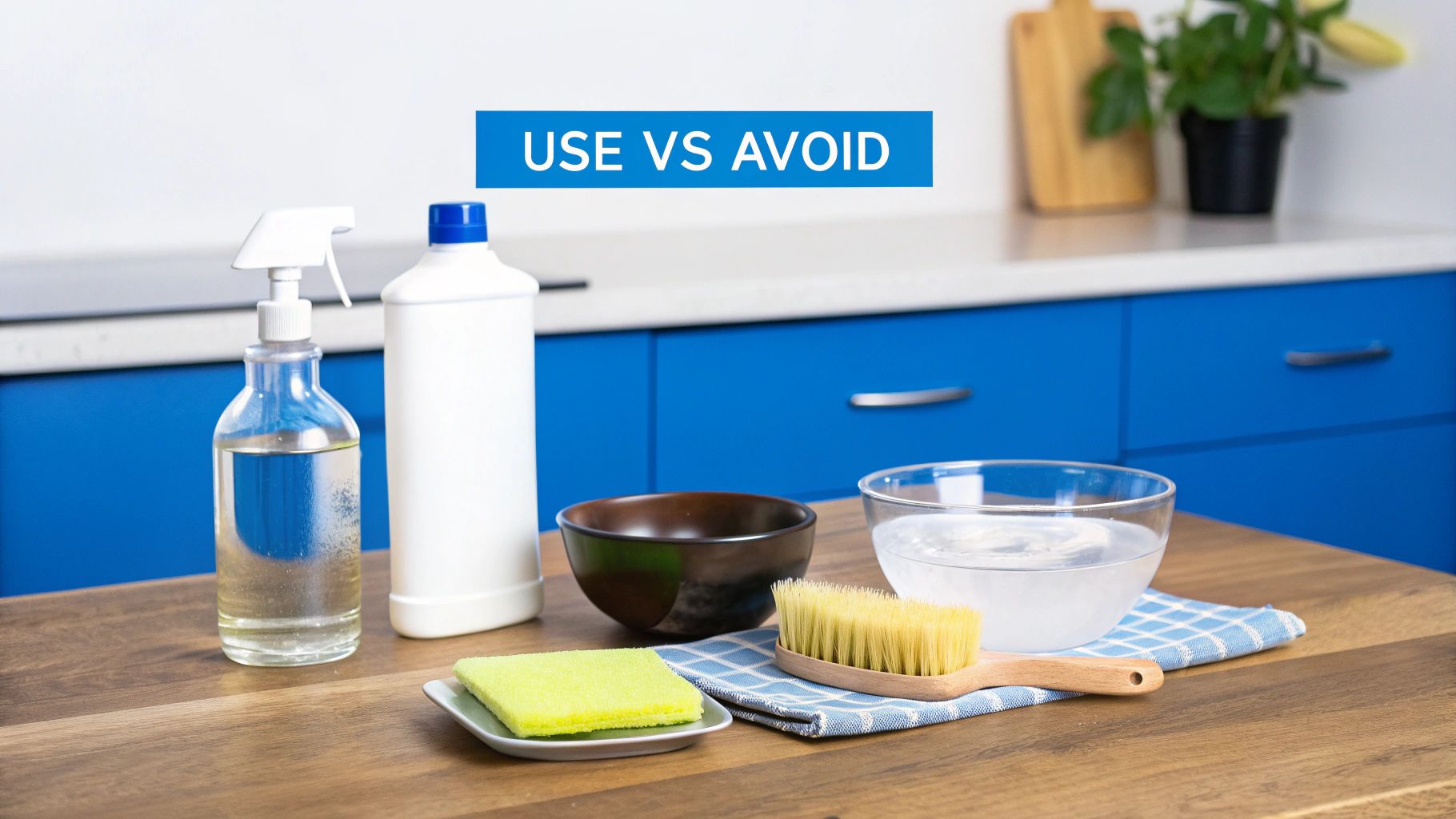
Mild, phosphate-free dish soap is the undisputed champion for cleaning gold at home. A few drops in warm water create a gentle solution that cuts right through oils and grime without being harsh.
For a little extra lift, try seltzer water instead of plain tap water. The carbonation acts like a thousand tiny scrubbers, helping to loosen debris from intricate settings and crevices without any damaging chemicals.
The Abrasives and Chemicals That Cause Damage
Many common household products will cause permanent, heartbreaking damage to your gold jewelry. You have to steer clear of anything abrasive or chemically harsh. They might work wonders on your countertops, but they are disastrous for precious metals and delicate gemstones.
Take toothpaste, for example. It's a popular DIY hack you’ll see online, but it’s loaded with mild abrasives designed to scrub tooth enamel. These tiny particles will etch thousands of micro-scratches onto the surface of your gold—especially softer, high-karat pieces—leaving it with a permanently dull finish. The same goes for baking soda; while useful elsewhere, its abrasive nature makes it a no-go for jewelry.
Chlorine is gold's worst enemy. Exposure to chlorinated bleach can lead to stress corrosion cracking, which can cause prongs and other fine details to literally break apart. Always take your jewelry off before using household cleaners or getting into a swimming pool.
Beyond abrasives, harsh chemicals are an even bigger threat. Bleach, chlorine, and ammonia react with the alloys mixed into your gold (like copper and nickel), causing corrosion and discoloration. This isn't just a surface stain; it can weaken the metal's entire structure.
To make it crystal clear, here’s a quick guide on what to keep far away from your jewelry box.
Safe vs. Unsafe Household Cleaners for Gold Jewelry
Not all cleaners are created equal. This table breaks down common household items to show you exactly what's safe for your treasured gold pieces and what could cause serious damage.
| Cleaning Agent | Safe for Gold Jewelry? | Reasoning & Cautions |
|---|---|---|
| Mild Dish Soap | Yes | Gentle, effective for removing oils and grime. Ensure it's phosphate-free. |
| Seltzer Water | Yes | The carbonation helps loosen debris from crevices without chemicals. |
| Toothpaste | No | Highly abrasive. Will scratch the surface of gold, creating a dull finish. |
| Baking Soda | No | Also an abrasive that will scratch and damage the metal's surface over time. |
| Chlorine Bleach | No | Extremely corrosive. Can cause permanent damage and discoloration to gold alloys. |
| Ammonia | No | Too aggressive for most jewelry. Can discolor metal and harm porous gemstones. |
| Boiling Water | No | Can cause thermal shock in many gemstones (opals, emeralds, tanzanite), leading to cracks. |
Sticking to simple, approved solutions does more than just clean your jewelry—it protects its beauty and structural integrity for the long haul. A little care goes a long way in ensuring your collection remains a cherished part of your life for years to come.
Maintaining Shine with Proper Storage and Care
Knowing how to clean your gold jewelry is only half the battle. To be honest, the daily habits you build around your collection are what truly preserve its beauty for a lifetime. Think of proper care and thoughtful storage as your first line of defense against damage, dullness, and unnecessary wear and tear.
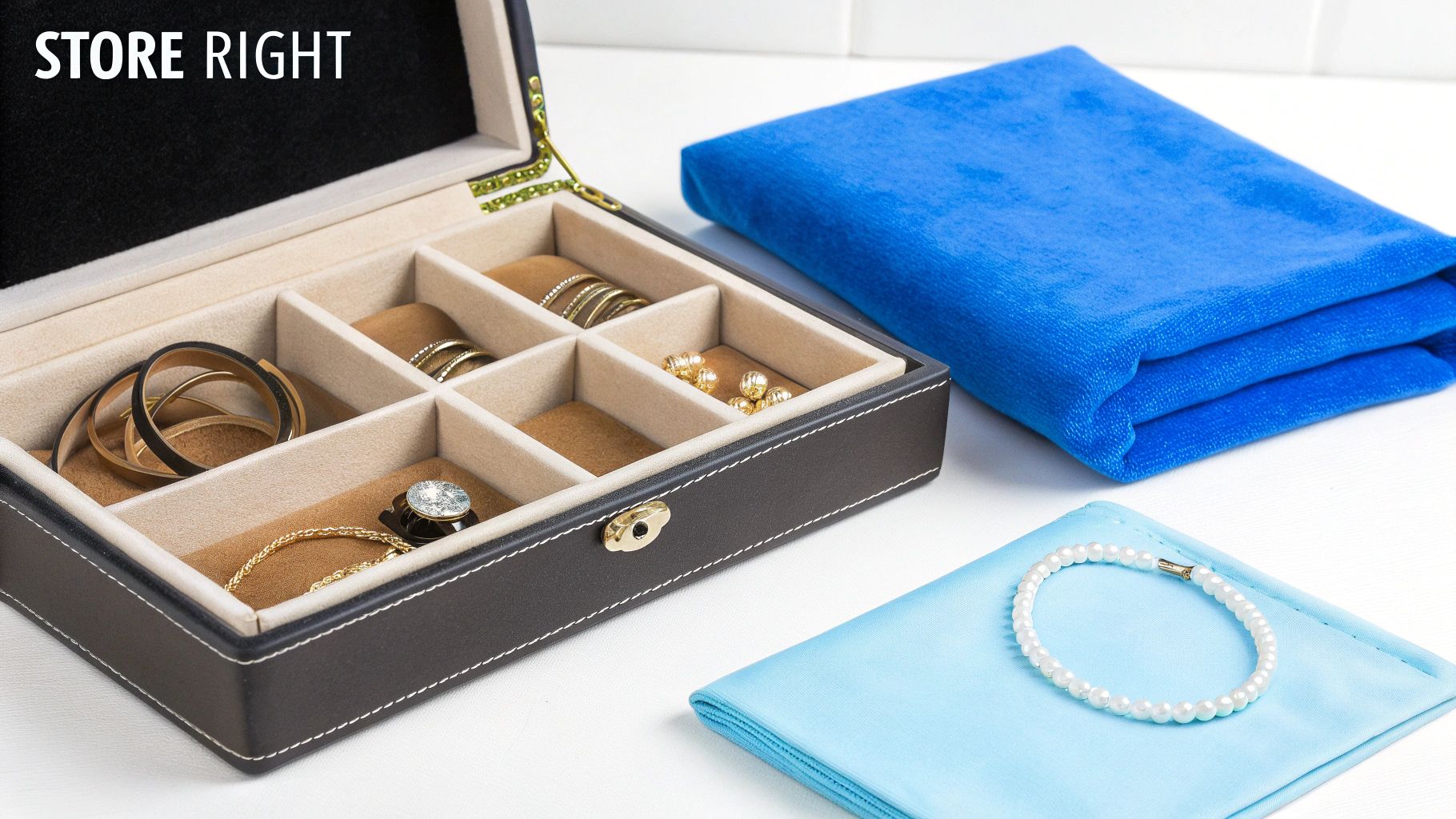
Here's the simplest rule, and it's also the most effective: make your jewelry the last thing you put on and the first thing you take off.
Hairspray, perfumes, lotions, and makeup all contain chemicals that can create a stubborn film on gold and even damage more delicate gemstones. Putting your pieces on after you’re done getting ready is a small change that makes a huge difference.
Smart Storage to Prevent Scratches
How you store your jewelry is just as important as how you clean it. We’ve all seen it: everything tossed into one drawer. That’s a recipe for tangled chains, scratched surfaces, and chipped stones. Gold is a relatively soft metal, so harder gems like diamonds can easily leave a mark.
To keep your pieces safe and sound, here's what we recommend:
- Use a Fabric-Lined Jewelry Box: A box with individual compartments for rings, earrings, and necklaces is ideal. The soft lining prevents scratches, and the dividers keep pieces from banging into each other.
- Invest in Anti-Tarnish Pouches: For special items, particularly anything sterling silver or gold vermeil, these soft pouches offer an extra layer of protection from the air and moisture that cause discoloration.
- Hang Your Necklaces: A simple necklace tree or even just individual hooks can prevent delicate chains from tangling into those frustrating knots. Trying to undo them can seriously weaken the links over time.
Finding the Right Cleaning Frequency
So, how often should you actually be cleaning your gold? The answer really depends on how often you wear a particular piece. A one-size-fits-all schedule just doesn't work. A wedding band you wear daily faces a lot more dirt and oil than a special occasion necklace.
For pieces you wear every day, like an engagement ring, a quick, gentle cleaning once a week is a great habit to get into. For items you wear less often, a few times a year or just as you notice they need it is perfectly fine.
We always recommend a balanced approach that combines consistent at-home care with periodic professional check-ups. While weekly or monthly cleanings at home manage daily grime, a professional cleaning every 6 to 12 months is crucial. It’s our chance to check the integrity of settings, spot any loose stones, and restore that factory-fresh finish.
This is especially true for intricate pieces where dirt can get deeply lodged. Plated items, with their delicate micron-thin gold layer, require a much gentler and less frequent cleaning schedule to avoid wearing away the finish.
You can find more great tips on the dos and don'ts of caring for gold jewelry on Q Report's blog. By adopting these simple habits, you’re not just cleaning your jewelry—you’re actively preserving its value and sentimental worth for generations to come.
When to Trust a Professional Jeweler
Knowing how to clean gold jewelry at home is a fantastic skill for routine upkeep, but it’s just as crucial to recognize when a piece needs an expert’s touch. Some jobs are simply beyond what a gentle, soapy soak can handle.
Trying to tackle deep-seated issues yourself can easily do more harm than good, turning a simple cleaning job into a costly repair. Think of it like maintaining your car: you can handle a wash and top off the fluids, but you wouldn’t try to rebuild the engine. Professional jewelers have the specialized tools and years of experience to handle situations that at-home methods just can't resolve.
Signs It's Time for a Professional Cleaning
Certain red flags should tell you it's time to pause the DIY cleaning and seek professional help. If you notice any of the following, it's a clear signal to let a jeweler take over.
- Deeply Lodged Debris: Ever look at an intricate ring—like a pavé band or a piece with complex filigree—and see dirt packed so tightly into the crevices that your soft brush can't even touch it? Over time, that buildup can actually loosen stones from their settings.
- Stubborn Tarnish on Vintage Pieces: Antique and heirloom jewelry often has delicate construction or is made from unique alloys that are easily damaged by the wrong cleaning methods. If a vintage piece develops stubborn tarnish, a jeweler can safely restore its finish without harming the original patina or fragile settings.
- Loose or Wiggling Stones: This is a major warning sign. If you can hear or feel a stone moving in its setting, stop wearing the piece immediately. A professional won't just clean the item; they'll inspect and tighten the prongs to prevent a devastating loss.
A regular professional check-up, recommended every 6 to 12 months for frequently worn items like engagement rings, is the single best form of preventative care you can get. It’s not just about sparkle; it’s about ensuring structural integrity.
The Power of Professional Tools
Jewelers use equipment that achieves a level of clean that is simply unattainable at home. The two main workhorses are ultrasonic cleaners and high-pressure steam cleaners.
Ultrasonic machines use high-frequency sound waves to create microscopic bubbles in a cleaning solution—a process called cavitation. These bubbles gently but powerfully dislodge dirt from even the most inaccessible spots. A steam cleaner then blasts away any remaining residue, leaving the jewelry with a brilliant, showroom-quality shine.
But these powerful tools also come with risks if used improperly. As industry experts often caution, ultrasonic cleaners can be dangerous for certain gemstones. The intense vibrations can damage porous or fracture-filled stones like emeralds, opals, and pearls, and they may even loosen fragile vintage settings. You can learn more about which materials require special care from Harper's Bazaar's guide to jewelry cleaning.
This is precisely why trusting an expert is crucial. A trained jeweler knows exactly which stones can handle the process and which require a gentler, hands-on approach.
At ECI Jewelers, we don't just clean your jewelry; we assess it first to ensure we use the safest and most effective method for each specific piece. If your treasured items need expert care, you can easily schedule an appointment with our specialists for a thorough and secure cleaning.
Common Questions About Cleaning Gold Jewelry
Even when you know the basics, a few specific questions always pop up before you start cleaning your favorite pieces. Getting those nagging "what ifs" answered is the key to feeling confident and keeping your collection safe.
We’ve pulled together some of the most common questions we hear from clients to give you quick, practical answers.
Can I Use Baking Soda to Clean My Gold Jewelry?
Our advice? It's best to avoid baking soda. While you'll see it in countless DIY cleaning recipes online, baking soda is a mild abrasive. Gold is a soft metal, and on higher-karat pieces like 18k or 22k, it can easily create thousands of tiny micro-scratches.
Over time, that network of scratches builds up, making a once-shiny piece look dull and worn. The safest bet is always a non-abrasive method, like the gentle dish soap and warm water soak we covered earlier. It protects your jewelry's finish for the long haul.
How Often Should I Clean My Gold Engagement Ring?
For a ring you wear every day, a light cleaning once a week is a fantastic habit. This quick routine stops the daily buildup of lotions, skin oils, and dirt from turning into a much bigger cleaning job down the line.
A simple 15-minute soak in warm, soapy water and a gentle pass with a soft brush is all you need to keep it sparkling. On top of your weekly care, we strongly recommend bringing it to a professional jeweler every six to twelve months for a deep clean and, just as importantly, an inspection to make sure the stone settings are still secure.
Is It Safe to Use a Polishing Cloth on All Gold Jewelry?
Polishing cloths are brilliant for bringing back a high shine and removing tarnish, but only on solid gold jewelry. These cloths are treated with a micro-abrasive compound that works wonders on durable pieces.
However, you need to be extremely careful with gold-plated or vermeil items. These pieces have just a thin layer of gold on the surface. The repeated rubbing from a treated polishing cloth can wear that delicate layer right off, exposing the base metal underneath.
For any plated jewelry, stick to a simple, soft, lint-free microfiber cloth for drying and buffing. It'll restore shine without stripping the finish.
If you have more questions, digging into other resources can help you learn what's the best way to clean your ring and other specific pieces. Ultimately, matching your tools and cleaning schedule to the type of jewelry you own is the secret to preserving its beauty for years.
At ECI Jewelers, we know every piece in your collection holds both monetary and sentimental value. If you have questions or need a professional's touch to restore your jewelry's original brilliance, our experts are here to help. Explore our services or visit our showroom to see the difference true care makes. Learn more at ECI Jewelers.


