

So, what’s the absolute best metal for a wedding band? The honest answer is: it really depends on you. It's a personal choice that hinges on your lifestyle, your budget, and what you find beautiful.
If you’re after pure, timeless luxury that’s also kind to sensitive skin, platinum is in a league of its own. For that classic, warm glow and the flexibility to resize down the road, you can't go wrong with gold. And if you need something that can keep up with a seriously active life, the incredible scratch-resistance of tungsten carbide is your best bet.
Your Guide To Choosing The Perfect Wedding Band Metal
Picking out a wedding band is a huge deal. This isn't just another piece of jewelry; it's the ring that will be with you through everything—from days at the office and weekend projects to gym sessions and family vacations. It needs to fit your life as perfectly as it fits your finger.
This decision is one of the most lasting ones you'll make for your big day, and getting the metal right is key to making sure that symbol of your commitment looks just as good decades from now. As you navigate all the details of your wedding, using comprehensive wedding planning resources can be a lifesaver in keeping everything organized and stress-free.
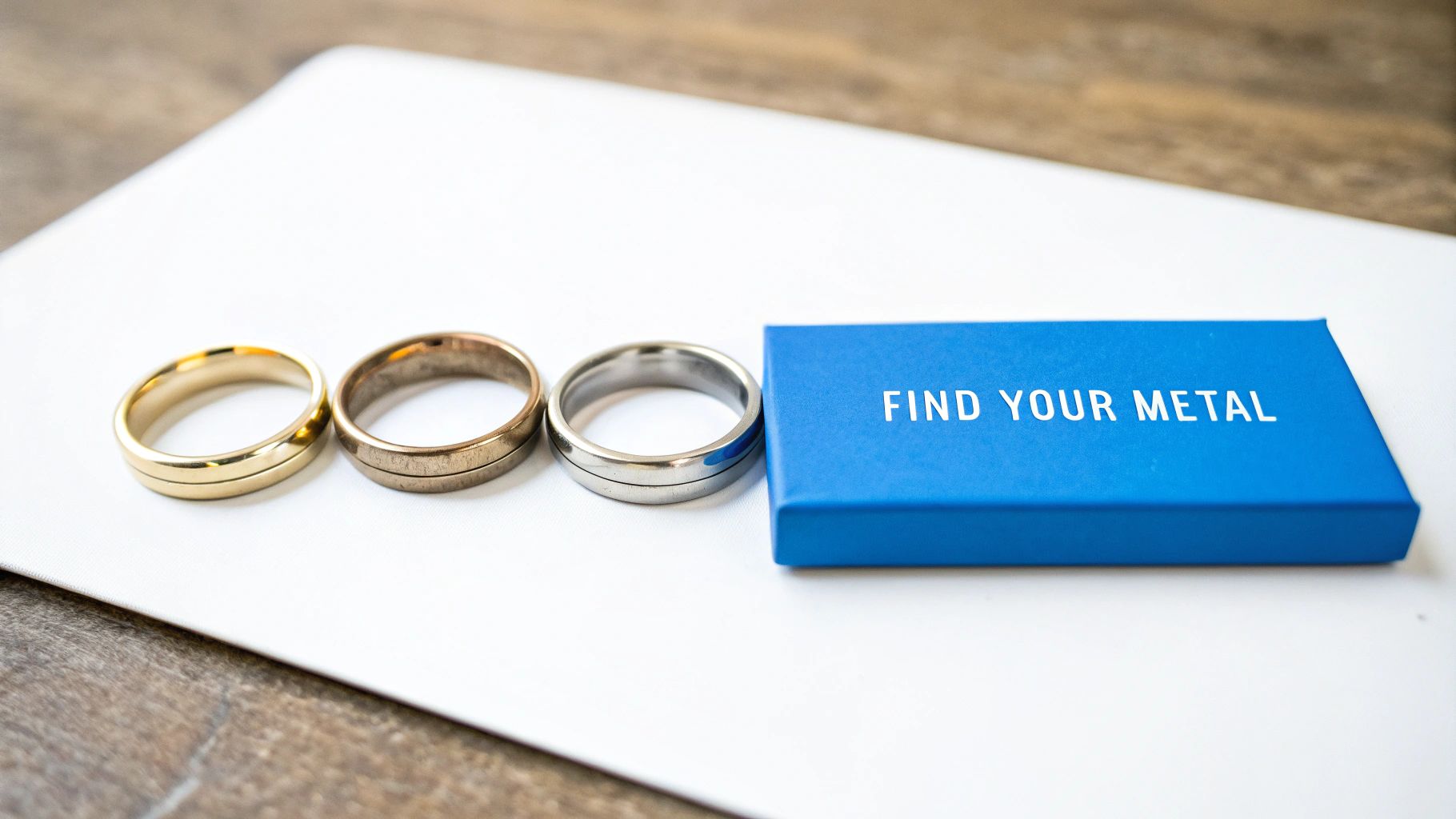
Think of this guide as your personal roadmap. We're here to cut through the confusion and walk you through all the options, from the classic precious metals everyone knows to the tough, modern alternatives gaining popularity. The metal is the very foundation of your ring—it dictates how it feels, how it wears, and how it will age with you over time.
Quick Guide To Popular Wedding Band Metals
To kick things off, let's start with a high-level look at the top contenders. This simple chart is designed to give you a quick snapshot of how these popular metals compare at a glance.
Here’s a breakdown to help you get your bearings before we dive deeper.
| Metal | Best For | Price Range | Durability | Hypoallergenic |
|---|---|---|---|---|
| Platinum | Luxury & Sensitive Skin | $$$$ | Very High | Yes |
| Gold (14k/18k) | Timeless Style & Resizing | $$ - $$$ | Moderate | Varies |
| Titanium | Active Lifestyles (Lightweight) | $ | High | Yes |
| Tungsten Carbide | Maximum Scratch-Resistance | $ | Highest | Yes |
| Palladium | Platinum Look, Lighter Feel | $$$ | High | Yes |
Seeing the core differences laid out like this can help you start zeroing in on what truly matters to you. Once you have a better feel for the basics, you'll be ready to explore our full collection of wedding bands with the confidence of an expert.
A Deep Dive into Gold and Platinum Wedding Bands
When you close your eyes and picture a classic wedding band, you’re probably imagining a simple, elegant ring made of either gold or platinum. For centuries, these two have been the titans of the jewelry world. They represent the gold standard (pun intended) for a reason, each bringing its own unique blend of tradition, beauty, and strength to the table. Let’s break down what makes them such enduring choices.
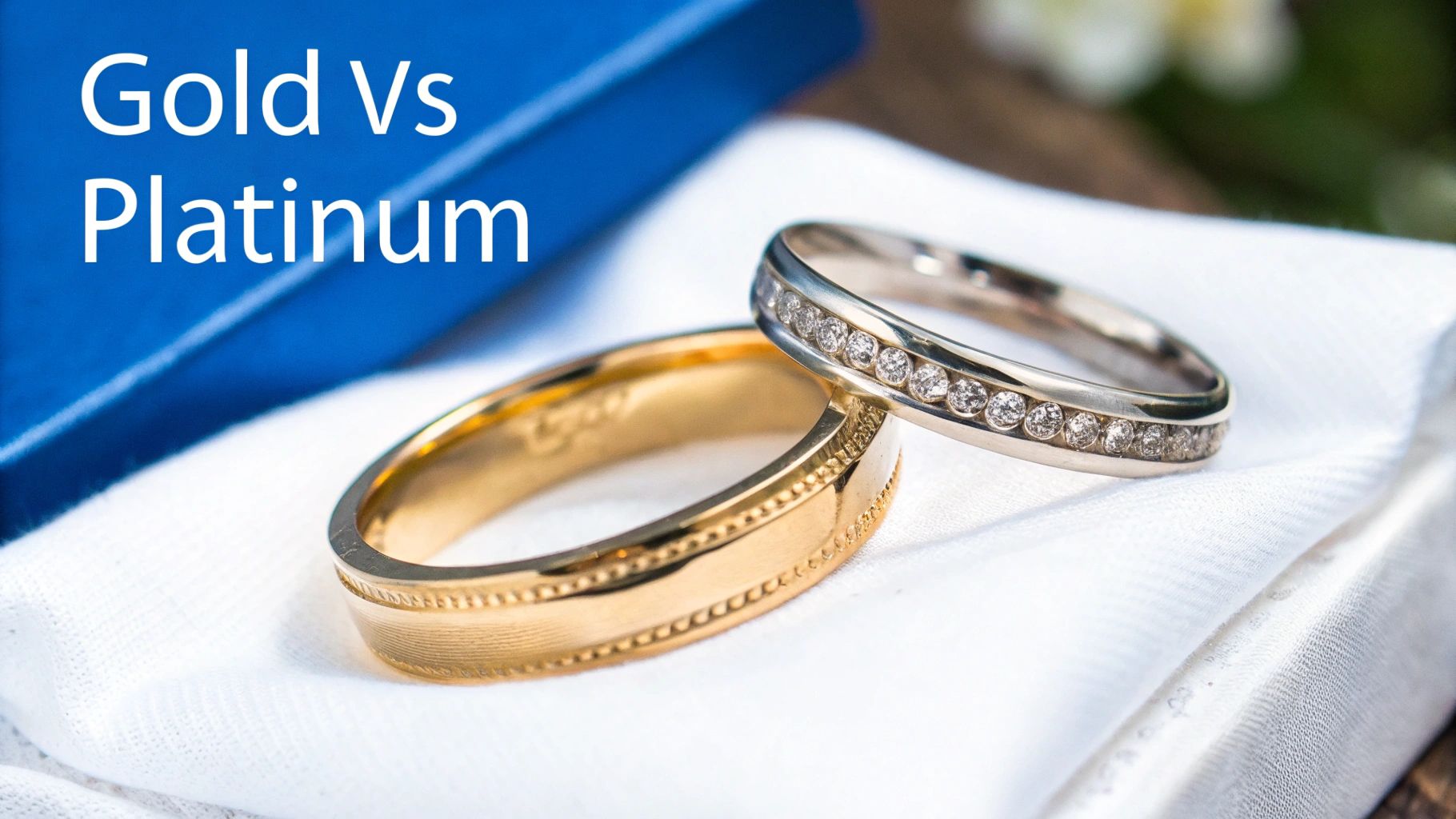
Gold has a story as rich and warm as its unmistakable color. It’s been the ultimate symbol of love and commitment for thousands of years. Platinum, on the other hand, is the modern heavyweight champion of luxury—it's rare, incredibly dense, and prized for its brilliant, pure white shine that never fades.
Understanding the Nuances of Gold
First things first: the gold in a wedding band is almost never pure gold. A ring made from 24 karat (24k) gold would be far too soft for daily life. Just imagine your ring getting bent out of shape from gripping a steering wheel or carrying groceries—that’s the reality of pure gold. It’s just not practical for a piece you’ll wear forever.
To solve this, jewelers create alloys, mixing pure gold with stronger metals like copper, silver, and zinc. This process does two things: it makes the ring durable enough for a lifetime, and it creates the beautiful spectrum of gold colors we all know and love. The gold’s purity in this mixture is measured in karats.
- 18k Gold: This blend is 75% pure gold and 25% other alloys. It has a deeper, richer color that really makes a statement. While it's considered a more premium choice, that higher gold content means it's also a bit softer and more susceptible to scratches than 14k.
- 14k Gold: Made of 58.3% pure gold and 41.7% alloys, 14k gold hits the sweet spot between durability, beautiful color, and affordability. It’s the most popular choice here in the U.S. because it’s tough enough to handle the realities of everyday life without breaking the bank.
The specific alloys used also give us our color palette. Yellow gold gets that classic warmth from a bit of copper and silver. White gold is created by mixing gold with white metals like palladium, and it's almost always finished with a rhodium plating for that extra bright, silvery sheen. And that trendy, romantic pink hue of rose gold? That comes from adding a higher concentration of copper to the mix.
Gold’s legacy is undeniable. In fact, a 2022 industry report showed that gold bands accounted for a staggering 29.9% of all sales in the U.S. men's metal wedding band market. You can dig into the numbers yourself and find out more about gold's market leadership at GrandViewResearch.com.
The Enduring Purity of Platinum
If gold is the timeless classic, then platinum is the undisputed king of the castle. It’s rare, it’s pure, and its natural properties make it one of the most desirable metals for a wedding band, especially if you’re looking for the absolute best.
Platinum is a naturally white metal, so its color is permanent—it will never fade, yellow, or tarnish over time. It’s also incredibly dense, which gives it a satisfying heft and a substantial, luxurious feel on your finger that you just don’t get with other metals.
But where platinum really shines is its durability. When a gold ring gets scratched, a microscopic piece of the metal is scraped away and lost forever. Platinum is different.
When platinum gets scratched, the metal simply gets displaced, pushed from one spot on the ring to another. This means your ring never loses its volume or weight, even after decades of wear. Over time, these tiny scratches blend together to form a soft, satin-like finish called a patina. Many couples grow to love this look, seeing it as a beautiful, tangible record of their life together.
Here’s a quick rundown of how they stack up side-by-side:
| Feature | Gold (14k/18k) | Platinum |
|---|---|---|
| Color | Comes in yellow, white, and rose. White gold needs rhodium plating to stay bright. | Naturally pure white. Its color will never fade or change. |
| Durability | Softer metal. Scratches remove tiny bits of gold over time. | Much denser and stronger. Scratches just move the metal around, creating its signature patina. |
| Hypoallergenic | Can contain nickel (a common allergen), especially in some white gold alloys. | Naturally 95% pure and hypoallergenic, making it a safe bet for sensitive skin. |
| Weight | Lighter on the finger, which many people find very comfortable. | Noticeably heavier and denser, giving it a very substantial, premium feel. |
| Maintenance | Needs regular polishing to buff out scratches. White gold needs to be re-plated every few years. | Can be polished to look brand new, but many people prefer to let the natural patina develop. |
At the end of the day, you can't go wrong with either. Gold offers that classic warmth and a wonderful versatility with its different colors. Platinum delivers unparalleled durability, a pure white luster that lasts forever, and peace of mind for anyone with sensitive skin.
Beyond Gold: A Look at Modern and Alternative Metals
While gold and platinum have centuries of tradition behind them, the wedding band world has exploded with new possibilities. A whole new class of modern, alternative metals has shown up, offering incredible performance, unique looks, and frankly, amazing value. Many of these materials come from the aerospace and medical fields, which tells you a lot about how tough they are.
These aren't your grandfather's wedding bands. They're challenging the old rules by being feather-light, nearly impossible to scratch, or coming in striking dark colors. If you work with your hands, live an active life, or just want a ring that feels more contemporary, you owe it to yourself to check these out. Let's dive into the top contenders.
Titanium: The Aerospace Champion
Imagine a metal strong enough for a jet engine but so light you barely feel it on your finger. That's titanium. It boasts the highest strength-to-weight ratio of any metal out there, making it a fantastic pick if you find heavier rings, like platinum, to be a bit cumbersome.
Titanium's natural color is a cool gunmetal grey, but it can be finished in different ways, from a mirror-like polish to a soft, brushed look. It's also 100% hypoallergenic, putting it right up there with platinum as one of the safest bets for sensitive skin. There's a reason it's trusted for medical implants.
But all that strength comes with one major catch.
Crucial Consideration: You can't resize a titanium ring. It's just too hard for jewelers to cut and solder the way they do with precious metals. If your finger size changes down the road, you’ll need a whole new ring.
Tungsten Carbide: The Scratch-Proof Powerhouse
If you are tough on your jewelry, meet your match. Tungsten carbide is, without a doubt, the king of durability. It scores a 9 on the Mohs scale of hardness, with only diamond ranking higher at a perfect 10. In practical terms, this means it's virtually impossible to scratch during day-to-day life. A tungsten ring will look just as polished and new in a decade as it did on your wedding day.
This incredible hardness also gives it some real heft; it feels substantial on your finger, much like gold. And don't let the industrial name fool you—tungsten can be shaped into some truly stunning designs and comes in various colors, from classic grey to bold black or even white.
- Extreme Scratch Resistance: Keeps its shine and finish looking brand new for years.
- Great Value: You get a premium look and feel for a very reasonable price.
- Hypoallergenic: It's completely safe for any skin type.
The flip side of all that hardness is brittleness. While it won't scratch, a tungsten ring can actually crack or shatter if it takes a sharp, hard hit—like being dropped on a tile floor. And just like titanium, tungsten cannot be resized.
Cobalt: A Platinum Look for Less
Cobalt has quickly become a go-to for people who love the brilliant, silvery-white sheen of platinum but not the price tag. It's a naturally white metal, so the color is permanent and will never need to be replated with rhodium like white gold. That makes it incredibly easy to care for.
Performance-wise, cobalt hits a sweet spot. It's much harder and more scratch-resistant than gold or platinum, but it isn't brittle like tungsten. It's a really solid, durable choice for an everyday ring.
While it holds up better than the precious metals, it can still pick up some scratches over time. It also shares the same non-negotiable drawback as the other modern metals: resizing is almost always out of the question.
Black Zirconium: The Modern and Dramatic Choice
Looking for something truly different and bold? Black zirconium is an amazing choice. The ring actually starts out as a silvery-grey metal, a lot like titanium. It then goes through an intense heating process that transforms the surface into a super-hard, ceramic-like black layer.
This isn't a plating or a coating; the black color becomes an integral part of the metal itself, so it won't chip off or fade. The end result is a ring that's dramatic, lightweight, durable, and hypoallergenic all at once.
Here’s a quick rundown of how these modern marvels stack up:
| Feature | Titanium | Tungsten Carbide | Cobalt | Black Zirconium |
|---|---|---|---|---|
| Feel | Extremely lightweight | Heavy, substantial feel | Medium weight, comfortable | Lightweight and sleek |
| Durability | Resists bending/denting | Virtually scratch-proof | Scratch-resistant | Scratch-resistant |
| Weakness | Can scratch | Can shatter on impact | Can scratch over time | Can scratch over time |
| Resizing | No | No | No | No |
Choosing one of these modern metals is really about deciding what matters most to you—the barely-there comfort of titanium, the bulletproof scratch-resistance of tungsten, or the head-turning style of zirconium. They’re fantastic alternatives to the classics, built for the way we live today.
How to Match a Metal to Your Lifestyle and Budget
So, you’ve got the rundown on gold's timeless warmth, platinum’s pure luxury, and the tough-as-nails performance of modern metals like tungsten. But the biggest question is still on the table: what's the best metal for a wedding band for you? The answer isn’t just sitting in a jeweler’s case—it’s woven into the fabric of your daily life.
Think of it like picking the right coat for the weather. A stylish trench coat is perfect for a cool city night, but it won’t do you much good on a sub-zero ski trip. In the same way, a softer 18k gold ring might not hold up for a mechanic, while a super-heavy tungsten band could feel awkward for someone who spends all day at a keyboard.
This is where we get personal. To find your perfect match, we need to take a close look at your job, your hobbies, and what you really want from a piece of jewelry you’ll wear for the rest of your life.
The Active Lifestyle Test
Let's start with an honest look at how you use your hands. Do you work in construction, healthcare, or as a mechanic? Are your weekends spent at the gym, in the garden, or climbing a rock face? If your hands are always on the go, durability needs to be at the top of your list.
- High-Impact Activities: If you’re often lifting weights or working with heavy equipment, you need a metal that can take a hit without shattering. Titanium is a fantastic choice here; it's incredibly strong and resists cracking under pressure. Platinum is also a great contender, as it bends rather than breaks.
- Scratch-Prone Environments: Want your ring to look brand new for years to come? Then scratch resistance is the name of the game. Tungsten carbide is the undisputed king in this arena, easily shrugging off the scuffs and scrapes that would leave their mark on softer precious metals.
This chart is a great shortcut for deciding between the top modern metals based on what matters most to you.
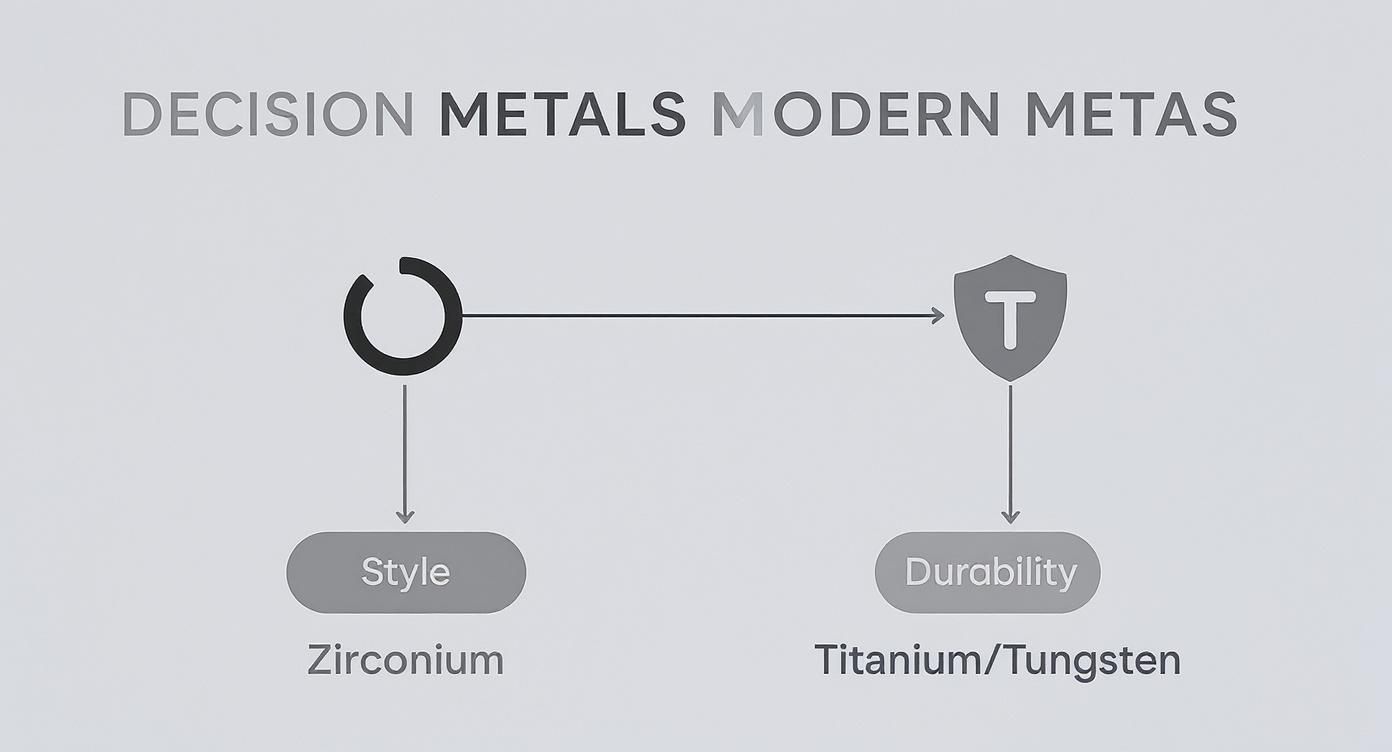
As you can see, once you know you need something tough, the final call often boils down to a personal preference for a specific style versus maximum durability.
Your Skin and Comfort Preferences
How a ring feels is just as important as how it looks. Some people really love the substantial, reassuring weight of a dense metal, while others prefer a ring so light they barely notice it's there.
The weight of a ring is a constant physical reminder of its presence. Platinum is the densest precious metal, giving it a satisfying heft that many people connect with quality and luxury. On the flip side, titanium is feather-light, making it one of the most comfortable options for all-day wear.
Skin sensitivity is another dealbreaker. The last thing you want from your wedding band is an allergic reaction. If you have sensitive skin or a known nickel allergy, you need to choose wisely.
Platinum is a top-tier choice, especially for those who need a hypoallergenic option. It’s naturally pure, extremely durable, and its brilliant white luster won’t fade or tarnish. This mix of luxury and practicality is why its popularity has soared, a trend you can read more about in market research from TransparencyMarketResearch.com.
Aligning With Your Budget
Finally, let’s talk numbers. The price of a wedding band can vary wildly, so it’s important to find a metal that fits your financial comfort zone without forcing you to compromise on the qualities you really care about.
Your wedding band is just one piece of the puzzle. It’s smart to think about it in the context of your total wedding spending. Our guide on how much to spend on an engagement ring can help you put your jewelry budget into perspective.
- Most Accessible ($): Stainless steel, titanium, and tungsten carbide deliver incredible durability and sharp looks at a very friendly price point.
- Mid-Range ($$-$$$): 14k gold and cobalt offer that classic or modern style with excellent longevity, making them a solid middle-ground investment.
- Premium ($$$$): At the top end, you have platinum and 18k gold. These metals offer unmatched prestige, purity, and a true feeling of luxury.
By balancing these three key areas—your lifestyle, your comfort, and your budget—you can confidently narrow down the options. This simple framework helps ensure the ring you choose is not only beautiful but a perfect and practical symbol of your life together.
Keeping Your Wedding Band Looking Its Best
Your wedding band is with you through everything, a constant symbol of your commitment. And just like any relationship, it thrives with a bit of care. How you look after your ring really comes down to the metal you chose, but a good routine will ensure it looks as good decades from now as it did on your wedding day.
For classic precious metals like gold and platinum, simple is best. A quick bath in a bowl of warm water with a few drops of mild dish soap will work wonders. You can use an ultra-soft toothbrush—think baby-soft—to gently get into any engravings or crevices. Afterward, just rinse it clean and pat it dry with a soft, lint-free cloth. Easy as that.
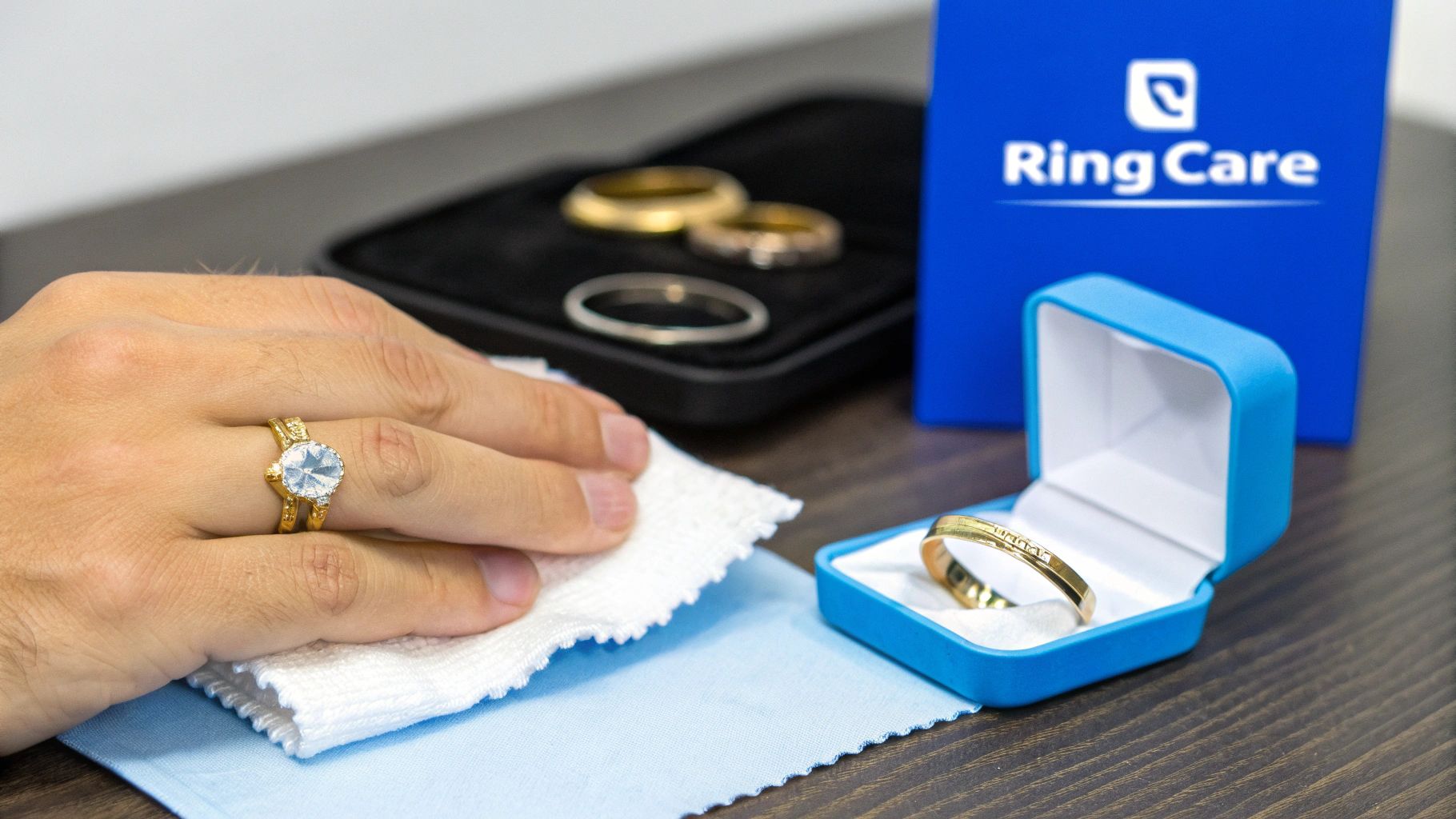
This gentle cleaning is usually all you need for regular maintenance. If you start to notice deeper scratches, especially on a softer gold band, it's time to bring it in for a professional polish. And if your ring features any diamonds or other stones, you’ll want to check out our specific tips on professional diamond care.
Specific Care for Different Metals
Every metal has its own personality, and that extends to how it needs to be cared for. Some are incredibly low-maintenance, while others need a bit more attention to stay in top form. This is definitely something to consider when making your final choice.
White Gold Maintenance
To get that stunning bright-white shine, white gold is plated with a very hard, reflective metal called rhodium. Over time, this plating can wear away, letting the natural, slightly warmer tone of the gold alloy peek through. To keep it looking its best, plan on having it professionally re-plated with rhodium every 1-3 years.
Platinum and Its Patina
Platinum is a workhorse—it’s tough and built to last. It will, however, get scratched. Over many years, these tiny scratches blend together to create a soft, almost frosted finish called a patina. Many people actually love this look, seeing it as a beautiful record of the life they’ve lived with their partner. But if you prefer that out-of-the-box mirror shine, a quick professional polish will restore it without losing any of the metal.
Modern Metals Care
If you opted for a modern metal like titanium or tungsten carbide, you’re in luck. These are famous for being tough and requiring almost no upkeep. A simple wash with soap and water is all they'll ever really need.
A word of warning, though: their hardness has a trade-off. Tungsten carbide is incredibly scratch-resistant but also brittle. A hard, direct hit—like dropping it on a ceramic tile floor—can actually cause it to crack or even shatter.
When to Take Your Ring Off
Honestly, the single best thing you can do to protect your ring is to know when to leave it in a safe place. Even the most durable metal can be damaged under the right (or wrong) circumstances.
Consider slipping your wedding band off before you do any of these things:
- Lifting heavy weights: The pressure from a barbell or dumbbell can easily bend softer metals or even crack harder ones.
- Swimming in pools or hot tubs: Chlorine is not your ring’s friend. It can react with the alloys in gold, causing damage and discoloration over time.
- Handling harsh chemicals: Think household cleaners, bleach, or solvents. These can permanently damage or discolor precious metals.
- Doing heavy manual labor: Activities like gardening, construction, or major DIY projects are prime opportunities for deep scratches and hard impacts.
By following these simple guidelines, you’re not just cleaning a piece of jewelry; you're preserving a symbol of your love. A little bit of routine care goes a long way in protecting your investment and ensuring your ring is ready for a lifetime of memories ahead.
A Few Common Questions We Hear About Wedding Bands
Picking the right metal is often the final piece of the puzzle, and it's a big one. It’s the decision that ensures you'll love wearing your ring every single day for the rest of your life. To help you feel completely confident, we've rounded up the questions we hear most often from couples standing right where you are. These are the practical, real-world concerns that make all the difference.
Think of this as your final checklist. We'll give you clear, honest answers to help you sort through the details, from the "which is tougher?" debate to the all-important question of resizing. Let's clear up any last-minute uncertainties so you can say "yes" to the perfect ring.
Which Metal Is Actually the Most Durable?
"Durable" can mean a few different things in the world of jewelry, so the best answer really depends on what kind of wear and tear you're worried about. It really comes down to a classic trade-off: scratch resistance versus impact strength.
When it comes to pure, unmatched scratch resistance, tungsten carbide is in a league of its own. It's an incredibly hard material, making it almost impossible to scratch during daily life. If your main goal is to keep your ring looking glossy and new without much fuss, tungsten is a fantastic choice.
But there’s a catch. That extreme hardness makes it brittle. If you drop it just right on a hard surface like a tile floor, it can actually crack or shatter.
On the other hand, if by "durable" you mean tough—as in, it won't bend, warp, or break—then platinum and titanium are your top dogs. Platinum is exceptionally dense and strong. While it will definitely collect scratches over time, the metal isn't actually lost; it just gets displaced, creating a unique, satiny finish called a patina that many people love. Titanium is also remarkably tough and resists bending and cracking, all while being surprisingly lightweight.
The Bottom Line: For a ring that’s virtually scratch-proof, go with tungsten carbide. For an all-around tough ring that can take a beating without breaking or bending, platinum or titanium are the way to go.
Can I Get a Titanium or Tungsten Ring Resized Later?
This is one of the most critical questions to ask, and the answer has some serious long-term implications. The short answer is no. In nearly all cases, bands made from alternative metals like titanium, tungsten carbide, and zirconium cannot be resized.
Their incredible hardness and unique molecular makeup mean a jeweler can't perform the traditional cut-and-solder resizing process. They simply can't work the material the same way they can with gold or platinum.
So, what does this mean for you? If your finger size changes down the road—which is very common—you’ll likely have to replace the ring entirely. Some brands do offer exchange programs where you can trade it in for a different size for a fee, but it's not a simple fix you can get done at a local shop.
If you think your finger size might fluctuate in the future, sticking with a traditional precious metal is a much safer bet. Gold and platinum are easily resized by any skilled jeweler, giving you flexibility for life.
What’s the Best Metal for Sensitive Skin?
For anyone with skin sensitivities or a known nickel allergy, this isn't just a preference—it's a necessity. The absolute best, most reliable hypoallergenic metal for a wedding band is, without a doubt, platinum.
Platinum is naturally 95% pure and is completely nickel-free, making it the industry’s go-to choice for preventing skin reactions. Its purity means it's biocompatible and safe for even the most sensitive wearers.
Here are a few other great options:
- Titanium is another excellent hypoallergenic choice. It’s so safe and non-reactive that it's the same material used for medical and surgical implants.
- Zirconium and Cobalt are also generally considered safe bets for most people with sensitivities.
- Gold can be a bit tricky. Pure gold is hypoallergenic, but it's the alloys mixed in that can cause trouble. White gold, in particular, often contains nickel for color, which is a very common allergen. Yellow and rose gold are usually safer, but they aren't guaranteed to be 100% irritant-free.
If you love that classic white metal look but have any concerns about skin reactions, choosing platinum gives you total peace of mind along with its premium feel.
How Do I Match a Wedding Band to an Engagement Ring?
Creating a beautiful, cohesive bridal set is something most people want. The goal is to pick a wedding band that not only looks great next to the engagement ring but also wears well with it. You've really got two main paths to take.
The most traditional approach is to match the metals exactly. A platinum engagement ring paired with a platinum wedding band will look seamless. They’ll have the same color and sheen, and they will age at the same rate. It’s a timeless, elegant look that never fails.
That said, mixing metals is very popular right now and can look incredibly stylish. A warm rose gold band can create a stunning contrast against a cool platinum or white gold engagement ring, really letting your personality shine through. The most important thing to remember here, though, is hardness.
A word of caution: It's crucial to avoid pairing a very hard metal like tungsten directly against a softer one like 18k gold. Over time, the harder ring will literally grind away at the softer one, causing significant wear and damage. If you do mix, try to stick with metals that have similar hardness levels, like pairing different colors of gold.
Your wedding band is so much more than jewelry. It’s a daily symbol of your commitment and a piece that should make you smile for decades. At ECI Jewelers, we offer a curated collection of fine wedding bands crafted from the world’s most beautiful and durable metals. Whether you're drawn to the timeless luxury of platinum or the modern edge of alternative metals, our experts are here to help you find your perfect match. Explore our selection and experience the quality and service that have made us a trusted name in fine jewelry for over 25 years.


