


The best wedding band for an oval engagement ring is usually a curved or contoured band designed to sit flush against the oval's curves. Oval diamonds are chosen by 25% of couples, nearly matching round diamonds at 26%, so the right pairing should protect the center stone's elongated look while fitting the setting comfortably. A straight band can also work when the engagement ring is set high enough to leave clearance beneath the center stone. We'll compare both profiles, explain eternity and half-eternity options, and show how setting height, width, metal, and lifestyle affect the final choice.
Choosing Your Oval Engagement Ring Pairing
You've found an oval engagement ring you love, but the wedding-band tray quickly creates a new question. Should the band curve around the center stone, sit straight beside it, or leave a deliberate space? The right answer depends less on the oval outline alone and more on the ring's setting height, under-gallery clearance, and overall proportions.
Oval diamonds have become a mainstream bridal choice rather than a niche alternative. National Jeweler's engagement-ring coverage notes that oval diamonds are selected by 25% of couples, compared with 26% for round diamonds. The same coverage explains that an oval can create a larger visual spread than a round diamond of the same carat weight, which is one reason slim bands often work so well. They add polish without taking attention away from the center stone.
For a practical starting point:
- Choose a curved or contoured band when you want the two rings to sit closely together and your setting blocks a straight band.
- Consider a straight band when the center stone sits high enough for the band to pass beneath it.
- Allow an intentional gap if your setting or personal style looks better with visual separation.
- Try the rings together from the top, side, and palm-facing views before deciding.
A flush fit isn't automatically better. The best pairing is the one that doesn't rub, rock, pinch, or make the oval look crowded. Our guide to choosing a wedding band can help you evaluate the broader design before you focus on the final profile.
Curved Versus Straight Wedding Bands
A contour wedding band uses a curve, angle, or notch to follow the engagement ring's silhouette. With an oval, this shape can wrap around the elongated shoulders and reduce the open space that appears when a straight band meets a low-set center stone.
A straight band creates a cleaner, traditional line. It can sit flush with a high-profile solitaire or cathedral setting when the raised center leaves enough clearance beneath it. Halo, bezel, low-profile, and side-stone settings may block a straight band, making a curved profile more practical.
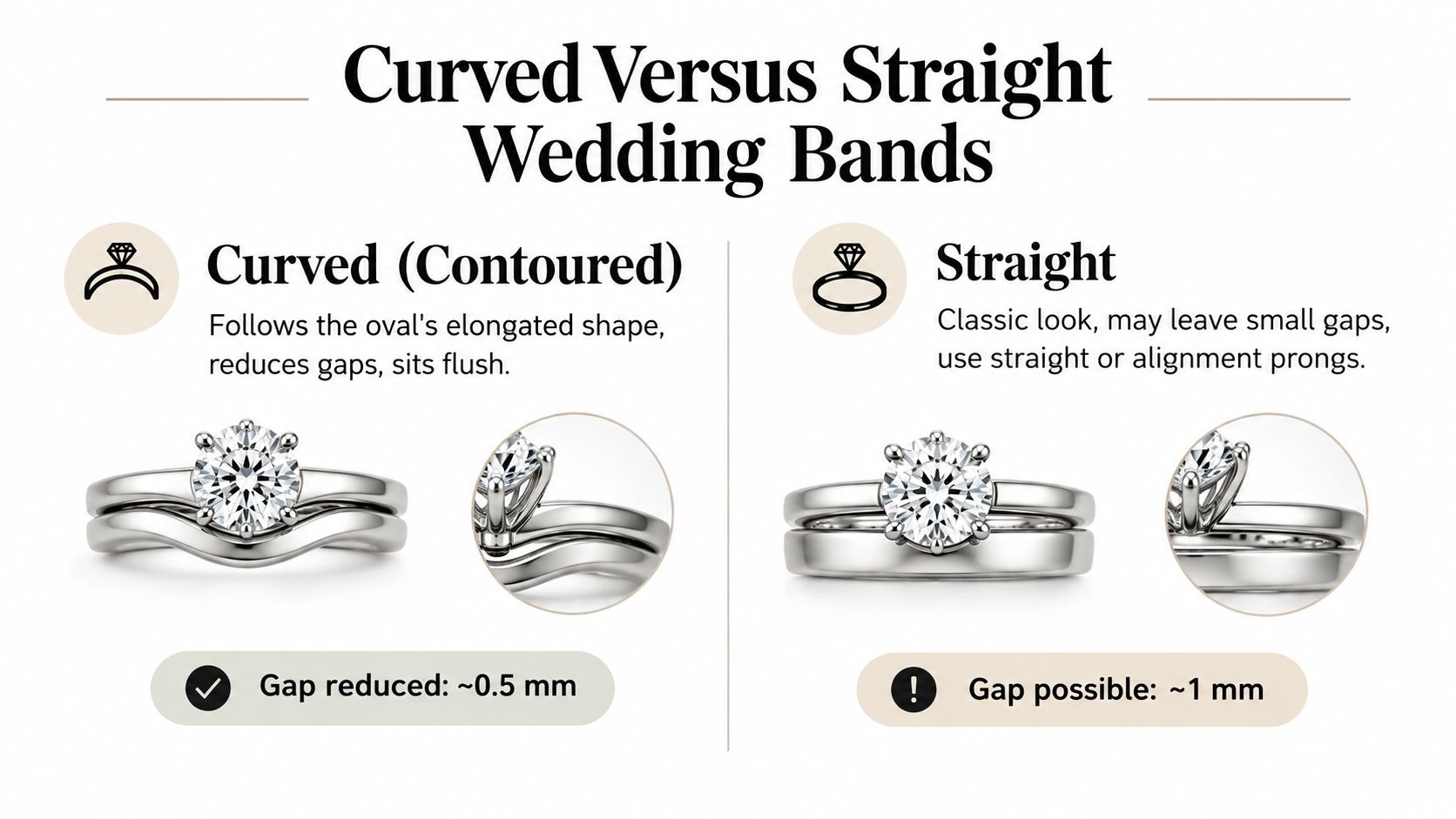
Inspect the underside of the engagement ring before choosing a band. A gallery close to the finger usually calls for a curved band. Visible space beneath the center stone and between the prongs gives you a better chance of achieving a comfortable straight-band fit.
| Band Type | Best For Setting Height | Fit Characteristics |
|---|---|---|
| Curved or contoured | Low to medium profile | Follows the oval's outline and helps close gaps |
| Notched or chevron | Low to medium profile | Frames the center with a more angular appearance |
| Straight | Medium to high profile | Offers a classic line when the setting leaves clearance |
Band width also affects the result. A narrow band may leave more visible space beside a broad setting, while a wider band can crowd a delicate oval or compete with detailed shoulders. Try the actual widths together rather than judging the pairing from a product photo.
The fit can be precise. PriceScope's guide to wedding bands for oval engagement rings notes that differences of roughly 0.3 to 0.7 mm can become visible in a stack, causing movement or a noticeable gap. Your oval's setting height, gallery shape, and band width all affect whether the finished pairing sits correctly.
The video shows how a curved band closes the gap beside a low-set oval, while a straight band leaves visible space.
Practical rule: Choose the profile that matches the setting's clearance, then confirm that the band width leaves the oval balanced rather than crowded.
Eternity and Half-Eternity Band Options
Diamond coverage changes the character of an oval ring stack. A full eternity band has diamonds set around the entire circumference of the ring. It delivers continuous sparkle from the top and sides, but the design can be more difficult to resize because diamonds continue around the shank.
A half-eternity band places diamonds across the visible upper portion while leaving the underside in plain metal. That arrangement can feel smoother against the finger and gives a jeweler more flexibility if the size needs adjustment later. It also keeps the lower part of the band simpler for daily wear.
For an oval engagement ring, consider how much visual activity already exists around the center:
- Solitaire oval: A pavé, half-eternity, or full-eternity band can add brilliance without competing with side stones.
- Halo oval: A slimmer diamond band often keeps the stack from feeling overloaded.
- Three-stone oval: A plain or lightly detailed band can give the center and side stones room to read clearly.
- Low-set oval: A contour profile matters more than diamond coverage because the band must clear the setting.
Metal placement matters as well. A white-metal eternity band creates a bright, continuous frame, while yellow or rose gold introduces warmth and contrast. Mixed-metal combinations can work when the contrast is deliberate and repeated in the engagement ring or another piece in the stack.
For a closer look at stone coverage, resizing, and everyday wear, see our eternity band guide. The goal isn't to add the most diamonds possible. It's to choose coverage that supports the oval's proportions and your comfort.
Matching Band Width and Metal to Your Ring
A slim oval solitaire can look elegant beside a narrow band, while a larger oval or substantial setting may need more visual weight. Judge the band beside the complete engagement ring, including its gallery, halo, and side stones.
Brilliant Earth's oval engagement-ring guide shows oval-ring widths from under 2 mm to over 3 mm, with thinner bands around 1.5 to 2 mm often keeping the stack balanced. Treat those figures as a starting point, not a rule. The setting height, stone coverage, and proportion of the oval determine how the combination reads from above and from the side.
Use these checks when trying on bands:
- Slim oval solitaire: Stay with a delicate profile so the band does not visually shorten the oval's elongated outline.
- Larger oval or substantial setting: Choose more width when the engagement ring has enough scale to support it, then confirm that the band does not crowd the center stone.
- Halo or pavé engagement ring: Limit extra detail if you want the halo and center to remain distinct. A stronger contrast works when a statement stack is intentional.
- Wide or sculptural band: View the rings together from above. The oval should still lead rather than disappear beside the band.
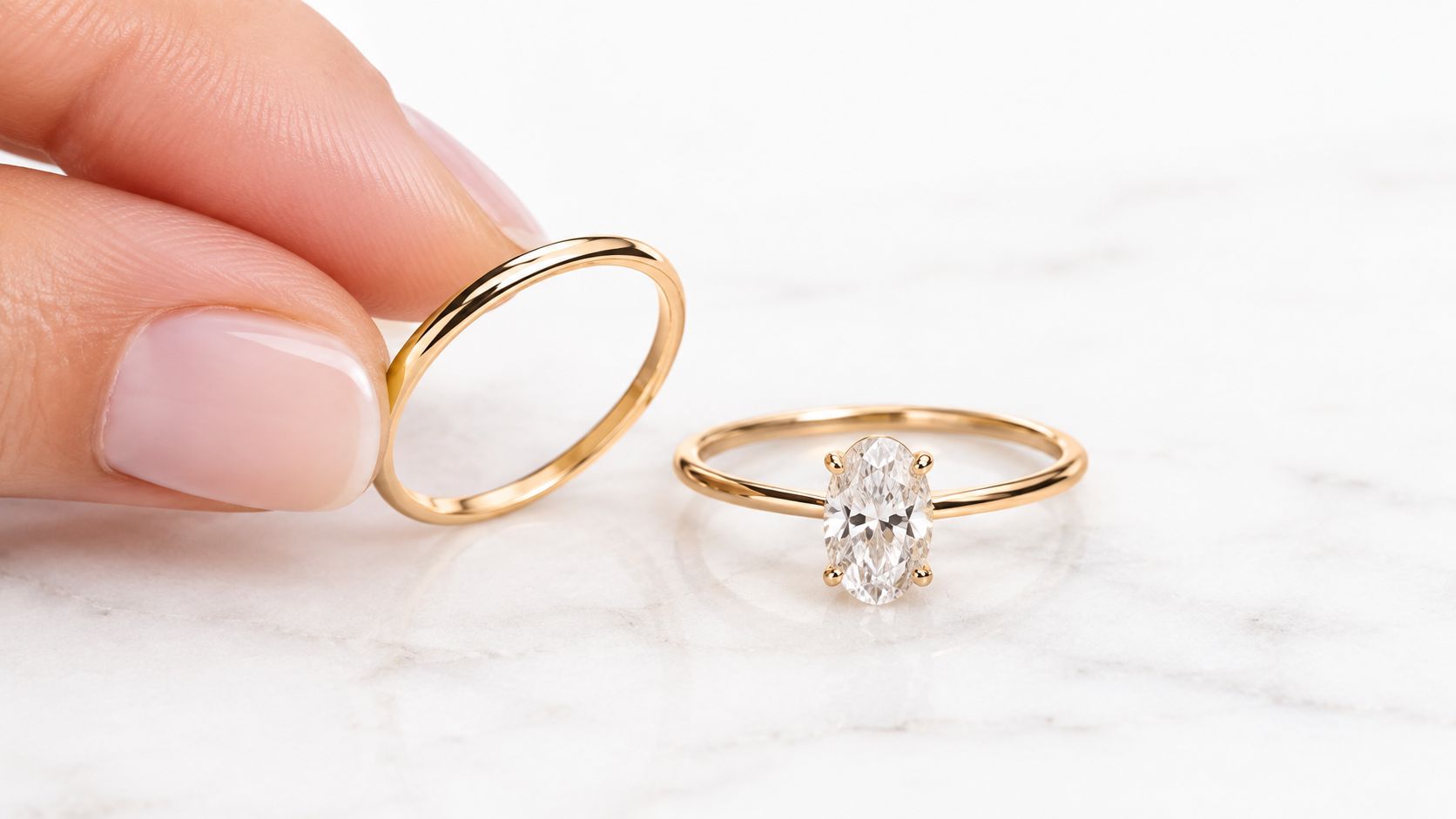
Metal changes the balance as much as width. Yellow gold emphasizes warmth, white metals keep the pairing bright and crisp, and rose gold adds contrast without changing the oval's silhouette. Mixed metals look considered when both colors appear elsewhere in the engagement ring or stack.
Use this wedding-band width guide to compare proportions, then try the bands together. Edge shape matters too. A rounded edge can make a measured width feel softer, while a flat or sharp profile can make the same width appear bolder.
Custom Fit and Lifestyle Considerations
A custom-fit band becomes especially useful when the engagement ring has an unusual gallery, a low halo, a bezel, or side stones that interrupt the path of a straight shank. The jeweler can work from the exact measurements of the ring rather than relying on a general oval template.
Fit differences that seem minor on paper can become obvious when the rings move against each other. A contoured profile can reduce trapped debris and unwanted movement at the contact point, but it still needs the correct curve, depth, and height for your specific setting.
A band should feel stable when your hand moves, not only when your fingers are resting on a counter.
Lifestyle should guide the surface details:
- Active daily wear: Smooth edges and a lower profile may be easier to live with than raised pavé or delicate prongs.
- Frequent glove use or hands-on work: Avoid a shape that catches against fabric or equipment.
- Preference for a quiet stack: Choose a plain or lightly finished band that lets the oval lead.
- Preference for a statement stack: A wider band or sculptural contour can create stronger contrast, provided the setting has enough room.
Our guide to the best metals for wedding bands can help you compare color and wear characteristics. Bring the engagement ring to an appointment, then test the band while making a fist, moving your fingers, and viewing the stack from the side. Comfort problems usually reveal themselves quickly.
Featured Wedding Bands from ECI Jewelers
The right band can be a curved diamond design, a plain straight shank, a half-eternity ring, or a wider statement piece. The important detail is whether the band's profile works with your oval's setting. A product image alone can't confirm a flush fit.
Because jewelry inventory and pricing change, use the live ECI Jewelers wedding-band collection to review current pieces, exact product names, available metals, and listed prices. Bring the engagement-ring details or the ring itself when asking about a particular band.

When reviewing a listing, check four details before you fall in love with the design:
- Profile: Is the band curved, notched, open, or straight?
- Width: Does it match the scale of the center stone?
- Diamond coverage: Is it plain, pavé, half-eternity, or full eternity?
- Metal: Does it match or intentionally contrast with the engagement ring?
ECI Jewelers offers wedding bands, eternity bands, and custom jewelry services, so a standard design and a customized option can be considered side by side. Ask for a fit check before purchasing if flush alignment is important to you.
Payment Options and Next Steps
Start with fit, then confirm the design and price. If you're considering a curved wedding band for an oval engagement ring, bring the engagement ring or provide clear measurements of the setting, including the height beneath the center stone.
ECI Jewelers lists flexible financing and leasing options through Affirm, Synchrony, Acima, and Snap Finance, with approval and terms set by each provider. Review the agreement offered at checkout or during the application process so you understand the payment schedule and total obligation.
Before finalizing the band, ask to confirm:
- Whether the band will sit flush or leave an intentional gap.
- Whether the curve is designed for your setting.
- Whether the band can be resized if it's a full eternity design.
- Whether the width and metal match your intended daily wear.
If you're choosing the best wedding band for an oval engagement ring, visit ECI Jewelers with your ring or setting details. Explore current wedding bands and eternity bands, then ask for a practical fit comparison between curved, straight, and custom options.


