


A diamond watch bezel is the ring around the watch crystal, but it's so much more than that. It's where master jewelers set diamonds to transform a high-end timepiece into a true showstopper, boosting both its look and its value. It does double duty: protecting the watch face while serving as a brilliant frame for incredible craftsmanship.
What's the Big Deal With a Diamond Watch Bezel?
What takes a luxury watch from a precision tool to a bold personal statement? Nine times out of ten, it’s the flash of a diamond bezel. This one component is where the world of watchmaking collides with high jewelry, creating something that’s part machine, part masterpiece.
At its core, the bezel is a functional part of the watch. Its main job is to hold the crystal tight, shielding the dial and hands from dust and moisture. But when you add diamonds, its role explodes. It becomes the watch’s focal point, a circle of fire that grabs your attention and screams luxury. Legendary brands like Rolex, Audemars Piguet, and Patek Philippe figured this out long ago, offering iconic models with perfectly crafted diamond bezels straight from their own workshops.
Factory vs. Aftermarket: The Most Important Distinction
As you get into diamond watches, there's one thing you absolutely have to understand right away: the difference between a factory-original bezel and an aftermarket one. This isn't a small detail; it's everything.
-
Factory-Original Bezels: These are bezels designed, made, and set with diamonds by the watch brand itself (think Rolex, AP, Patek). You're getting guaranteed quality, with stones and settings that perfectly match the watch's original design.
-
Aftermarket Bezels: Also known as "custom" or "iced-out" bezels, these are made by third-party jewelers and added to a watch after it was sold. They offer endless customization, but they can seriously hurt a watch's value and authenticity.
A watch with its original factory diamond bezel is considered whole and authentic by collectors and the brand. This originality is critical for holding its long-term investment value and ensuring the brand will service it.
Getting this distinction right is the cornerstone of making a smart buy. A factory bezel protects the watch's integrity, keeps its warranty intact, and holds its value far better on the collector's market. An aftermarket bezel, no matter how well-done, permanently alters the watch from its original state. For serious collectors and auction houses, that's often a dealbreaker. This guide will walk you through every aspect of diamond bezels so you can appreciate the craft, judge the quality, and make a decision that fits your goals.
Decoding Diamond Bezel Styles and Setting Techniques
The real artistry of a diamond watch bezel isn't just about the diamonds themselves—it's about how they're set. This meticulous craft defines the watch's entire personality, from its silhouette to the way it catches the light. Think of it as the language of high jewelry; understanding these techniques helps you spot the difference between a good custom piece and a truly exceptional factory original.
Let's break down the most common setting styles you'll find on luxury timepieces, so you know exactly what you're looking at.
The Pavé Setting: A Seamless Carpet of Sparkle
Picture a cobblestone street, but instead of stones, it's paved with brilliant diamonds set so closely together that the metal underneath vanishes. That's the magic of a pavé setting. The name comes from the French word for "paved," and it creates an incredible, continuous surface of fire and light.
To achieve this look, a jeweler drills tiny holes into the bezel and sets each small diamond into them. They then form minuscule beads or prongs from the surrounding metal to hold every stone securely in place. The goal is to make the metal disappear, giving the illusion that the bezel is made entirely of diamonds. It’s an incredibly labor-intensive process, but the breathtaking result is a signature of many high-end Rolex and Audemars Piguet models.
A diamond bezel does more than just look good; it adds value and protects the watch crystal.
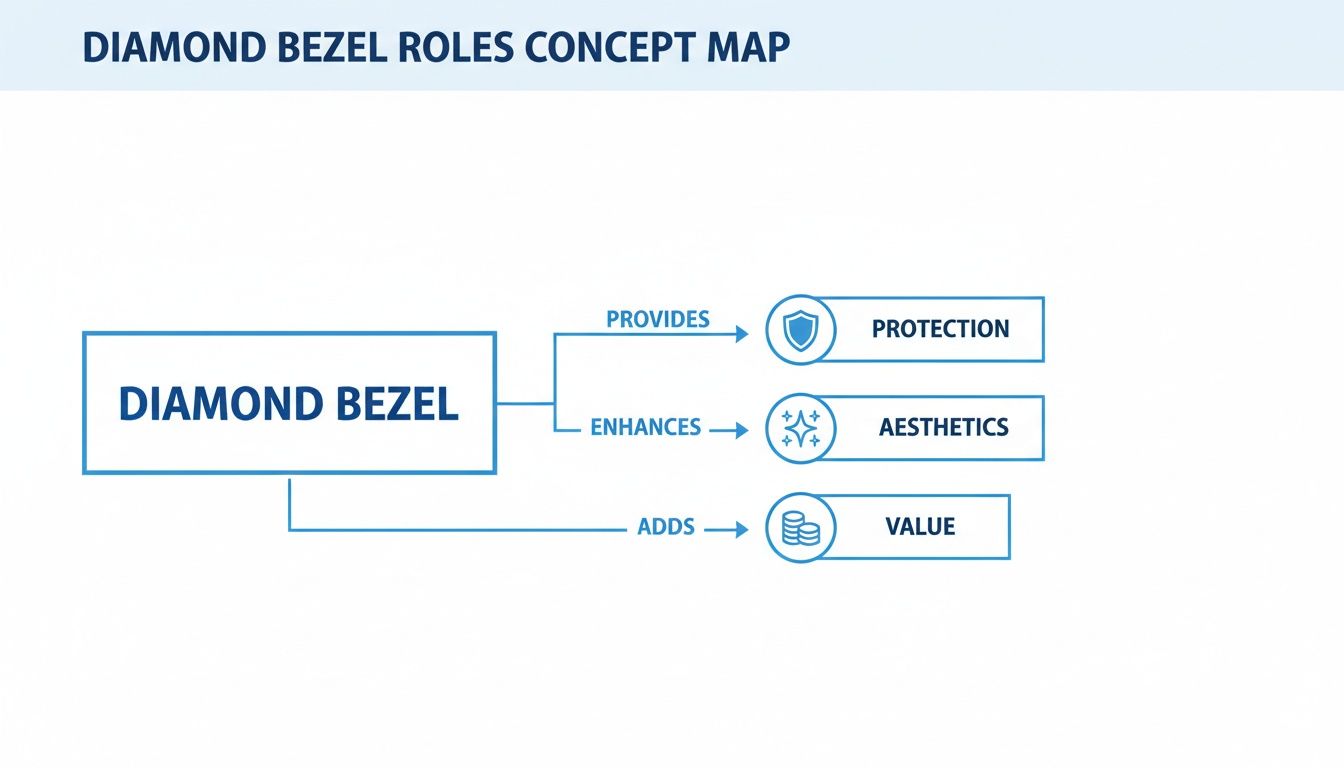
As this shows, the bezel is a critical component that elevates the watch's aesthetic appeal, serves a protective function, and boosts its overall financial value.
The Channel Setting: Modern and Secure
If pavé is a sparkling road, then a channel setting is more like a sleek monorail. Here, diamonds are set right next to each other, edge-to-edge, inside a groove or "channel" cut into the bezel. With no metal separating the stones, you get a clean, uninterrupted ribbon of brilliance flowing around the dial.
This method is also very secure since the channel walls protect the diamonds on two sides. It’s a popular choice for both round brilliant and baguette-cut diamonds, offering a sophisticated, streamlined aesthetic. You'll often see this elegant design on classics like the Rolex Datejust and Day-Date, where it adds a powerful touch of luxury without being too flashy.
The setting technique is more than just a style choice—it's a statement of craftsmanship. A perfectly executed channel set bezel demands absolute precision. Even one slightly misaligned or incorrectly sized stone would disrupt the entire flow of light and ruin the effect.
Prong and Invisible Settings: Maximizing Light and Illusion
Beyond the two most common styles, there are more advanced techniques that represent the peak of bezel artistry. Each one is designed for a specific purpose: either to make a single stone pop or to create a flawless, unbroken surface of gems.
-
Prong Setting: Also known as a claw setting, this is the classic way to feature a gemstone. Each diamond is held by tiny metal prongs that lift it up, allowing light to flood in from every angle for maximum sparkle. While you see it more often on rings, it's used on watch bezels to create a bold, dramatic look where each diamond gets to be the star of the show.
-
Invisible Setting: This is one of the most difficult and impressive techniques in all of jewelry. Diamonds are specially cut with tiny grooves on their sides, which then slide onto a hidden metal grid beneath the surface. From the top, you see no prongs, no channels, no metal at all—just a seamless mosaic of diamonds. It’s a true test of a master gem-setter’s skill and is reserved for the most exclusive timepieces. The result is pure, uninterrupted brilliance that looks like it's floating on the watch.
To help you quickly tell these techniques apart, here's a simple breakdown of what makes each one unique.
Comparing Diamond Bezel Setting Techniques
This table offers a quick-reference comparison of popular diamond setting techniques, highlighting their key characteristics, visual appeal, and typical applications on luxury watches.
| Setting Technique | Visual Style | Diamond Visibility | Best For | Common Brands/Models |
|---|---|---|---|---|
| Pavé | "Paved" with diamonds; minimal metal | High | Maximum sparkle and a luxurious, textured finish | Rolex, Audemars Piguet, Patek Philippe |
| Channel | Clean, linear flow of diamonds | High | A modern, secure, and seamless look | Rolex Datejust, Breitling, Cartier |
| Prong (Claw) | Individual stones lifted by prongs | Maximum | Showcasing larger, individual diamonds | Jacob & Co., Chopard, high-jewelry pieces |
| Invisible | Uninterrupted surface; no visible metal | Total | A flawless, magical "floating" diamond effect | Franck Muller, Cartier, high-end custom work |
Ultimately, each setting style tells a different story. Whether you prefer the all-out brilliance of pavé or the clean lines of a channel set, understanding these details is key to appreciating the artistry that goes into a fine diamond watch.
Factory Original vs Aftermarket Diamond Bezels
When you're looking at a diamond watch, you’ll quickly run into one of the biggest debates in the watch world: factory original versus aftermarket. This single choice is a game-changer, impacting everything from your watch’s resale value and authenticity to whether the brand will even service it down the road.
Getting this right from the start is crucial, so let's break down what each option really means for you and your timepiece.
The Gold Standard: Factory Bezels
A factory-original diamond bezel—often called OEM for "Original Equipment Manufacturer"—is designed, built, and set with diamonds by the watch brand itself. Think of it as part of the watch's DNA. Brands like Rolex are legendary for their in-house gem-setting, where every single diamond is scrutinized to meet their ridiculously high standards.
This isn't just about looks. A factory bezel is engineered with microscopic precision to fit the watch case perfectly, which is essential for maintaining its water resistance and structural integrity. For serious collectors and investors, a factory bezel is the only way to go because it preserves the watch’s originality and provenance, making it the gold standard.
Choosing factory-set is a commitment to authenticity. Brands employ master gem-setters who spend hours aligning each stone to maximize brilliance and create a finish that's absolutely flawless. The quality control is intense—they typically only use diamonds that are internally flawless to VVS in clarity.
More importantly, a watch with its original factory diamond bezel keeps its manufacturer warranty. If it ever needs service, the brand will work on it without a second thought. This is a huge deal, as most luxury brands will flat-out refuse to service a watch that’s been modified with non-original parts.
Key Takeaway: A factory-original diamond bezel guarantees the highest level of craftsmanship, ensures authenticity, and protects the watch's long-term investment value. It's the only option that keeps the warranty and serviceability with the original manufacturer intact.
The World of Aftermarket Bezels
An aftermarket diamond bezel is one created and installed by a third-party jeweler, not the watch brand. The main draw here is customization and cost. You can get a highly personalized, iced-out look—often with a much higher carat weight—for a fraction of what a factory-equivalent model would cost.
This route gives you total creative freedom. You can pick the diamond size, quality, and setting style to build a piece that’s uniquely yours. But this freedom comes with some serious risks you need to weigh carefully.
The quality of aftermarket work is all over the map. While some jewelers do phenomenal work, others might use lower-grade diamonds or improper setting techniques that could damage the watch case or compromise its water resistance. An ill-fitting bezel can create tiny gaps, leaving the delicate movement inside vulnerable to moisture and dust.
But the biggest downside? The hit to your watch's value and authenticity. The moment an aftermarket bezel goes on, the watch is no longer "all original." This instantly voids the manufacturer’s warranty and can slash its resale value in the eyes of purist collectors and auction houses. The watch might look more expensive, but its actual market value often drops.
That said, the market for customized luxury watches is booming. We're seeing a huge shift, especially in the US and Asia-Pacific markets. Custom diamond bezels on Rolex sports models like the Daytona and Submariner are seeing five-year CAGRs of up to 35% on the secondary market, blowing standard models out of the water. High-end customizers are applying meticulous diamond settings that elevate these watches, commanding 25-40% resale premiums.
Ultimately, the choice boils down to what you value most. If originality, investment potential, and brand integrity are your top priorities, a factory bezel is the clear winner. But if your goal is maximum visual impact and personal expression for a lower up-front cost, an aftermarket diamond watch bezel, like those on this custom Rolex Datejust II, can be a great option—as long as you understand and accept the trade-offs.
How to Evaluate Diamond Quality for a Watch Bezel
When it comes to a diamond watch bezel, not all sparkle is created equal. Two bezels with the same total carat weight can look worlds apart, and that difference comes down to the quality of the diamonds themselves. Understanding the 4Cs—Cut, Color, Clarity, and Carat—is essential, but they take on a whole new meaning when you're talking about dozens of tiny, perfectly matched stones on a watch.
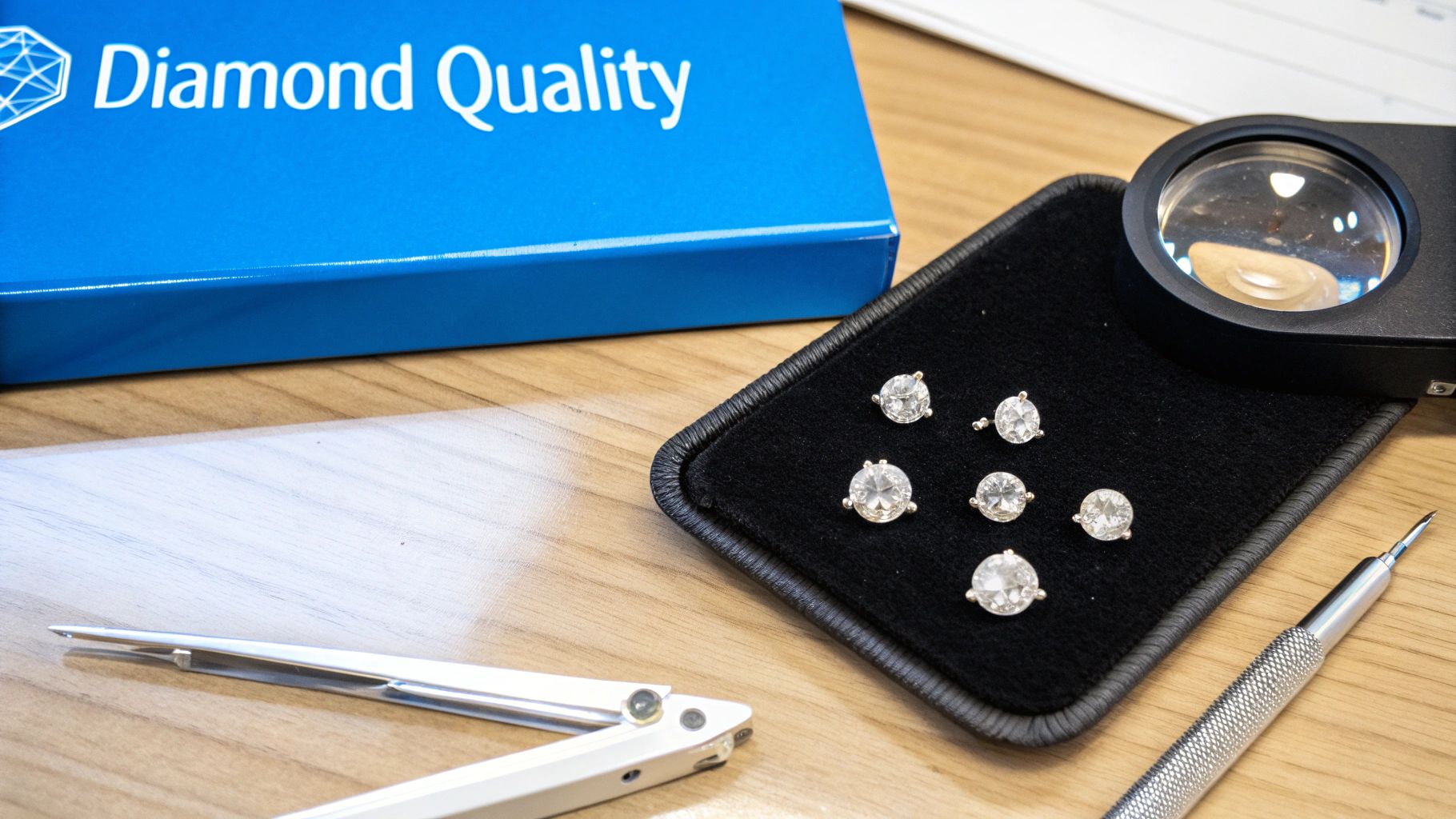
This knowledge is your best tool. It lets you look past the price tag and see the true craftsmanship and value of a timepiece. You'll learn to spot superior work, ask the right questions, and make sure the brilliant accessory you're investing in is up to snuff.
Why Cut Reigns Supreme
For any diamond bezel, Cut is king. It's not about the shape; it's about the precision of the facets that unlock a diamond's fire and brilliance. While carat weight gets all the attention, it’s the cut that makes a diamond come alive. A poorly cut stone, no matter how big or clean, will just look dull.
Think of each little diamond as a mirror. A masterfully cut stone has perfectly angled facets that grab light, bounce it around inside, and shoot it back out at your eye as a dazzling sparkle. In a bezel with dozens of stones side-by-side, this effect is magnified tenfold.
The goal of a master gem-setter is to create a seamless, uninterrupted circle of fire. This is only possible when every single diamond is cut with exceptional precision, ensuring they all reflect light in perfect harmony.
When you're looking at a bezel, check for a uniform, lively brilliance across the entire surface. If you see dark or flat spots, that’s a red flag. It’s often a sign of inconsistent cuts—a common shortcut in lower-end aftermarket work.
Color and Clarity Consistency
After cut, Color and Clarity are all about creating a clean, cohesive look. Diamond color is graded from D (totally colorless) to Z (light yellow). For a bezel to look truly high-end, all the stones must be perfectly matched within the near-colorless range, usually between D and G. Even a tiny mismatch can create a "patchy" look that screams low quality.
Clarity refers to the absence of internal flaws (inclusions). Top watchmakers like Rolex almost always use diamonds in the VS (Very Slightly Included) to VVS (Very Very Slightly Included) range. At this grade, any inclusions are microscopic and completely invisible without a loupe.
You don't need to overpay for Flawless (FL) or Internally Flawless (IF) diamonds on a bezel. The stones are too small to appreciate that level of perfection, making VS the sweet spot for exceptional quality without unnecessary cost. If you want to dive deeper, you can learn more in our diamond clarity and color guide.
Understanding Total Carat Weight
Finally, let's talk about Total Carat Weight (CTTW). This number is the combined weight of all the diamonds on the bezel, not the size of one stone. A 3-carat bezel might be made of 30 smaller diamonds or 15 larger ones.
While a higher CTTW usually means a bolder look, the quality of the individual stones is what really matters. A bezel with 2 carats of beautifully cut, perfectly matched VS diamonds will always outshine a 3-carat bezel with sloppy, inconsistent stones. When you're buying, always put the 4Cs ahead of sheer carat weight.
The Investment Value of Diamond Bezel Watches
When you start talking about luxury watches, the conversation almost always turns from telling time to long-term value. A diamond watch bezel is where the worlds of watchmaking and hard assets collide, and its effect on a watch's worth can be surprisingly complex.
The most important factor? Whether the diamonds were set at the factory or added later.
For serious collectors, there's no substitute for factory-set. When premier brands like Rolex, Audemars Piguet, or Patek Philippe release a diamond watch, it's not just an accessory—it's a meticulously engineered asset. Their own expert gemologists and master setters ensure every single stone meets rigid standards for cut, color, and clarity. The result is a flawless, cohesive work of art.
This obsession with perfection, paired with the brand's built-in prestige, creates the scarcity and desirability that can make these timepieces appreciate over time.
Navigating Market Dynamics
A factory-set diamond bezel's investment potential is locked into its originality. When a watch leaves the manufacturer with its original diamonds, it has a verifiable history that collectors and auction houses prize above all else. This is why these models often hold their value—or even increase it—faster than their plain-bezel counterparts.
The aftermarket world, however, tells a different story.
Adding a custom diamond bezel can definitely crank up a watch's visual "wow" factor, but its impact on investment value is a double-edged sword. Sure, a well-done "iced-out" customization might boost the immediate resale price for buyers who want that specific look.
A common mistake is thinking more diamonds always equals more money. For purist collectors, an aftermarket bezel—no matter how brilliant—is a fundamental alteration. It breaks the watch from its original state, which can seriously hurt its long-term collectible and investment value.
The Role of Scarcity and Brand Prestige
At the end of the day, the brand name is the most powerful engine driving value. Diamond watch bezels have become a hallmark of high-end watchmaking, turning timepieces into dazzling statements of style, especially in big markets like North America and Europe.
Just look at Rolex, the undisputed king. Their Lady-Datejust 36mm 'Diamond Jubilee' model is covered in a full-pavé bezel and dial with over 720 diamonds of G-color and VS clarity. This isn't just bling; it's a strategy. It helps drive the brand's projected $1.32 billion in revenue from diamond-encrusted watches by 2026.
This creates scarcity-driven demand. Authorized dealers report average waitlists of 14 months for these diamond-set Datejusts, which only fuels the hype and pushes prices higher.
This trend is often magnified by pop culture. If you're curious about how luxury watches gain value, checking out Celebrity Watch Collections shows which models are getting the most attention. Whether you're buying for yourself or as a strategic investment, understanding these dynamics is crucial.
You can learn more about whether diamond watches are a good investment in our detailed guide.
Proper Maintenance and Care for Your Diamond Bezel
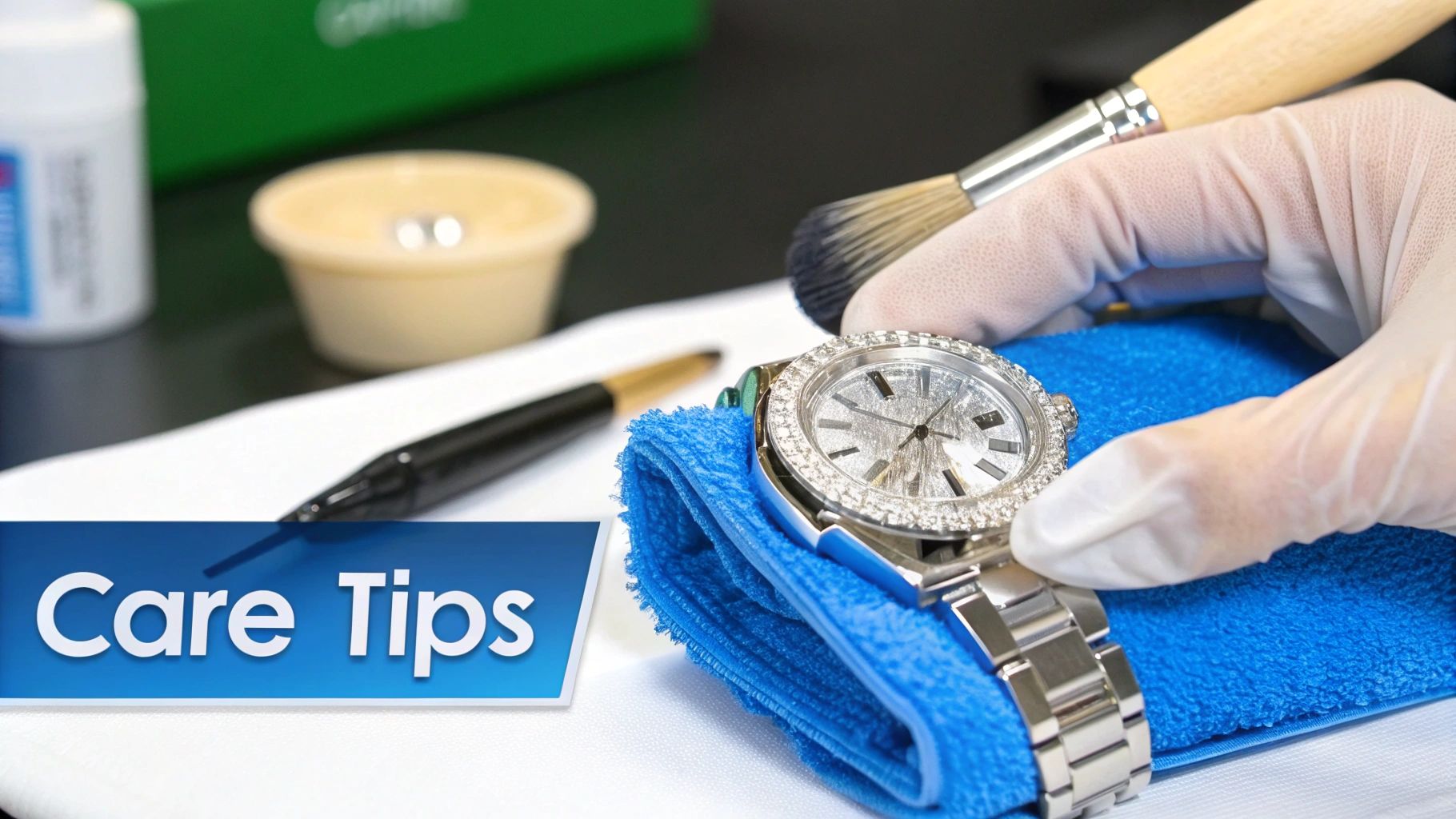
A stunning timepiece is an investment in both precision engineering and pure artistry. When that watch features a diamond bezel, it requires a little extra care to protect that investment and keep it looking its best. Daily life exposes your watch to a surprising amount of gunk—oils from your skin, lotions, and environmental dust—which can wedge itself between the diamonds and their settings, making them look dull and lifeless.
Proper maintenance is all about preserving that fire and brilliance.
Safe At-Home Cleaning Techniques
You can absolutely do some light cleaning at home to bring back your bezel's shine. The key here is to be gentle. You don't need harsh chemicals or abrasive tools, which can cause permanent damage to precious metals and even the diamonds themselves.
A simple mix of warm water and a few drops of mild, ammonia-free dish soap is all you need. This solution is surprisingly effective at cutting through everyday grime without being corrosive. Stay far away from bleach, chlorine, and acetone, as these can easily tarnish gold or platinum and may even weaken the settings over time.
For the best results, just follow these simple steps:
- Soak Briefly: Dip the watch head (and only the watch head—keep leather straps dry!) into the soapy water for a few minutes. This will start to loosen up any built-up dirt.
- Gently Brush: Grab an extra-soft toothbrush, like one made for babies, and carefully scrub the bezel. Get into all the little spaces around each diamond and its prongs or channel walls.
- Rinse Thoroughly: Run the watch head under a gentle stream of clean, lukewarm water. You want to make sure you get all the soap residue off, as it can leave a cloudy film.
- Dry Completely: Pat the watch dry with a soft, lint-free microfiber cloth. Paper towels are a no-go; they can leave behind tiny fibers and even scratch highly polished surfaces.
Knowing When to See a Professional
While a quick home clean is great for regular upkeep, it’s no replacement for a professional service. There are clear signs that your diamond bezel needs an expert’s touch, and ignoring them can lead to bigger problems. A professional jeweler has the right equipment and know-how to tackle issues home cleaning just can't fix.
One of the most critical parts of maintenance is simply checking that the diamond settings are secure. A single loose prong could mean losing a valuable stone—a far more expensive problem than a routine inspection.
Keep an eye out for these warning signs:
- A Loose or Rattling Stone: If you can hear or feel a diamond moving in its setting, stop wearing the watch immediately and bring it to us.
- Bent or Damaged Prongs: It’s easy to snag a prong on clothing without even realizing it. A quick visual check will tell you if any prongs look lifted, bent, or broken.
- Persistent Dullness: If your diamonds still look cloudy after a good cleaning, you likely have stubborn grime trapped underneath the stones that only an ultrasonic cleaner can safely remove.
We strongly recommend a professional inspection and deep cleaning at least once a year. An expert can verify the integrity of every single setting, make sure the bezel is securely attached to the case, and use a high-powered steam or ultrasonic cleaner to restore your watch's original, breathtaking sparkle. This proactive approach is the single best way to protect your beautiful timepiece for the long haul.
Your Top Questions About Diamond Watch Bezels, Answered
We’ve covered a lot of ground, from the art of diamond setting to the investment side of things. To wrap it all up, let's tackle the questions we hear most often from collectors and enthusiasts. Think of this as your quick-reference guide for making smart decisions.
Does adding an aftermarket diamond bezel void my warranty?
Yes, almost without exception. Slapping an aftermarket bezel on your watch is a surefire way to void the manufacturer's warranty.
Prestigious brands like Rolex and Audemars Piguet will refuse to service a watch that has been modified with non-original parts. It's a major trade-off you have to consider: is the custom look worth giving up factory support and potentially impacting the watch's long-term value?
How can I tell if a diamond bezel is factory original?
Spotting a true factory bezel is a job for a seasoned expert, as the tells can be microscopic. But there are a few key giveaways.
Factory work is all about absolute precision. Look for flawless uniformity in the diamond quality, cut, and color. The setting itself will be perfect, and the bezel will fit the case so seamlessly it looks like it grew there. It's a level of perfection that even the best custom jewelers struggle to replicate.
The real proof is in the paperwork. A watch’s original papers and specific reference number are the most definitive evidence of a factory-set bezel. These documents act like a birth certificate, officially linking the diamonds to the watch right from the source.
When you have the papers, there's simply no room for doubt.
Is it better to buy a watch with a factory bezel or add one later?
If you're thinking about investment value and guaranteed quality, the answer is clear: always go for the watch with its factory-original diamond bezel.
These pieces hold their value much better and are far more sought-after by serious collectors who value originality above all else. Adding a bezel later is a great option if your main goal is personalizing the look, but it's not the path to take if you want to preserve the watch's original state and maximize its investment potential.
What is the most popular watch for adding a diamond bezel?
For years, classic models like the Rolex Datejust and Day-Date were the go-to choices for both factory and custom diamond bezels. They are timeless canvases.
Lately, though, there's been a huge shift toward luxury sports models. High-quality custom work on a Rolex Daytona, GMT-Master II, or Audemars Piguet Royal Oak is incredibly popular. This trend reflects a move toward bolder, more expressive luxury watches that really make a statement.
Whether you need help authenticating a factory original, are dreaming up a custom project, or you're ready to buy or sell a fine timepiece, expert guidance is everything. At ECI Jewelers, our specialists offer transparent advice and a world-class selection of luxury watches. Explore our collection or schedule a consultation at https://www.ecijewelers.com to make your next move with total confidence.


