

When you're choosing a wedding band, it's easy to get lost in the details—the metal, the finish, the style. But the single most important decision, the one that sets the stage for everything else, is its width.
This simple measurement, in millimeters (mm), defines the ring's entire character. It dictates how it looks on your hand, how it feels day-to-day, and how it sits next to an engagement ring.
What Is Wedding Band Width and Why It Matters Most
Think of a band's width as the foundation of its design. A delicate 2mm band has a whisper-thin, classic feel, while a bold 8mm band makes a confident, modern statement. Getting the width right creates a sense of harmony that feels completely natural and personal.
While there are no hard rules, most people find their sweet spot within a well-established range. Typically, women’s bands fall between 2mm and 4mm, and men's bands are most popular in the 5mm to 8mm range. These numbers aren't just arbitrary—they're the result of decades of design refinement balancing style, comfort, and durability.
Finding Your Starting Point
To make sense of these numbers, it helps to see how they translate into distinct visual styles. As you weigh your options, using a wedding planning timeline template can keep everything organized, ensuring your ring selection lines up perfectly with the rest of your preparations.
Here’s a quick breakdown of the most common widths and what they're known for:
- 2mm - 3mm: Slender, timeless, and elegant. This is a go-to for women's bands because it pairs beautifully with almost any engagement ring without stealing the show. It's also perfect for stacking.
- 4mm - 5mm: The versatile, gender-neutral sweet spot. It offers a more substantial presence than a slim band but remains comfortable enough for constant wear, making it a fantastic all-rounder.
- 6mm - 8mm: A classic choice for men's wedding bands. A 6mm ring is a traditional standard, while an 8mm band delivers a bolder, more contemporary look that works especially well on larger hands.
A wedding band's width is like the frame around a piece of art. It has to complement the masterpiece—your hand and engagement ring—not overpower it. The goal is balance.
Here is a quick reference table to help you visualize these common styles.
Quick Guide to Common Wedding Band Widths
| Width (mm) | Visual Style | Best Suited For |
|---|---|---|
| 2mm - 3mm | Delicate & Classic | Stacking, pairing with engagement rings, slender fingers. |
| 4mm - 5mm | Versatile & Balanced | A universal fit, comfortable daily wear, gender-neutral. |
| 6mm - 8mm | Substantial & Modern | Making a statement, larger hands, a standalone band. |
Ultimately, that number in millimeters is more than just a measurement. It's the core of your ring's personality. By understanding what these widths look and feel like in the real world, you can confidently choose a band that feels like it was made just for you.
Finding The Right Width For Your Hand and Finger Shape
Choosing a wedding band is about much more than just picking a metal you like. The width of the band is a crucial detail that determines how the ring looks and feels on your hand. It’s all about proportion—finding a width that complements your hand's unique shape, not overwhelms it.
Think of it like framing a picture. A massive, ornate frame would swallow a small, delicate photo. In the same way, a band that’s too wide can overpower a petite hand, while one that’s too thin can get lost on a larger one. The goal is to find that perfect balance.
Considering Hand Size and Finger Length
The first thing to look at is the overall size of your hands and the length of your fingers. Are your hands broad or slender? Are your fingers long and slim or on the shorter side? These features play a huge role in how a band’s width is perceived.
For larger hands or longer fingers, a wider band in the 6mm to 8mm range often looks best. It has enough presence to feel substantial and balanced. On the other hand, for smaller hands or shorter fingers, a slimmer band between 2mm and 4mm is usually a better fit. It can even create an illusion of length, making fingers appear more elegant and slender.
This simple guide can give you a solid starting point.
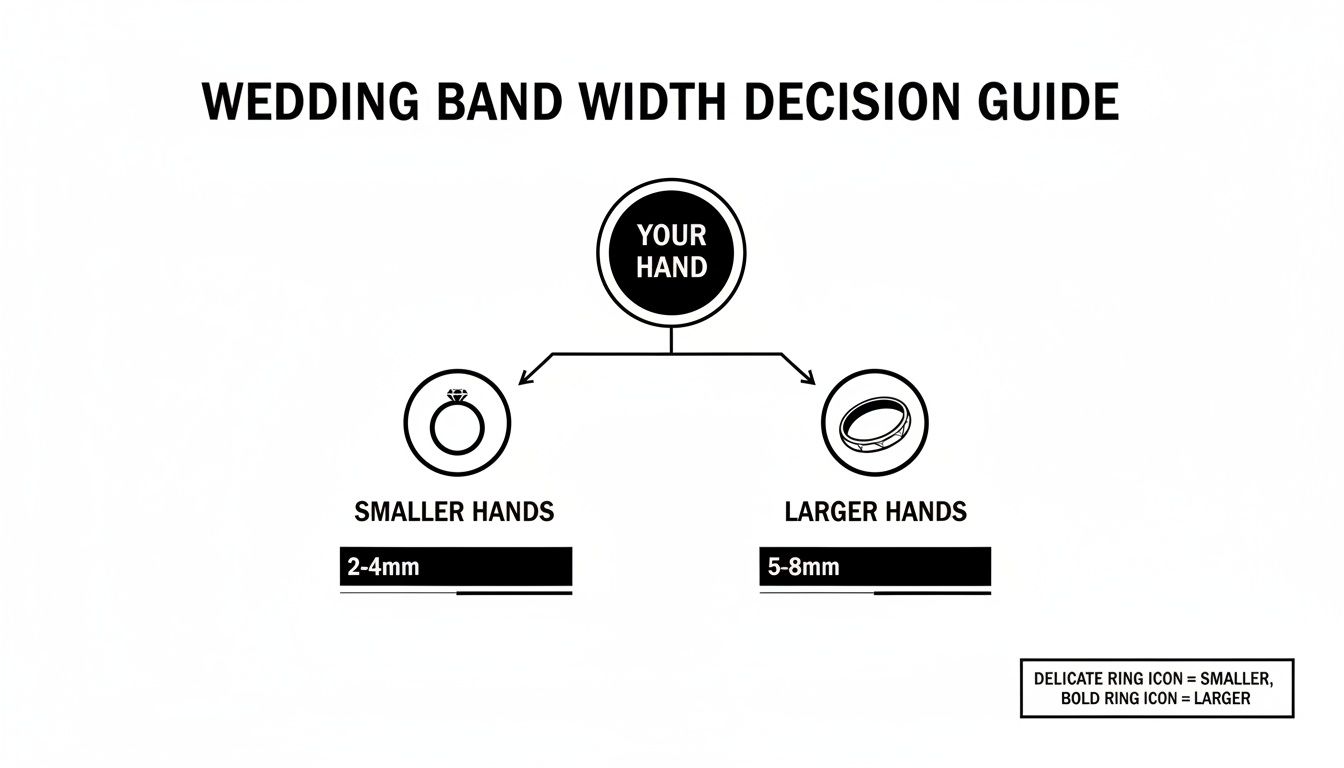
As the chart shows, sticking to the 2-4mm range for smaller hands or the 5-8mm range for larger hands is a tried-and-true way to get a look that just feels right.
Visualize The Final Look
Reading about millimeters is one thing, but seeing it on your own hand is another. A great trick is to cut small strips of paper to the exact widths you're considering—say, 3mm, 5mm, and 7mm. Place them on your finger one by one. This simple exercise gives you a real-world feel for how much real estate each width takes up and can save you from any surprises later.
As you consider your options, it’s interesting to see how much ring shopping has changed. E-commerce is now the fastest-growing channel for wedding rings, driven by younger couples who value convenience and selection. Online tools like virtual try-ons make it easier than ever to find the perfect band from anywhere. In fact, the wedding ring market is projected to hit a staggering $185.44 billion by 2034.
A wider ring covers more skin, which can make it feel tighter than a slimmer band of the exact same size. This is why many people need to go up a quarter or half size for bands over 6mm.
Comfort and Practicality
Looks aren’t everything—your ring needs to be comfortable for everyday wear. A wider band has more surface area touching your finger, which can feel different as your hands swell or shrink with temperature changes.
Here are a few practical points to keep in mind:
- Active Lifestyles: If you’re constantly working with your hands or have an active hobby, a narrower band is often more practical. It’s less likely to get in the way or feel bulky.
- Size Adjustments: Don't forget the sizing rule: wider bands usually need a slightly larger size. Make sure to get measured by a professional and let them know the width you plan on buying.
- Knuckle Size: If your knuckles are larger than the base of your finger, a wide band can be tough to get on and off. A slimmer profile or a comfort fit design can make all the difference here.
Finding the right width is a key part of the process. For a deeper dive into making the final choice, check out our complete guide on how to choose a wedding band. By balancing visual appeal with daily comfort, you’ll land on a ring that feels like it was made just for you.
How to Pair Your Wedding Band with an Engagement Ring
Creating a beautiful bridal set is an art, and the secret often comes down to getting the wedding band's width just right. It’s not simply about putting two rings on the same finger; it's about curating a look that feels intentional, balanced, and a true reflection of your personal style.
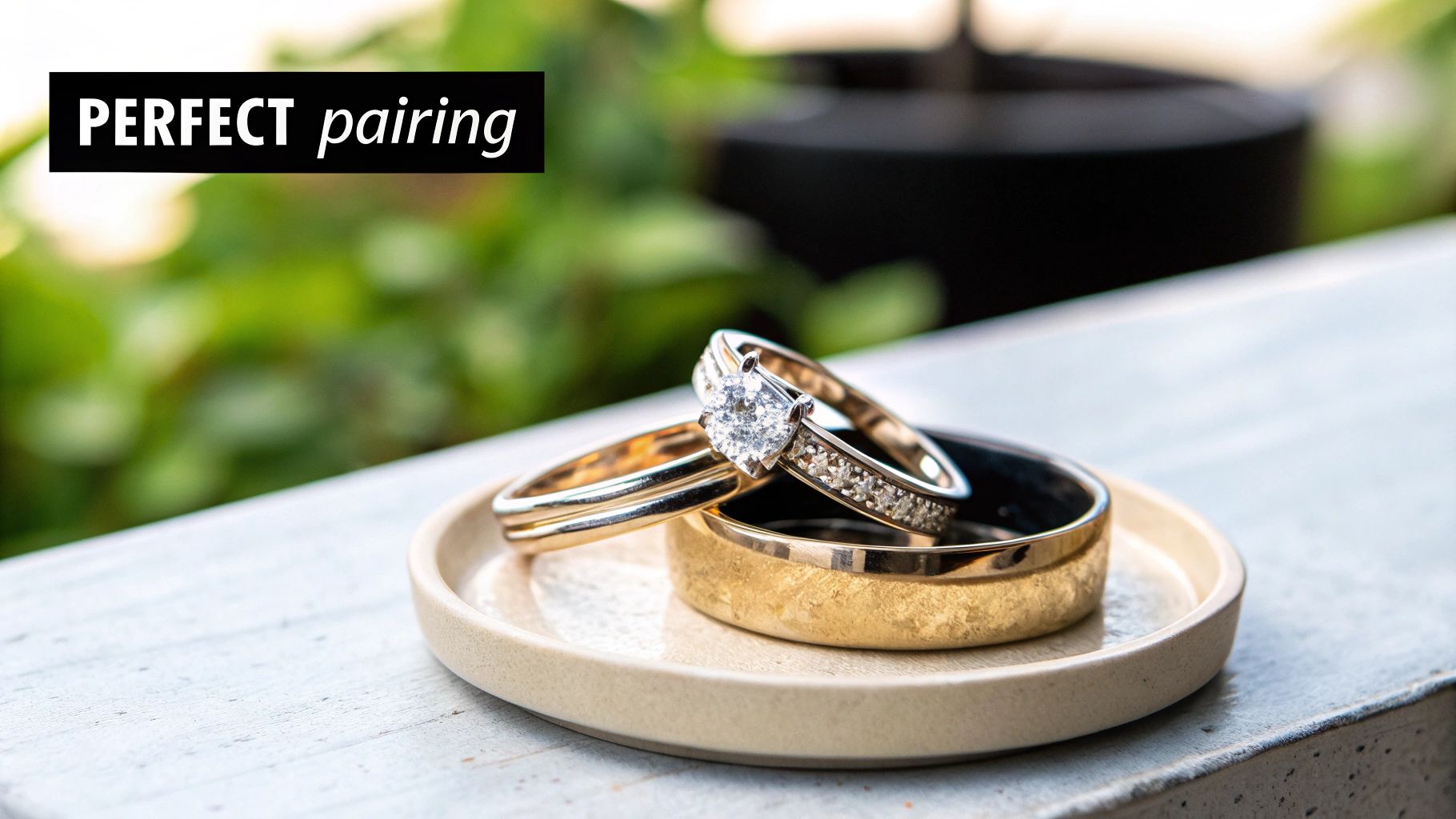
Think of your engagement ring as the main event and the wedding band as its perfect supporting act. A well-chosen band should elevate the star of the show, not compete with it. By paying attention to width, you ensure the two rings complement each other's proportions, creating a stunning union on your hand.
Achieving a Seamless Fit
For many, the first goal is finding a pair that looks like it was made together from the start. This usually means minimizing any gap between the two rings. Your wedding band's width is critical here, especially when you consider your engagement ring’s setting.
A great rule of thumb is to choose a wedding band that is either the same width as your engagement ring's band or just a touch narrower. For instance, if your engagement ring has a 2.5mm band, a 2mm or 2.5mm wedding band will likely create a beautifully balanced look. This approach lets the engagement ring shine as the focal point while the wedding band adds elegant support.
But the shape of your engagement ring's setting is just as important.
- For High-Profile Settings: Rings where the center stone sits high (like a classic Tiffany-style solitaire) can often sit flush with a straight wedding band of almost any width.
- For Low-Profile Settings: If your ring has a lower setting or an intricate basket, you may need a "contour" or "curved" wedding band. These are designed to hug the curves of your engagement ring, eliminating any awkward gaps.
When pairing rings, think about visual weight. A delicate pavé engagement band paired with a thick, heavy wedding band can feel disjointed. Aim for a partnership where both rings feel like they belong together.
Timeless Pairings and Modern Stacks
While a perfect match is a timeless choice, building a personalized stack is a fantastic way to express your style. This is where you can get creative, mixing widths and textures to create a look that is all your own. Understanding how different widths play together is the key to a great stack.
A good way to start is with thinner bands, usually in the 1.5mm to 2.5mm range. Using more delicate bands prevents the final stack from looking bulky or overwhelming your finger. You could mix a simple polished band with a textured one and a dainty pavé diamond band to create real depth and interest. For those just beginning their search, our comprehensive guide on how to choose the perfect engagement ring offers some great foundational advice.
Styling Examples for Popular Rings
To give you a clearer idea, here's how different width choices can complement some of the most popular engagement ring styles.
| Engagement Ring Style | Recommended Wedding Band Width | Why It Works |
|---|---|---|
| Classic Solitaire | 2mm - 2.5mm | A slightly narrower band makes the center stone pop without adding unnecessary bulk. |
| Halo Setting | 2mm or less | A slim, simple band keeps all eyes on the intricate halo and prevents the look from becoming too busy. |
| Three-Stone Ring | 2.5mm - 3mm | A slightly wider band helps balance the horizontal spread of the three stones, creating a cohesive design. |
At the end of the day, the best pairing is the one that feels right to you. Whether you love the classic elegance of a perfectly matched set or the creative freedom of a curated stack, paying close attention to width is the single most important step toward creating a bridal set you'll adore for a lifetime.
A Guide to Men's Wedding Band Widths
When it comes to choosing a man's wedding band, the decision centers on a blend of timeless style, everyday comfort, and a real sense of personal identity. While a woman's band is often designed to beautifully complement her engagement ring, a man's ring usually stands on its own, making its own statement.
The sweet spot for most men's rings lands somewhere between 5mm and 8mm. This range feels substantial enough to have presence but is still comfortable enough for daily wear, hitting that perfect balance between a visible symbol of commitment and something that won’t get in the way.
The Classic vs. Contemporary Spectrum
The specific width you land on can completely change the ring's personality. A 6mm band is the undisputed classic, the industry standard for generations. It’s a balanced, understated choice that feels significant without being flashy, working with any style from a business suit to weekend casual.
Move up to an 8mm band, and you're making a much bolder, more modern statement. This wider profile naturally draws the eye and looks especially good on men with larger hands or longer fingers, where it creates a powerful sense of proportion. Anything wider, say 10mm or more, is heading into true fashion-forward territory.
Your wedding band should feel like an extension of who you are. A guy who lives in classic, tailored suits might feel most comfortable with a 6mm band. Someone with a more contemporary edge to their wardrobe, on the other hand, will probably gravitate toward a confident 8mm width.
Matching Width to Your Lifestyle
Style is one thing, but practicality is everything. Your day-to-day life should be a huge factor in your decision. Simply put, a wider band has more surface area, which can sometimes feel restrictive or just get in the way if you work with your hands.
Think about how you spend your days:
- For the Office Professional: If your hands are mostly on a keyboard, a wider 7mm or 8mm band is a great choice—comfortable, stylish, and no-fuss.
- For the Hands-On Worker: If you're in construction, mechanics, or any physically demanding field, a narrower 5mm or 6mm band is far more practical. It's less likely to catch on machinery or feel bulky inside gloves.
- For the Active Individual: For guys who hit the gym or play sports regularly, a slimmer profile is again the smarter pick for both comfort and safety.
As you think about the perfect width, remember it's a key part of the groom's overall look. For more on crafting a sharp, cohesive style, check out the ideas in Distinctive Elegance: The Groom's Bespoke Look.
How Finishes Appear on Different Widths
The finish—whether it’s polished, matte, or hammered—looks different depending on the width of the ring. Think of a wider band as a larger canvas; it gives textured finishes more room to shine, making them more noticeable and impactful.
Here’s a quick rundown of how finishes play out across different widths.
| Finish Type | On a Narrower Band (5-6mm) | On a Wider Band (7-8mm) |
|---|---|---|
| Polished | A classic, reflective shine that adds timeless elegance. | Creates a bold, mirror-like surface that really stands out. |
| Matte/Brushed | Offers a subtle, modern, and understated texture. | Delivers a sophisticated, industrial look with a strong presence. |
| Hammered | Provides a unique, artisanal feel with subtle facets. | Showcases the detailed craftsmanship with a dramatic, textured effect. |
Ultimately, choosing the right width is a personal journey. By weighing your hand size, your personal style, and what you do every day, you’ll find a ring that doesn't just look great, but feels right—a comfortable and meaningful symbol for a lifetime.
How Metal and Profile Change a Ring's Feel and Appearance
It’s a common mistake to think that two wedding bands of the exact same width will look and feel identical. The truth is, the metal it’s crafted from and the shape of its interior can completely transform its presence, creating a totally different experience on your hand.
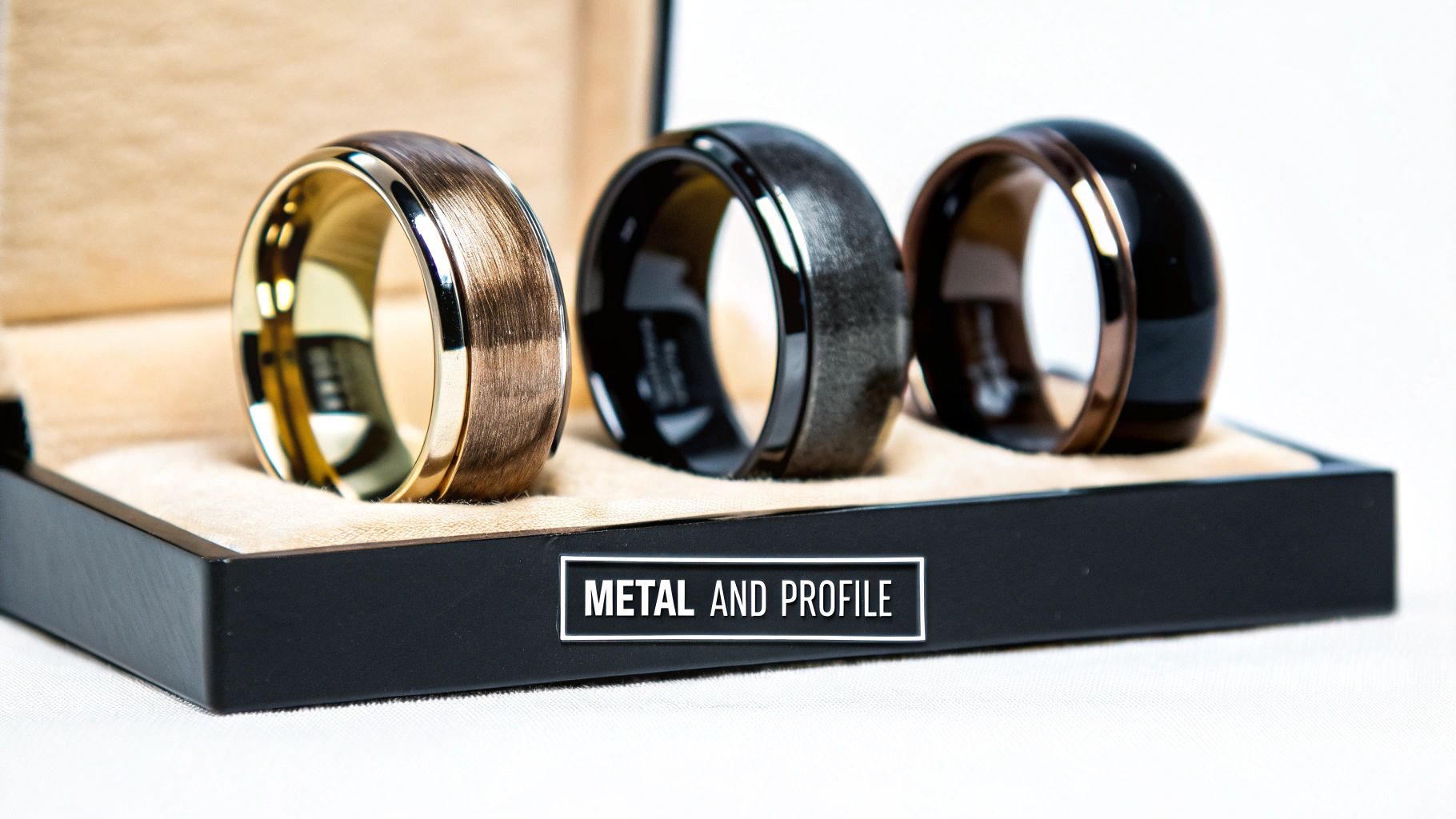
Here's a simple way to think about it: a 6mm band in bright, highly reflective platinum will catch more light and can appear slightly larger than a 6mm band in a dark, matte-finished metal like tantalum. The material and finish are crucial details because they directly influence how a ring is perceived on the finger.
How Metal Choice Affects Visual Width
The color and luster of your metal play a surprisingly big role in how wide your ring actually looks. It's an optical illusion, but a powerful one that can help you fine-tune the final appearance of your wedding band.
Here’s a quick breakdown of how this works:
- Bright & Reflective Metals: Materials like platinum and high-polish yellow or rose gold reflect a ton of light. This brightness creates a visual "halo" effect, making the band seem a little wider and more eye-catching than it is.
- Dark & Matte Metals: On the flip side, darker or non-reflective metals like tantalum, black zirconium, or brushed titanium tend to absorb light. This gives them a sleeker, more understated look, sometimes making them appear a touch narrower than their polished counterparts.
This subtle difference gives you more control. If you want a bold look without adding physical bulk, a polished, bright metal is an excellent choice. If you prefer something more low-key, a darker, matte-finished ring gets you there. We explore this in more detail in our guide to the best metals for wedding bands.
Comfort Fit vs. Standard Fit
Beyond looks, the interior profile of the band is the single most important factor for daily comfort—especially with wider rings. The two main options you'll run into are Standard Fit and Comfort Fit, and believe me, the difference is night and day.
A Standard Fit (or flat fit) ring has a completely flat interior surface. This means the entire inside of the band is in direct contact with your skin. While this can be fine for very narrow bands, it often feels restrictive and can trap moisture on wider profiles.
A Comfort Fit band, however, is cleverly designed with a slightly domed interior. This reduces the amount of metal touching your skin, allowing the ring to glide over your knuckle more easily and sit much more comfortably all day long.
Think of a Comfort Fit band like a perfectly tailored suit jacket versus one that’s too tight across the shoulders. The tailored fit allows for movement and breathability, making it far more wearable. The same principle applies to your ring.
Here’s a quick comparison to help you decide what’s right for you.
| Feature | Standard Fit | Comfort Fit |
|---|---|---|
| Interior Shape | Completely flat | Domed or rounded |
| Skin Contact | Maximum contact | Minimized contact |
| Best For | Narrow bands (4mm or less) | Wider bands (5mm and up) |
| Feel | Can feel tight, traps moisture | Glides on easily, more breathable |
For any band over 5mm, a Comfort Fit is almost always the way to go. It dramatically improves the wearing experience, turning a substantial ring into something you’ll barely notice is there. By considering both the metal and the profile, you can truly perfect the look and feel of your ring.
Tips for Measuring Your Ring Size Accurately
Getting the width right is half the battle, but nailing the fit is the final, crucial step. An accurate ring size transforms a beautiful band into a comfortable, secure symbol you’ll never want to take off. This process is a bit more nuanced than just wrapping a string around your finger, especially when different band widths come into play.
Believe it or not, your finger size isn’t static—it changes throughout the day. Things like temperature, humidity, and even what you ate for lunch can cause your fingers to swell or shrink slightly. For the most reliable reading, it’s always best to measure your finger at the end of the day when it’s likely at its largest and at room temperature.
Why Width Changes Everything
One of the most important but often overlooked rules is that wider bands fit tighter. A wide ring, which is typically anything 6mm or more, covers more surface area on your finger and displaces more skin. Think of it like the difference between a thin belt and a thick weightlifting belt—the wider one feels much more restrictive.
Because of this, we almost always recommend sizing up by a quarter or even a half size for wider bands. A professional jeweler can help you dial in the precise adjustment needed for your chosen width and finger shape.
This small adjustment makes a world of difference in daily comfort, preventing that too-snug feeling during warm weather or after a workout.
Sizing for the Future: Engraving and Resizing
Your wedding band is a lifetime commitment, and its width directly impacts your options for future modifications like personalization and resizing.
- Engraving: Wider bands offer a beautiful canvas for detailed personalization. A band that's 4mm or wider provides plenty of space for names, dates, or a meaningful quote, making it a wonderful way to add that personal touch.
- Resizing: Very narrow bands (under 2mm) can be tricky to resize without compromising their structural integrity. On the flip side, extremely wide bands with intricate patterns or continuous diamond settings can also present resizing challenges. A mid-range width usually offers the most flexibility down the road.
Understanding these constraints ahead of time ensures the band you choose can evolve with you over the years. This long-term perspective is vital, especially as the global wedding ring market continues to grow, with valuations reaching approximately USD 97.3 billion. While the affordable mid-range segment currently holds the largest market share, the luxury sector is expanding rapidly as more couples invest in high-quality, lasting pieces. You can discover more insights about this growing market and its trends.
Ultimately, accurate measurement is the key to a lifetime of comfort and enjoyment. By considering the time of day, accounting for the band's width, and thinking about future adjustments, you can confidently select a size that feels like it was custom-made just for you.
Your Top Wedding Band Width Questions, Answered
Even after narrowing down your options, a few last questions always seem to pop up. Think of this as your final check-in, where we tackle the most common queries we hear from clients to make sure you feel completely confident in your choice.
What Is the Most Popular Wedding Band Width for Women?
While taste is always personal, the undeniable sweet spot for women's wedding bands falls between 2mm and 4mm. This range is versatile enough to complement nearly any engagement ring style.
A 2.5mm or 3mm band usually strikes the perfect balance—it has enough presence to be noticed on its own but is sleek enough to let your engagement ring remain the star. On the other hand, a delicate 2mm band is perfect for minimalist stacks, while a 4mm band makes a bolder statement and looks fantastic worn solo.
Should a Wedding Band Be Wider or Thinner Than an Engagement Ring?
There's no hard-and-fast rule here, but a timeless guideline is to choose a wedding band that’s either the same width as your engagement ring or just a little bit narrower. This creates a beautifully balanced, classic look that keeps the focus squarely on your engagement ring.
That said, modern styling loves to break the rules. Pairing a wider, more substantial wedding band with a delicate engagement ring can create a powerful, contemporary look that feels totally unique. It all comes down to the visual story you want to tell.
Can a Very Wide Wedding Band Be Comfortable?
Absolutely. A wide band (6mm or more) can be incredibly comfortable for everyday wear, but only if you get two things right: the profile and the size. For any wide ring, a "Comfort Fit" profile isn't just a suggestion—it's essential.
The domed interior of a comfort fit means less metal is in constant contact with your skin. This simple design feature allows the ring to slide over your knuckle more easily and prevents that restrictive, trapped feeling.
It's crucial to be sized by a professional specifically for a wide comfort-fit band. You’ll almost certainly need to go up a quarter or even a half size to accommodate the extra surface area for a perfect all-day fit.
How Do I Choose a Width for a Stack of Rings?
Building a stunning ring stack is an art of layering, and the secret is to start with thinner bands. Bands in the 1.5mm to 2.5mm range are your best friends here. They allow you to mix and match multiple rings without the stack becoming bulky or overwhelming your finger.
You can create amazing depth and personality by playing with different textures, metals, and even slightly varied widths within that slimmer range. A great way to start is by choosing your main wedding band first, then adding anniversary or spacer bands over the years to celebrate new milestones.
At ECI Jewelers, our experts are ready to help you navigate these final details with personalized advice. Explore our curated collection of fine wedding bands and find the perfect piece to symbolize your commitment by visiting ecijewelers.com.


