

You're comparing two watches that both claim to be 40 mm, yet one sits neatly on the wrist while the other overhangs the edges and catches on a shirt cuff. That difference comes from more than case diameter. This guide shows how to measure watch case size at home by checking diameter, lug-to-lug, thickness, and the usable flat surface of your wrist, so you can choose a watch with confidence.
Why Watch Case Size Is More Than Diameter
A case listed as 40 mm can wear compact or oversized. The difference often comes from lug length, case shape, and thickness rather than the dial's apparent width. Diameter remains the industry's standard size description, measured across the case from flank to flank while excluding the crown. Industry sizing guidance gives lug-to-lug greater weight for fit because it captures the watch's full vertical footprint.
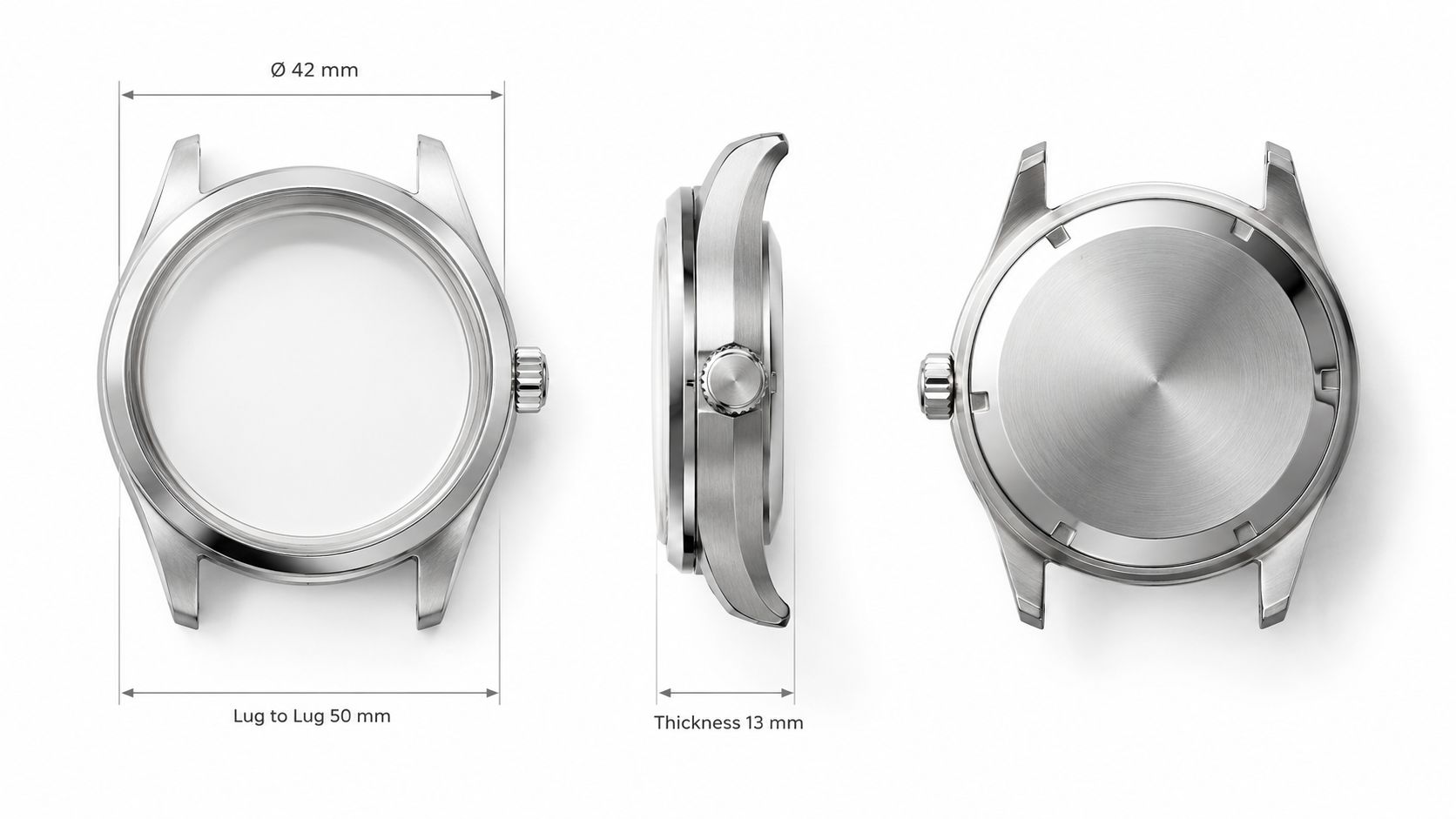
Short, downward-curving lugs can make a broad case feel contained. Long, straight lugs can project past the wrist even when the dial looks restrained. Lug-to-lug measures the top-to-bottom span, while thickness controls how high the case sits and whether it clears a shirt cuff.
Flat-top wrist width provides the missing reference. A watch can have an acceptable diameter yet overhang because its maximum lug-to-lug exceeds the wrist's usable flat surface. Measure that surface directly instead of relying on circumference alone.
The third specification is strap or bracelet lug width. Common widths include 18 mm, 20 mm, 22 mm, and 24 mm, and an accurate reading prevents problems when replacing a bracelet or selecting a leather, rubber, or fabric strap.
Practical rule: Diameter describes visual presence. Lug-to-lug, thickness, and wrist width determine how the case actually sits.
This matters across modern sports watches, vintage dress watches, and bespoke watchmaking for VIPs, where proportion affects both comfort and appearance. Judge the case using all three dimensions, then compare them with the flat portion of your wrist.
Understanding Diameter, Lug-to-Lug, and Thickness
A watch listed as 40 mm can still wear too large if its lugs stretch beyond the wrist. Case size depends on three separate measurements, and each answers a different fit question.
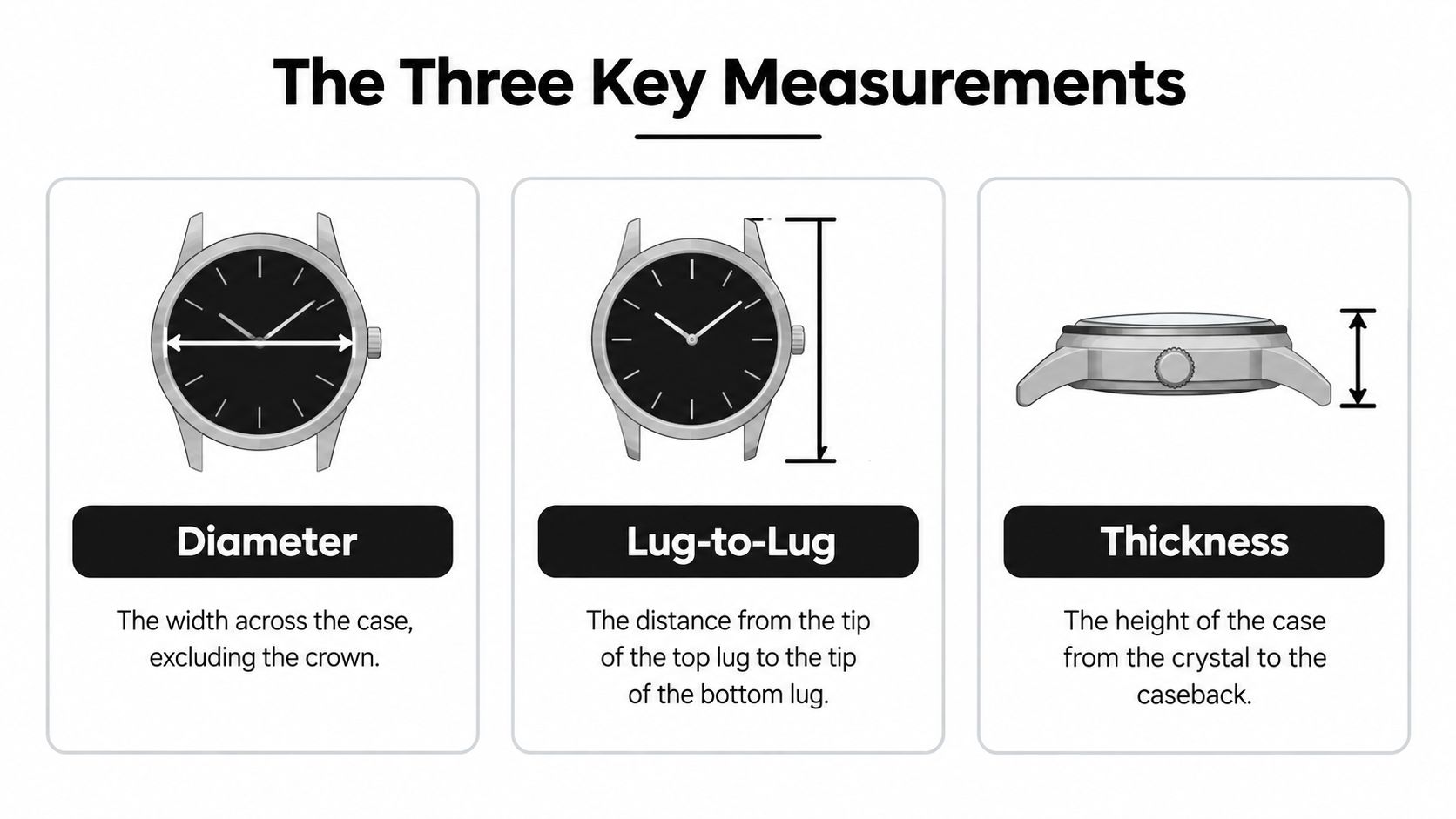
Diameter defines width
Diameter is the straight-line width across the widest part of the case, excluding the crown. On a round watch, measure across the center line when the crown does not interfere. A 2-to-8 o'clock axis can give a cleaner reading when the crown projects from the case.
Do not automatically count a bezel overhang. Specifications generally refer to case width, not the bezel extending beyond it. For rounded cases, find the widest equivalent span. Square and cushion cases require more care, since their corners may overstate the practical width. A Rolex watch size guide offers a useful comparison point when reviewing how manufacturers present case dimensions.
Lug-to-lug describes the footprint
Lug-to-lug is the straight-line distance from the outer tip of the upper lug to the outer tip of the lower lug. Measure from tip to tip, rather than following the case curve. This dimension has the strongest effect on whether the watch stays within the wrist's usable flat surface or extends past it.
A compact dial with long, straight lugs can overhang. A larger-looking dial with short, downward-curving lugs may sit neatly within the wrist. Compare lug-to-lug with the flat-top width of the wrist, not circumference alone.
Thickness controls height
Thickness runs from the caseback to the crystal. It determines how high the watch sits, how easily it passes under a cuff, and how top-heavy it may feel during wear. A narrow but tall case can feel more substantial than a wider, flatter one.
Lug width is a separate specification. Measure the internal gap between the lugs where the strap or bracelet fits. Common widths include 18 mm, 20 mm, 22 mm, and 24 mm. The correct measurement prevents an ill-fitting replacement strap or bracelet. A modern sizing guide shows how case proportions and strap widths are considered together.
Practical rule: Diameter describes visual presence. Lug-to-lug, thickness, and wrist width determine how the case sits.
Judge all three case dimensions against the wrist's flat usable surface before treating diameter as a fit decision.
How to Measure Accurately With Calipers and a Ruler
A case can measure correctly on paper and still wear poorly if the measurement is taken from the wrong points. At home, use a digital caliper for repeatable readings, then confirm lug-to-lug with a rigid ruler. Light, controlled contact matters more than force.
Setting up the watch
Remove the watch from your wrist and place it crystal-up on a clean, flat surface. Open the bracelet or strap fully if it prevents the case from sitting level. Remove it only if you are comfortable doing so. Keep the crown away from the caliper jaws whenever possible.
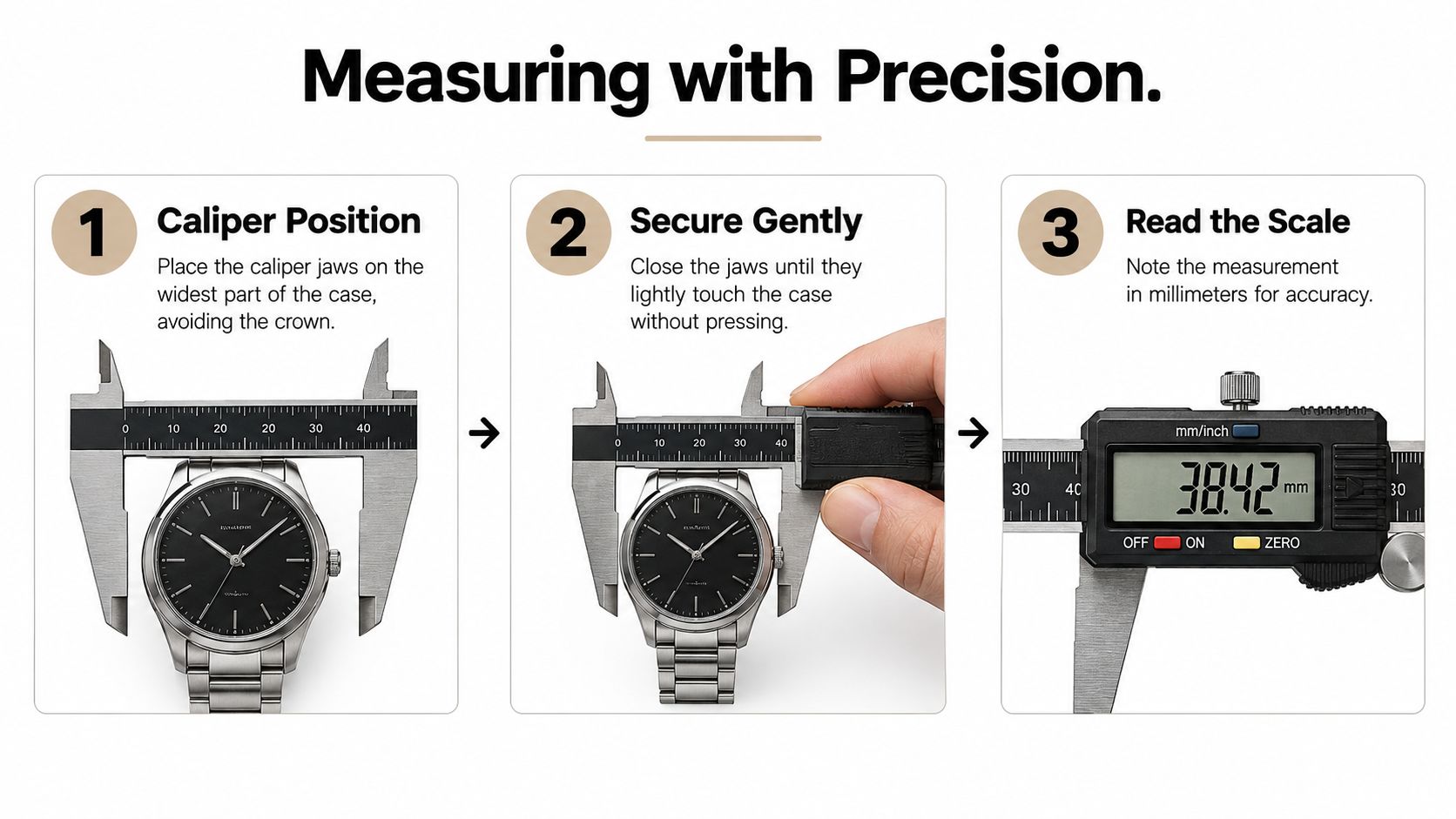
For diameter, open the external jaws wider than the case and bring them inward until they touch the widest points on the left and right sides. Do not clamp the case. Light contact avoids false readings and protects polished surfaces from marks.
Align the jaws across the case's true width. A 3-to-9 o'clock line suits many single-crown watches, while a 2-to-8 o'clock axis can avoid including the crown. For rounded cases, measure on the diagonal at the widest point. Take the reading across the case itself, not across the crown, guards, or protruding pushers.
Reading lug-to-lug and thickness
For lug-to-lug, lay a rigid ruler alongside the watch and identify the outer tip of each lug. Measure the straight distance between those tips. Keep the ruler straight rather than bending it around the case or following the lugs' curve. This reading represents the watch's footprint across the wrist.
Measure thickness with the caliper's depth blade or a ruler held beside the case. Read from the lowest point of the caseback to the highest point of the crystal. Include a raised crystal because it contributes to the watch's actual height and affects how it sits under a cuff.
Record diameter, lug-to-lug, and thickness in millimeters, then repeat each reading. If the tool gives slightly different results, record the nearest half millimeter instead of claiming false precision. A jeweler's bench can resolve construction details that a household ruler cannot. Robosize AI measurement can provide a digital reference when physical measuring is inconvenient.
Watch the technique in motion before trying it yourself:
Bracelet adjustment is separate from case measurement. If the case fits but the bracelet needs resizing, follow this watch bracelet sizing guide.
Translating Measurements Into Perfect Fit on Your Wrist
A 40 mm watch can wear compact or oversized. The deciding factors are the usable flat-top width of the wrist, lug-to-lug span, and case thickness. Measure the relatively flat area across the top of the wrist, then compare it with the watch's straight lug-to-lug measurement. Lugs that stay within that surface usually sit securely. Lugs that extend past it can make the watch look too large, even when the diameter seems conservative.
A practical fit chart relates flat-top widths of about 41 mm, 46 mm, 51 mm, 56 mm, and 61 mm to maximum lug-to-lug spans of approximately 44 mm, 48 mm, 52 mm, 56 mm, and 60 mm. The pattern explains why diameter alone can mislead. A lug-to-lug fit guide provides comparable published guidance.
Wrist Size to Watch Proportion Guide
| Wrist Circumference | Recommended Case Diameter | Maximum Lug-to-Lug | Fit Note |
|---|---|---|---|
| 16 to 18 cm | 38 to 41 mm | Up to 48 mm | Confirm flat-top width and lug shape before buying |
| 6.5 inches | 38 to 40 mm | About 47 mm | Lug-to-lug is the key threshold |
| 7 inches | 39 to 42 mm | About 49 to 50 mm | A broad wrist may still have limited usable flat surface |
| 17.1 to 19 cm | 42 to 44 mm | About 49 to 52 mm | Diameter is only a starting point |
| Above 19 cm | 44 to 46 mm or larger | About 52 to 56 mm | Check balance and strap proportion |
These thresholds are sizing heuristics, not guarantees. Guidance commonly places about 47 mm lug-to-lug on a 6.5-inch wrist and about 49 to 50 mm on a 7-inch wrist. The same reference stresses that long lugs or aggressive case geometry can make a watch wear larger than its diameter suggests. Check the actual watch rather than relying on the dial-side measurement alone.
Thickness supplies the final comfort check. A case under about 12 mm thick is more likely to slide beneath a shirt cuff, although a curved case can wear lower than its raw measurement suggests. Caseback shape and crystal height also affect how far the watch rises from the wrist.
Strap width changes visual balance. A 20 mm strap gives a different proportion from a 22 mm strap, even when the case diameter is similar. If the case fits but the bracelet needs adjustment, use ECI Jewelers' bracelet size guide.
Common Mistakes to Avoid When Measuring at Home
A measurement can be wrong even with a good tool. The usual problem is measuring the wrong surfaces, especially when the crown, case curve, or lug shape enters the reading. Keep the watch stable and identify the exact endpoints before recording each dimension.
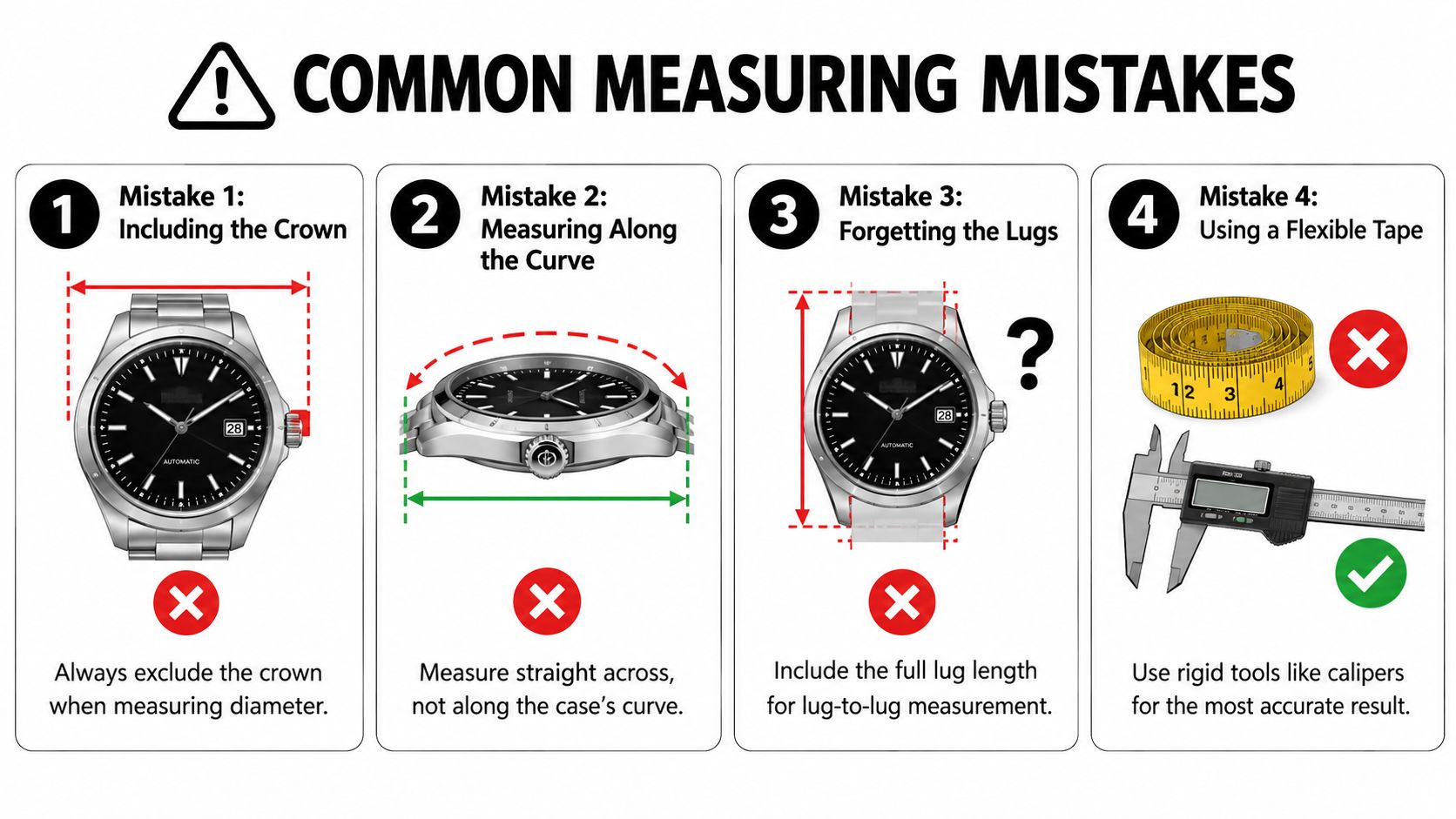
The four errors that distort fit
- Including the crown. Crown and crown guards make a watch seem wider than its case. Measure across the case flanks, excluding the crown. Case-width guidance defines diameter as the widest case span without the crown.
- Measuring along the curve. A flexible tool follows the surface and gives a curved length instead of a usable straight-line measurement. Lug-to-lug must run directly from the outer tip of the top lug to the outer tip of the bottom lug.
- Forgetting the lugs. A 40 mm case with long lugs can wear larger than its diameter suggests. Measure the complete lug span, including both tips, before judging whether the watch will overhang your wrist's flat surface.
- Using a flexible tape. Tape bends around curves and introduces uncertainty. Use calipers for diameter and thickness, then a rigid ruler for lug-to-lug. With household tools, repeat each reading and compare it with the manufacturer's dimensions.
Case shape needs a separate check. Rounded cases may be widest on a diagonal, while square and cushion cases should be assessed across their narrowest equivalent span. Record the flat-top wrist width as well, because diameter alone cannot show whether the case and lugs will sit beyond the usable surface.
Strap proportions can change the result visually. The guide to different watch straps helps compare how lug width and strap construction affect the final appearance. A correct measurement still needs a practical fit check.
Finding Your Ideal Size and Buying With Confidence
Accurate sizing protects comfort, but it also protects the quality of a buying decision. Record diameter, lug-to-lug, thickness, lug width, and your wrist's flat-top width before comparing references. Modern sizing guidance has moved beyond diameter-only descriptions because those three case dimensions reveal how a watch sits, clears clothing, and balances with its strap.
Use the numbers to narrow the field, then inspect the watch itself. A daily wearer may need modest thickness and short lugs, while a collector may accept a more prominent case for a particular design or movement. The 36 mm, 39 mm, and 41 mm watch case size guide is useful when comparing adjacent proportions rather than chasing a single universally correct size.
Unusual materials make measurement even more important. A distinctive meteorite watch with leather strap may attract attention for its dial, but its case height, lug span, and strap width still determine whether it works on your wrist. For a pre-owned purchase, ECI Jewelers offers specialist inspection, an authenticity guarantee, market-based valuations, and concierge support online and in its Diamond District showroom.
ECI Jewelers can help verify case dimensions, inspect authenticated luxury watches, and compare references for the wrist fit you want. Visit ECI Jewelers to review available Rolex, Audemars Piguet, Patek Philippe, and other luxury models, then request guidance before you buy, sell, or trade.


