


At its core, the choice between Omega and TAG Heuer boils down to brand identity and technical ambition. Omega stands as a pillar of accessible high horology, celebrated for its in-house Master Chronometer movements and a legacy written in the stars. TAG Heuer, on the other hand, is the quintessential entry point into Swiss luxury, carving out its niche with bold, motorsport-inspired designs and a more approachable price point.
A High-Level Comparison of Omega and TAG Heuer
Picking between Omega and TAG Heuer is a classic crossroads for anyone entering the world of Swiss watches. Both are giants with incredible histories, but they speak to very different people. Getting a feel for their core identities is the first step to figuring out which one belongs on your wrist.
Think of Omega as operating in a higher weight class, often going toe-to-toe with Rolex. The brand is revered for genuine watchmaking breakthroughs, like the Co-Axial escapement and its ultra-tough, anti-magnetic Master Chronometer certification. This technical muscle, combined with its fame as the official timekeeper of the Olympics and the first watch on the moon, cements its status as a true investment-grade timepiece.
TAG Heuer lives and breathes on the racetrack. Its DNA is intertwined with the world of motorsports, giving its watches an avant-garde and often aggressive design language. While it has developed fantastic in-house movements like the Calibre Heuer 02, the brand also wisely uses reliable third-party movements. This strategy keeps their watches more accessible, making TAG Heuer a perfect choice for someone who wants the thrill of a Swiss chronograph with a dynamic, modern edge.
To put it all in perspective, here’s a quick rundown of how the two brands stack up.
Quick Comparison Omega Vs TAG Heuer
| Attribute | Omega | TAG Heuer |
|---|---|---|
| Market Position | Upper-tier luxury, competing with Rolex | Entry-to-mid-tier luxury |
| Typical Price (New) | $5,000 - $12,000+ | $2,000 - $7,000 |
| Movement Focus | In-house, METAS-certified Master Chronometers | Mix of in-house (Heuer 02) and third-party |
| Core Identity | Precision, exploration, and horological heritage | Motorsport, avant-garde design, and racing legacy |
| Famous Associations | James Bond, NASA (Moonwatch), Olympic Games | Formula 1, Steve McQueen, Porsche |
| Resale Value | Generally strong, especially for iconic models | Moderate, with more initial depreciation |
| Best For | Collectors prioritizing technical innovation and value | Enthusiasts seeking sporty design and brand heritage |
This table gives you the 30,000-foot view, but the real story is in the details. Each brand’s philosophy shines through in its most famous watches, its approach to engineering, and the type of person who chooses to wear them. Now, let’s dive deeper.
Comparing Brand Heritage From The Moon To The Racetrack
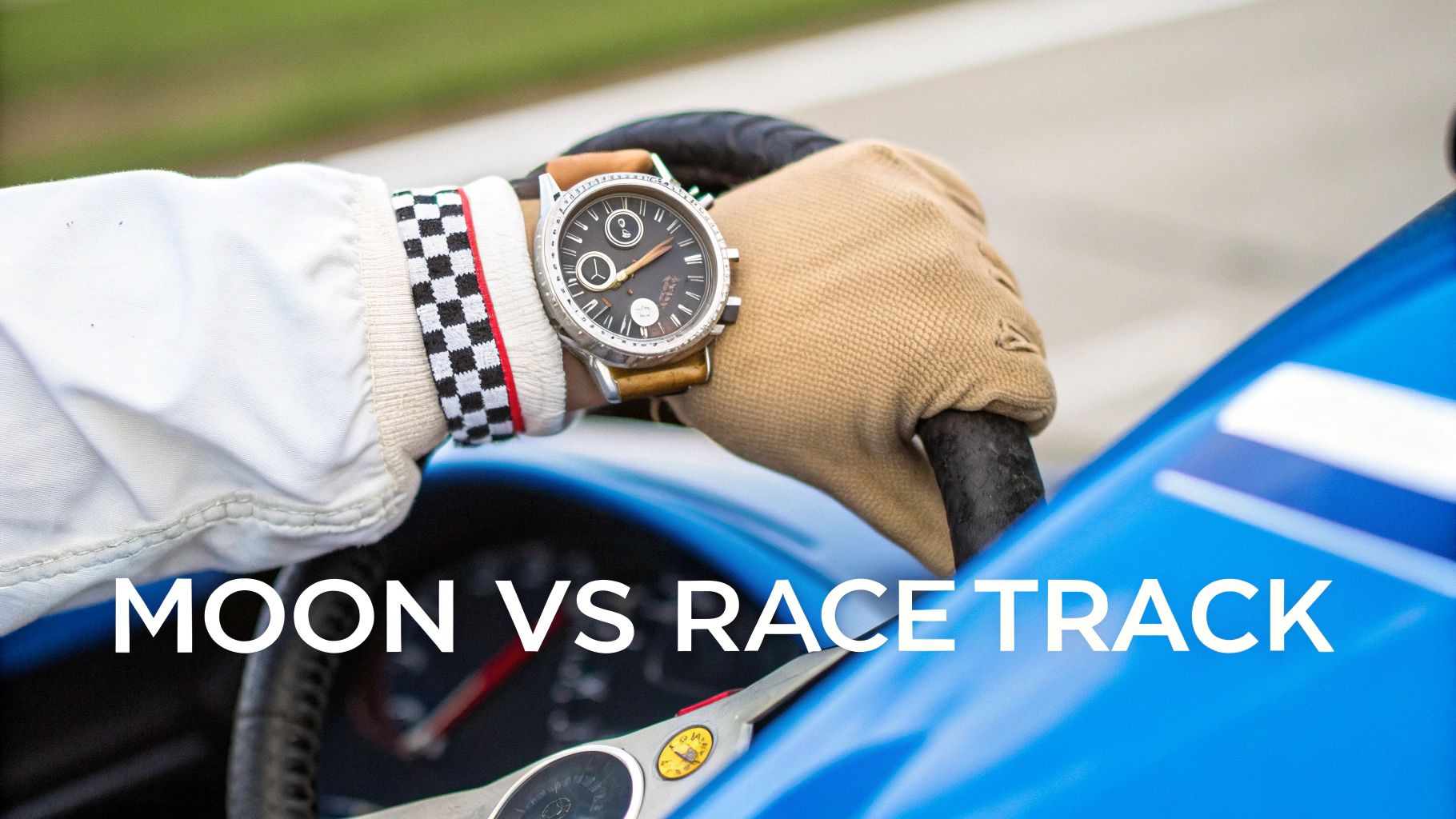
To really get to the heart of the Omega vs. TAG Heuer debate, you have to look back at where they came from. Their origins are completely different, and those founding stories are woven directly into the watches they make today. These aren't just brands; they're living records of human achievement—one tied to cosmic exploration, the other to the roar of the racetrack.
Omega, founded way back in 1848, built its entire identity on uncompromising precision. This obsession with accuracy led them to become the official timekeeper for the Olympic Games, a role they've held for nearly a century. But their defining moment, the one that truly cemented their legacy, came in 1969 when the Omega Speedmaster was chosen by NASA and became the first watch worn on the Moon.
That single event speaks volumes about Omega's reputation for insane reliability under the most extreme conditions imaginable. It's a heritage of quiet, technical mastery you can feel in the solid build of a Seamaster or the timeless function of the "Moonwatch."
TAG Heuer’s Legacy Forged In Motorsport
On the flip side, TAG Heuer’s story, which kicked off in 1860, is inseparable from the high-octane world of motorsports. While Omega was aiming for the stars, Heuer was timing laps at Le Mans. Their chronographs weren't just fancy accessories; they were essential tools for racing legends, built to capture fractions of a second with perfect clarity.
This connection to racing isn't just marketing fluff—it's the core of the brand's engineering philosophy. TAG Heuer's innovations, like the oscillating pinion, were born from the demanding needs of drivers, creating a legacy of bold, sporty, and avant-garde design.
This is exactly why models like the Carrera and Monaco feel so energetic and purposeful. They were designed for legibility and toughness at incredible speeds. To really appreciate TAG Heuer's deep roots in racing, it's worth exploring the fascinating history of Formula 1, which shaped so much of the brand's DNA.
How Heritage Shapes The Modern Watch
This split in their histories directly impacts the watches you see in the display case today.
- Omega’s Identity: The brand feels classic, almost academic, in its approach. The designs often lean traditional, celebrating a legacy of exploration and certified accuracy. It's a story of reliability, historical significance, and pure horology.
- TAG Heuer’s Identity: This brand is all about competition and a bit of swagger. Its designs are often bolder, more angular, and unapologetically sporty, channeling the adrenaline of the track. It’s a narrative about pushing limits and iconic style, famously worn by Steve McQueen.
Ultimately, choosing between them means choosing between two powerful stories. Are you drawn to the methodical precision of an astronaut's tool or the split-second timing of a race car driver's chronograph? Your answer points you straight to the right watch.
Analyzing In-House Vs. Third-Party Movements
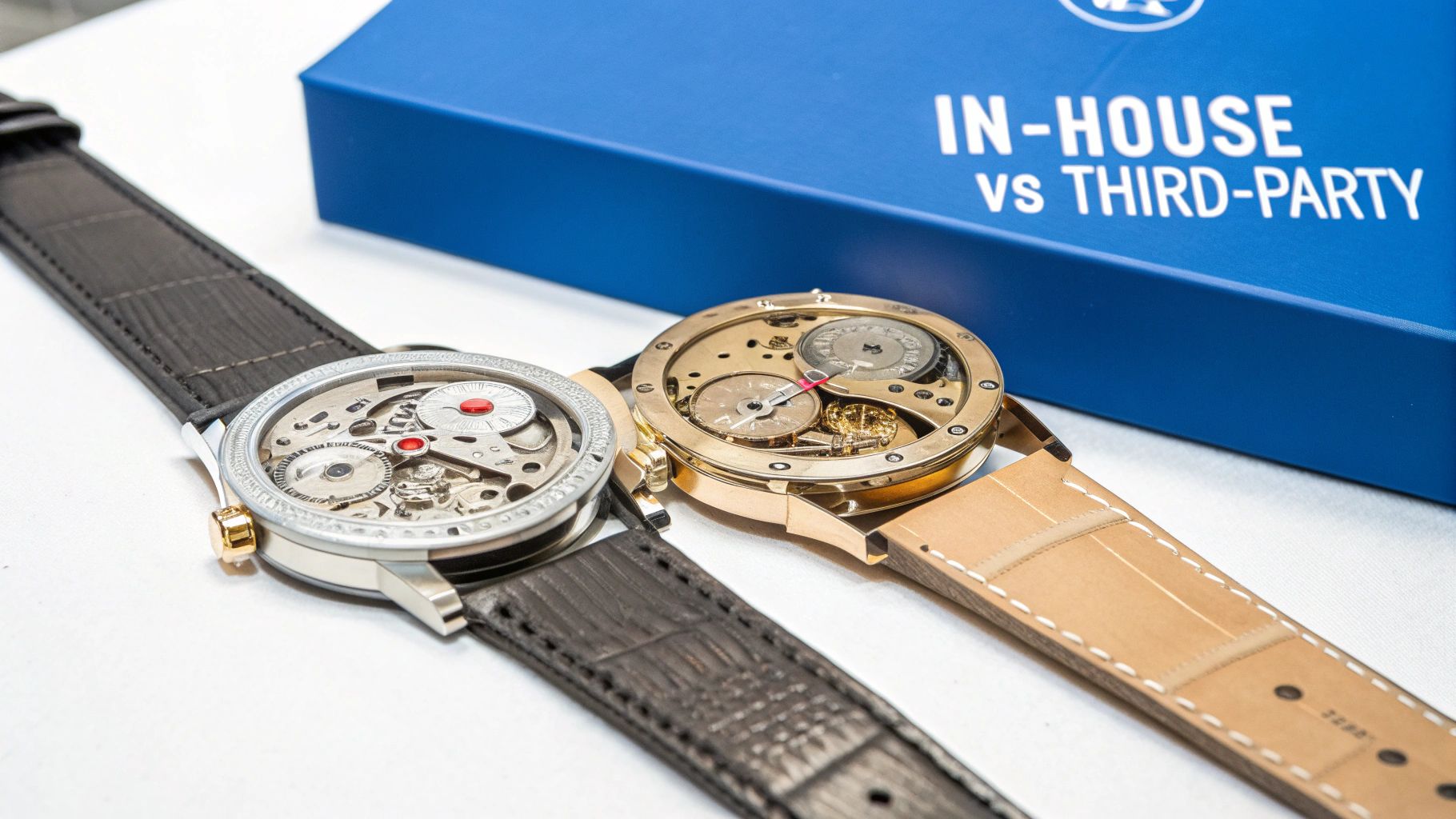
The movement is the heart of a watch, and it’s where one of the biggest philosophical differences between Omega and TAG Heuer becomes crystal clear. This is an area where Omega’s obsession with horological engineering really pulls ahead, setting an incredibly high bar for what a modern luxury watch can do.
Omega has become a true powerhouse of in-house manufacturing. The brand’s entire modern identity is built around its proprietary Co-Axial escapement and the punishingly difficult Master Chronometer certification. These aren’t just fancy marketing terms; they translate into real-world benefits you can feel.
A Master Chronometer-certified Omega is more accurate, lasts longer between services, and is unbelievably durable. The big showstopper is its resistance to magnetic fields up to 15,000 gauss, which protects its precision from the electronics all around us. This focus on technical mastery is a huge draw for serious collectors who value innovation and rock-solid performance.
The TAG Heuer Approach
Historically, TAG Heuer has taken a more practical, real-world approach. For decades, the brand built its reputation on using tough, reliable, and proven third-party movements from specialists like ETA and Sellita. That smart strategy allowed TAG Heuer to offer classic Swiss luxury at a price point that made it the perfect entry point for new collectors.
But that’s not the whole story anymore. TAG Heuer has invested heavily in developing its own manufacturing chops.
- The Calibre Heuer 02: This in-house chronograph movement is a serious piece of engineering. It boasts an 80-hour power reserve and a column-wheel design—features you usually find in watches costing thousands more.
- A Blended Strategy: Today, TAG Heuer cleverly mixes its own calibres with proven third-party movements. This gives buyers a fantastic range of options that perfectly balance cost, performance, and prestige.
This blended approach means that while a TAG Heuer might not have the "in-house only" purity of an Omega, it delivers exceptional value and dependability. To really appreciate what’s going on inside, check out our guide on how a mechanical watch works.
The takeaway is simple: Omega’s in-house movements are a statement of technical dominance, and they're a huge reason for the brand's higher prices and stronger resale value. TAG Heuer offers a more flexible value proposition, mixing reliable workhorse movements with its own impressive technology.
So, which is right for you? It all comes down to what you value most. Are you after that cutting-edge, in-house engineering and willing to pay a premium for it? Or do you prefer the proven reliability and smart value offered by a brand that uses the best of both worlds? There’s no wrong answer—only the one that fits your collection.
Iconic Models: Speedmaster Vs. Carrera Head-To-Head
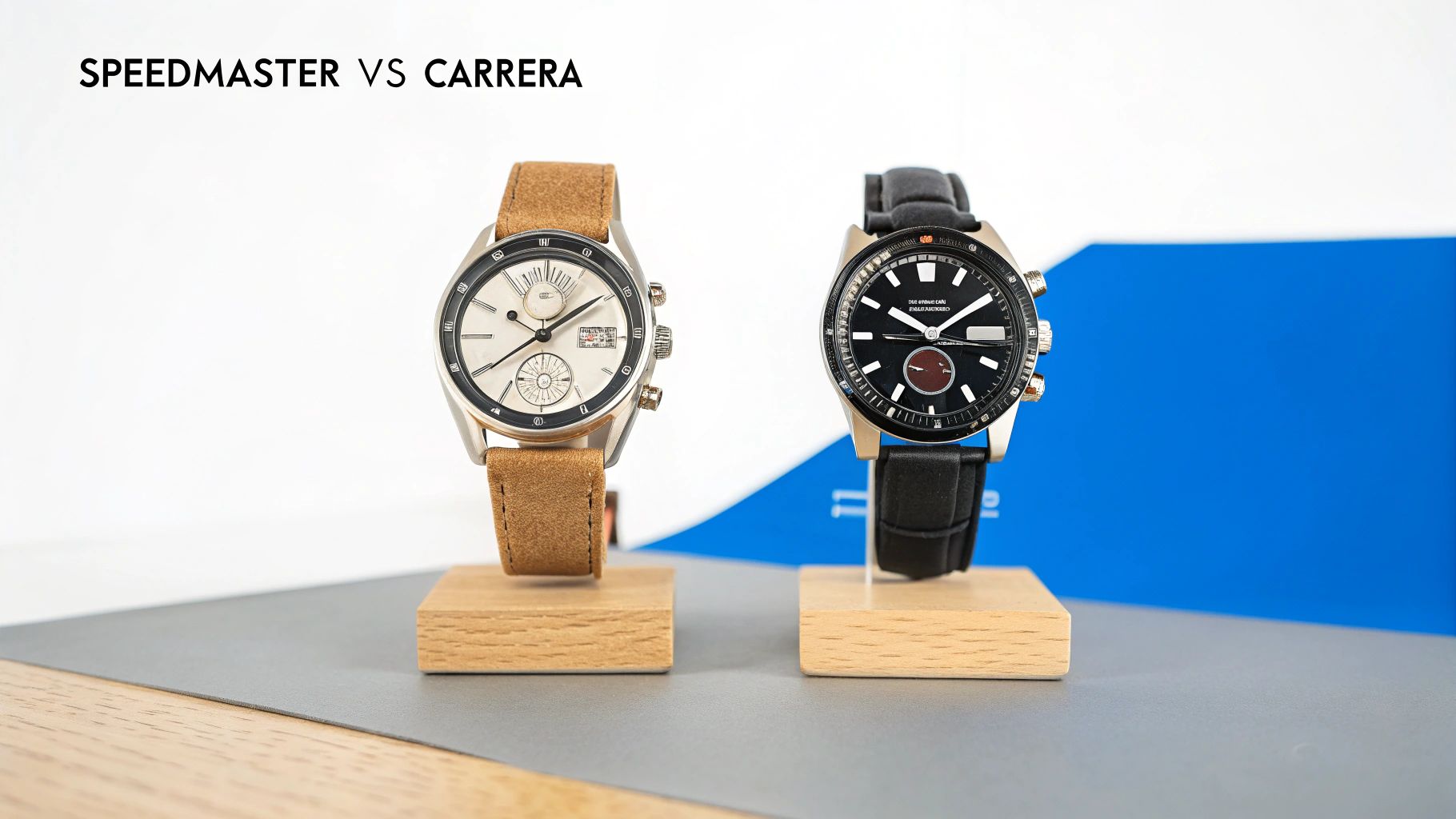
You can tell a lot about a brand by its flagship models. When you put Omega and TAG Heuer side-by-side, the conversation always comes back to two legendary matchups: the Speedmaster versus the Carrera, and the Seamaster versus the Monaco. Each of these watches is the purest expression of what its brand stands for.
The Omega Speedmaster Professional, the one and only "Moonwatch," is an absolute icon. Its design is a masterclass in clean, functional aesthetics, and it has remained almost entirely unchanged since NASA hand-picked it for every crewed space mission. That history alone gives it a timeless cool that trends can't touch.
In the other corner is the TAG Heuer Carrera, a watch born from the raw spirit of motorsport. Inspired by the notoriously dangerous Carrera Panamericana road race, its design has always prioritized instant legibility with clean, sharp lines. While Omega has preserved the Speedmaster in amber, the Carrera has been allowed to evolve, reflecting a more dynamic approach to design over the decades.
Design And Heritage Compared
The real story here is how each brand treats its legacy. For collectors, a key difference is that the Omega Speedmaster is the only major sports chronograph that has kept its original 1960s design largely intact. This is a huge factor in its cult status and helps explain why it holds its value so well compared to many Carrera models, which see more frequent updates.
The Carrera, first launched in 1963, is pure racing heritage, showcasing TAG Heuer's deep connection to the track. For a deeper look at how a watch's backstory influences today's market, check out the latest industry analysis from Morgan Stanley.
For the Buyer: The Speedmaster is for the purist—someone who wants to own an unaltered piece of horological history. The Carrera speaks to the enthusiast who loves a classic design but also appreciates how it's been refined with a modern edge.
This same philosophical split applies to their other icons. The Omega Seamaster is a benchmark for professional dive watches, perfectly blending robust, tool-watch engineering with a refined look that makes it incredibly versatile. Meanwhile, the TAG Heuer Monaco, with its unmistakable square case and link to Steve McQueen, is a bold, avant-garde statement piece for someone who wants to be noticed.
Functional Differences And Use Cases
At their core, both the Speedmaster and Carrera are chronographs, but their original purposes shaped their features. If you're new to the complication, we have a helpful guide that explains what a chronograph watch is and how it works.
Here’s how these legends stack up in the real world:
- Omega Speedmaster: Though originally a racing watch, its tachymeter scale and manual-wind movement are direct links to its space-faring days. Winding it yourself is part of the experience, a tangible connection to its history.
- TAG Heuer Carrera: Many modern Carreras are powered by the excellent Calibre Heuer 02 automatic movement, which boasts a very practical 80-hour power reserve. It’s a fantastic, modern chronograph for daily wear.
- Omega Seamaster Diver 300M: This is a true professional tool watch. It’s got a helium escape valve, a tough ceramic bezel, and 300 meters of water resistance. It's built for serious underwater work but is handsome enough for a suit.
- TAG Heuer Monaco: While it's a perfectly capable chronograph, the Monaco is really about its daring, unconventional design. It's a style-first icon for those who march to the beat of their own drum.
Ultimately, choosing between these watches isn't just about specs. It's about deciding which story connects with you, which design language speaks to your personal style, and what you truly value in a fine timepiece.
A Guide To Resale Value And Investment Potential
Let's be honest: a luxury watch is more than just a tool to tell time. It's an asset. When you're weighing Omega vs. TAG Heuer, the financial side of things—what happens after you walk out of the store—is a huge factor. The secondary market tells a pretty clear story here.
Omega consistently holds its value better, making it the more stable choice if you view your watch as a potential investment.
Several things keep Omega's resale value strong. The brand's market position is a powerhouse, second only to Rolex in many conversations. This isn't just talk; 2023 data from Morgan Stanley and LuxeConsult shows Omega commands 7.49% of total Swiss watch exports. Compare that to TAG Heuer's estimated 1.7% market share, and you can see the scale and stability that props up Omega's pre-owned prices. For a closer look at these numbers, you can read the full Swiss watch industry performance report on italianwatchspotter.com.
For collectors and savvy buyers, brand equity is everything. Omega’s deep connection to historical moments like the Moon landing, plus its genuinely innovative in-house movements, create a powerful story. That story drives demand and protects its value over the long haul.
Understanding Depreciation Trends
TAG Heuer is a fantastic gateway into Swiss luxury, offering incredible design and history at the retail counter. But that accessibility often means a bigger initial drop in value on the pre-owned market. While some limited editions or iconic vintage models can hold their own, the brand's core collection generally doesn't retain value as firmly as Omega's lineup.
Omega, especially its hero models, is a different beast entirely.
- Omega Speedmaster Professional: The "Moonwatch" is what many in the industry call a "blue-chip" watch. It’s known for excellent value retention and, in some cases, can even appreciate over time.
- Omega Seamaster Diver 300M: As a direct rival to the Rolex Submariner, the Seamaster benefits from massive demand and a strong brand halo, keeping its value reliably stable.
This doesn't make a TAG Heuer a bad buy. Far from it. It's a watch meant to be worn and loved for what it is. Just know that you should expect a more significant drop from its retail price if you decide to sell it down the line. If the financial angle is a big part of your decision, our guide on investing in luxury watches offers a deeper dive into these strategies.
Here’s a quick data-driven look at how the two brands stack up from an investment perspective.
Investment Metrics Omega Vs TAG Heuer
| Metric | Omega | TAG Heuer |
|---|---|---|
| 2023 Market Share | 7.49% (Ranked #3) | 1.7% (Ranked #13) |
| Typical Depreciation | Lower (especially on Speedmaster & Seamaster) | Higher (on most standard models) |
| Brand Ranking (Value) | Top 5 Swiss Brand | Top 15 Swiss Brand |
| Average Pre-Owned Price | $4,000 - $8,000+ | $1,500 - $4,000 |
| Collectibility | Very High (vintage & modern) | Moderate (strong in vintage motorsport) |
The numbers reinforce the narrative: Omega's market dominance and brand prestige create a much stronger foundation for value retention.
Ultimately, if long-term value and asset stability are high on your list, Omega is the clear winner in this matchup. Its market strength, historical importance, and the unwavering desirability of its key models make it a safer financial bet for any collector.
Making Your Final Decision: Which Brand Is Right For You?
So, after all the specs, history, and side-by-side comparisons, which watch belongs on your wrist? The truth is, the choice between Omega and TAG Heuer comes down to what you're really looking for in a luxury timepiece. It's less about which brand is "better" and more about which brand's soul speaks to you.
Are you drawn to understated, precision-engineered horology with a rich legacy of exploration? Or does the bold, adrenaline-fueled world of motorsport and avant-garde design get your heart racing? Answering that question is the key.
Who Should Choose Omega
Omega is the clear choice for the buyer who sees a watch as more than just an accessory. You're buying into a legacy of technical achievement, from the depths of the ocean to the surface of the moon. If you value world-class in-house movements, meticulous finishing, and a watch that will almost certainly hold—or increase—its value over time, Omega is your brand.
Think of an Omega as a foundational piece for a serious collection. It's an heirloom, a long-term asset, and a quiet nod to fellow enthusiasts who appreciate what's ticking inside the case.
This decision tree helps frame the choice, especially if investment potential is on your mind.
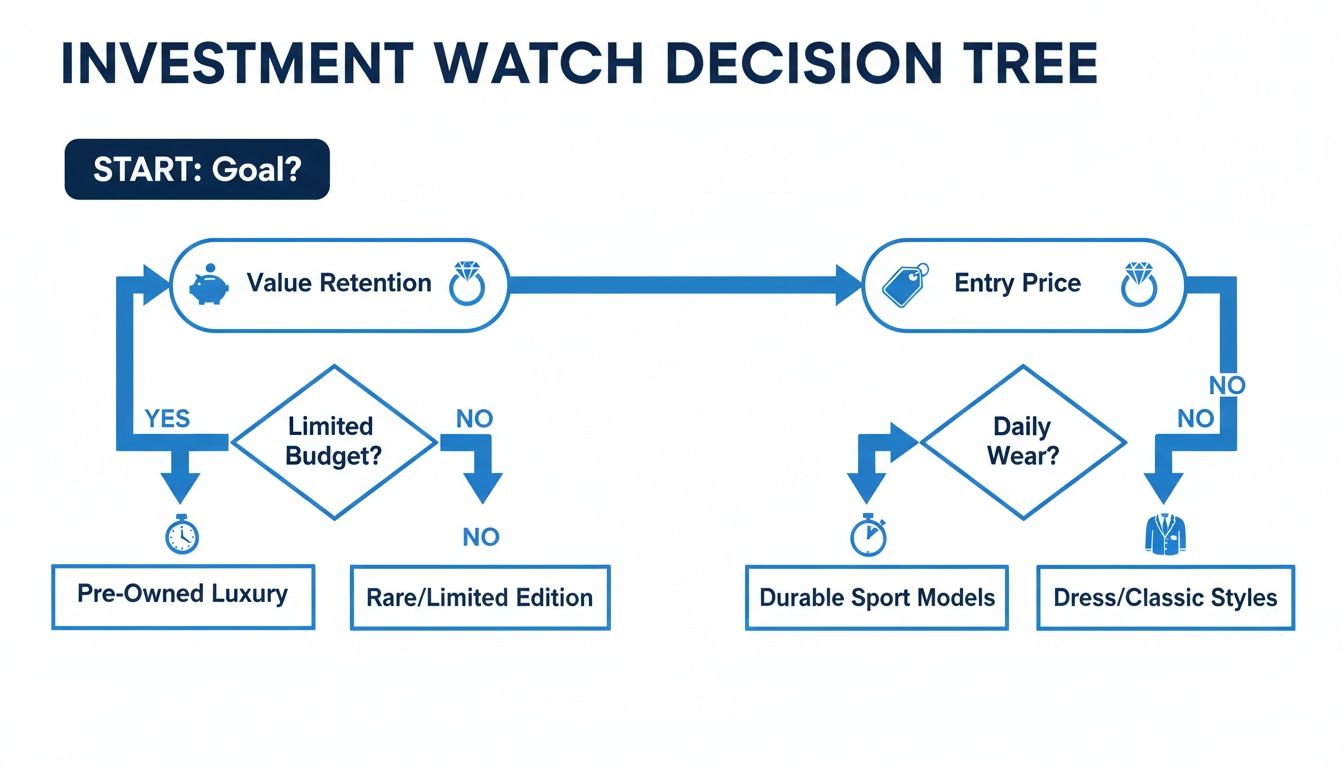
As you can see, if holding value is a top priority, the path points straight to Omega’s proven market strength and collector demand.
Who Should Choose TAG Heuer
TAG Heuer is for the enthusiast who wants their watch to make a statement. It's for the person who loves the roar of an engine and appreciates a design language born on the racetrack. TAG Heuer offers a fantastic entry point into the world of Swiss chronographs without the often-intimidating price tags of its peers.
If you gravitate toward dynamic, contemporary aesthetics and want a watch that feels more like a piece of high-performance gear, TAG Heuer delivers that thrill. It’s a watch that doesn’t just tell time—it tells a story of speed, daring, and pushing the limits.
When you're weighing your options, especially with pre-owned pieces, the financial health of the parent companies is worth considering. Omega's impressive performance, with revenues hitting 2.6 billion Swiss francs in 2023, stands in stark contrast to TAG Heuer's reported 7% sales decline that same year. This stability is a big reason why Omega is viewed as a more solid long-term investment. For those interested in the numbers, you can read more about the watch industry's financial trends to see the bigger picture.
In the end, you can’t go wrong with either. Both brands build incredible timepieces with genuine history. The best decision comes from choosing the watch whose story, style, and spirit you truly connect with.
Common Questions: Omega vs. TAG Heuer
When you're weighing two legendary brands like Omega and TAG Heuer, a few key questions always come up. Here are the straight answers we give our clients to help them make the right choice.
Is Omega A Better Investment Than TAG Heuer?
Yes, if you're looking at it purely from a financial standpoint, Omega is the stronger investment. Its most iconic models, especially the Speedmaster and certain Seamasters, consistently fetch higher prices on the pre-owned market.
This comes down to a few things: Omega's use of superior in-house movements, a steady stream of sought-after limited editions, and unrelenting collector demand. TAG Heuer, with its broader and more accessible lineup, doesn't quite have the same long-term value retention. You can dive deeper into the market forces behind pre-owned watch values at exquisitetimepieces.com.
Which Brand Is More Prestigious?
While both are fantastic Swiss watchmakers, Omega is generally seen as holding more prestige within the serious watch community. This reputation is built on a foundation of true horological innovation (like the Co-Axial escapement), its undeniable place in history as the first watch on the Moon, and its market position just a step below Rolex.
Key Takeaway: Think of it this way: Omega is often considered a player in "high horology," a brand you graduate to. TAG Heuer is celebrated as one of the absolute best entry points into the world of luxury Swiss sports watches, backed by an incredible motorsport heritage.
Are Omega Watches More Durable?
Both brands make tough, reliable watches, but Omega has a clear advantage here thanks to its commitment to METAS Master Chronometer certification. To earn that title, an Omega watch is independently tested for accuracy, performance, and resistance to magnetism up to a massive 15,000 gauss. It’s a guarantee of exceptional resilience for everyday life.
TAG Heuer's watches are absolutely built to last, but they don't undergo that same level of rigorous, third-party certification across their entire automatic collection.
At ECI Jewelers, our passion is helping you find the perfect authenticated timepiece that fits your life, style, and financial goals. You can explore our hand-picked collection of pristine pre-owned Omega and TAG Heuer watches online or stop by our New York showroom for a one-on-one consultation.


