


The Rolex Day-Date 36 and Day-Date 40 both use the same Calibre 3255 and precious-metal construction, so the real choice is wrist feel, case geometry, and whether you want classic understatement or modern presence. If the 36 looks elegant but a little restrained on your wrist, the 40 usually solves that. If the 40 starts to feel too broad, the 36 is the cleaner, more traditional answer.
That's the simple truth at the counter. We see buyers try both on and realize the movement isn't the deciding factor at all. What matters is how the case sits, how the lugs flow, and whether the watch feels like it belongs on your wrist every day.
Which Rolex Day-Date Size Fits Your Wrist
A client arrives wearing a sport watch, tries on the Day-Date 36, then the Day-Date 40, and usually knows within seconds. The 36 feels composed and traditional. The 40 feels more assertive. Neither is automatically right. The correct choice is the one whose case, lugs, and bracelet sit naturally on your wrist.
Start with wear, not numbers
The Day-Date is a precious-metal dress watch, so it should be judged differently from a Submariner or GMT. The 36 preserves the model's original balance. The 40 gives it more visual authority while keeping the same day-and-date formula. Both sizes use the same modern calibre and offer the expected Day-Date materials and functions, so the purchase comes down to wrist feel, case geometry, and presence.
Practical rule: choose the 36 if you want the watch to slip under a cuff and read as restrained. Choose the 40 if you want the Day-Date to make its presence known before anything else.
The extra diameter is only part of the experience. Lug-to-lug reach, lug shape, bezel width, and the way the President bracelet flows from the case can make one watch feel substantially larger than its measurement suggests. A 36 with longer, sharper lugs may wear more broadly than expected, while a well-shaped 40 can sit neatly on a smaller wrist. Use this Rolex case size guide as a general reference, then judge the actual Day-Date on your arm.
A mirror check works better than a product thumbnail. Look at the watch from above, then turn your wrist sideways. The case should sit inside the edges of your wrist, and the lugs should not appear to reach past the wrist bones.
Use your style as the filter
Formal, structured, or understated clothing usually suits the 36. Choose the 40 if you prefer a broader silhouette or want the Day-Date to feel more current. Yellow gold and platinum already attract attention, so the larger case creates an especially strong impression.
- Pick the 36 for classic proportion, easier cuff clearance, and a closer connection to the original Day-Date identity.
- Pick the 40 for greater wrist presence, a wider dial opening, and a less traditional appearance.
- Ignore the old rule that small wrists must wear 36 and large wrists must wear 40. Case shape and lug-to-lug proportion matter just as much.
Try both sizes before deciding. The best Day-Date is the one that still looks balanced when your arm is relaxed, not only the one that photographs well.
How Do the Case Proportions Actually Compare
The Day-Date 36 vs 40 question looks simple until you see both watches on the wrist. The diameter gap is 4 mm, but the case shape does more of the work than the number suggests. Independent reference measurements put the 36 at roughly 36 mm across, about 12.0 mm thick, and around 44 mm lug-to-lug, while the 40 is about 40 mm across, roughly 12.5 mm thick, and around 47.0–47.5 mm lug-to-lug. Day-Date buying guide measurements
The lug-to-lug difference is the real story
The extra length changes how the watch sits across the wrist, not just how wide it reads. A case can stay close in diameter and still feel larger if the lugs run farther from end to end. That is why the 40 has more wrist presence than its size alone suggests, even though Rolex kept the Day-Date balanced by refining the lugs and bezel. Day-Date 36mm vs 40mm comparison
If you want to measure this properly at home, use calipers from the tip of one lug to the tip of the opposite lug, then check how much bracelet sits beyond the wrist bones. For step-by-step instructions, see our guide on how to measure watch case size.
A watch that looks perfect from the front can still overhang once the bracelet drops away from the case. On a 6.5-inch wrist, that extra bracelet spread is what pushes the 40 toward the 47.0–47.5 mm footprint people notice right away.
The 36 keeps the classic President feel that made the model famous. It looks tighter, dressier, and more contained. The 40 opens up the dial and gives you a broader shoulder-to-shoulder stance, which suits buyers who want a Day-Date that reads more current without losing the watch's formal character.
Day-Date 36 vs 40 Case Dimensions
| Measurement | Day-Date 36 | Day-Date 40 |
|---|---|---|
| Case diameter | About 36 mm | About 40 mm |
| Thickness | About 12.0 mm | About 12.5 mm |
| Lug-to-lug | About 44 mm | About 47.0–47.5 mm |
| Overall feel | Classic and compact | Broader and more contemporary |
For buyers, the point is simple. The 40 is not just a bigger dial, it is a different footprint on the wrist, and that is what decides comfort, cuff clearance, and whether the watch feels restrained or assertive.
Do Both Sizes Share the Same Movement and Materials
Yes. The Day-Date 36 and Day-Date 40 both run on Rolex calibre 3255, and Rolex states that it is developed and manufactured in-house. That matters because the practical feel of the watch is about the case on your wrist, not a difference in mechanics. The 3255 uses Rolex's Chronergy escapement, which helps it work efficiently, and it is built with about 70 hours of power reserve, so it will keep running through a weekend if you take it off on Friday. For a clear breakdown of how that movement fits into Rolex's lineup, see our guide to Rolex movements.
Same mechanics, different packaging
Both sizes are mechanically aligned. The choice is proportion, presence, and how much watch you want sitting on the wrist.
That is the part buyers should focus on. The movement will not tell you whether the watch feels right under a cuff or whether the case looks balanced from the side. The 36 wears with a tighter, more traditional profile. The 40 spreads out with a broader stance that reads more current.
Both watches also stay firmly in precious metal territory. Rolex offers the Day-Date in yellow gold, white gold, Everose gold, and platinum, which keeps the model in its proper place as a dress watch with real substance. The metal choice changes the mood, but not the underlying identity. The Day-Date still feels like a serious gold Rolex, not a dressed-up sports watch. Rolex Day-Date newsroom overview
The bracelet matters as much as the calibre
The President bracelet is part of the equation too. The case size sets the tone, but the bracelet and case together decide how the watch settles on the wrist.
The 36 usually lands neater and more restrained. The 40 gives the watch more horizontal spread, so it feels roomier and a touch stronger in profile. That difference shows up in everyday wear, especially if you wear fitted sleeves or prefer a watch that disappears more easily under a cuff.
If you want the short version, here it is:
- Choose the 36 if you want the classic Day-Date shape and a watch that sits more discreetly.
- Choose the 40 if you want more visual reach and a firmer modern stance.
- Do not compare the movements. On this model, that is the wrong question.
The better way to judge these two is by how the case proportions work with your wrist. The calibre is the same. The wear is not.
Are Collectors Shifting Back to the 36mm President
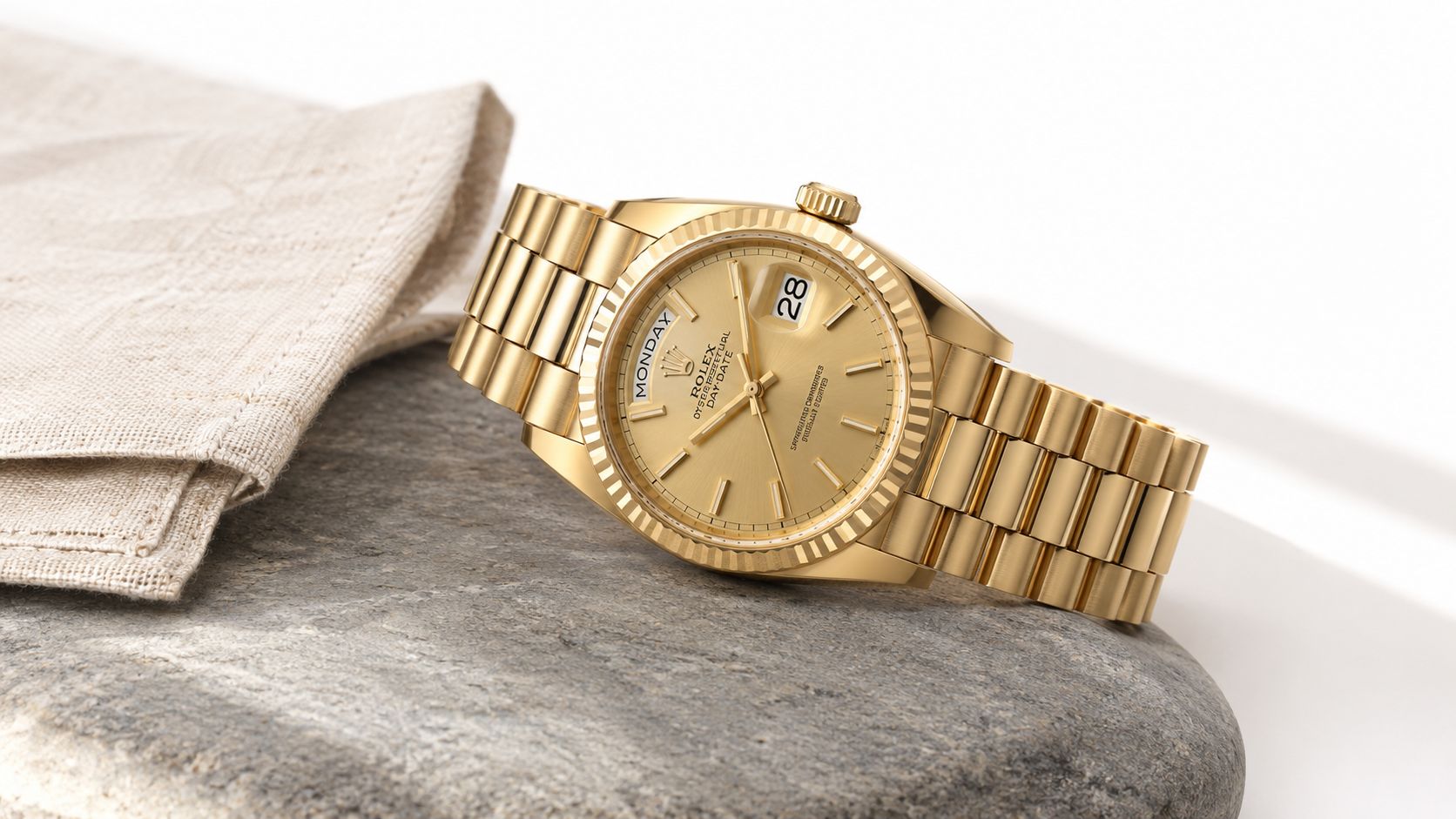
Yes, and the reason is simple. Collectors are paying more attention to proportion, not just diameter. The 36 mm Day-Date suits the original President profile, while the 40 mm keeps the broader, more modern wrist presence that still sells well in the market. SwissWatchExpo on Rolex case sizes
What that means in real buying terms
The 36 keeps the original Day-Date identity intact. Buyers who want a gold Rolex that feels measured and restrained often choose it because the case sits with less visual bulk and the overall shape feels more deliberate.
The 40 still has a clear audience. It reads faster across the room, especially on wrists used to larger modern watches. The case has more visual spread, so the watch feels bolder in a cuff and more current with casual clothing. For some buyers, that stronger stance is the point.
The collector shift is not about abandoning the 40. It is about giving the 36 equal respect again. That smaller size now looks intentional, not timid.
The right size is the one you stop noticing after ten minutes.
How collectors think about both sizes now
Collectors who favor the 36 usually want classic proportion, a tighter fit under a sleeve, and a watch that stays close to the model's roots. The 40 suits buyers who prefer more dial presence and a stronger horizontal read on the wrist. The lug-to-lug difference determines comfort and visual spread, so the choice goes beyond the 4 mm number on paper.
That is why the conversation has changed. The 36 is no longer treated as the safe option, and the 40 is no longer the automatic default. Buyers are matching case geometry to wrist shape, dress code, and how much attention they want the watch to draw.
If you wear fitted clothes, the 36 usually settles better. If you want the Day-Date to stand out, the 40 gives you that extra reach without changing the model's core character.
Which Day-Date Should You Buy and What Are the Current Prices
The right purchase depends on more than case size. Set your budget by metal first, then compare the reference, dial, condition, and completeness of each watch. A clean, correctly configured Day-Date with its box and papers can command more attention than a similar example missing its original accessories.
Our buying recommendation
Choose the Day-Date 36 when the case geometry, lug-to-lug reach, and bracelet fit suit your wrist. It is the better buy for a close sleeve fit and for buyers who care about traditional proportions without treating the watch as a status display.
Choose the Day-Date 40 when you want more dial area and a broader bracelet spread, but judge the actual lug-to-lug fit before buying. A 40 that overhangs the wrist will feel less balanced than a well-fitted 36.
For value comparisons, separate the reference generations. The 128238 is the modern yellow-gold 36, while the 228238 is the modern yellow-gold 40. Metal changes the price substantially, with platinum and Everose gold configurations occupying different parts of the pre-owned market from yellow or white gold. Dial rarity, visible wear, service history, and whether the box, papers, and accessories are present can move two watches with the same reference far apart in price. Our pre-owned Rolex watch pricing guide provides useful context for comparing those variables.
The how to sell jewelry online in 2026 article also reinforces a practical point for luxury buyers: clear presentation and provenance make it easier to judge what you are being offered.
Featured Day-Date examples
These are the configurations we would place in front of a serious buyer. Inventory changes, so check the collection page if a listed example is no longer available.
Rolex Day-Date 40 ref. 228238
Yellow gold with the full modern President feel, a strong choice if you want presence first.
Rolex Day-Date 36 ref. 128238
Yellow gold in the classic size, the cleaner option for traditional proportions.
Rolex Day-Date 40 ref. 228235
Everose gold with the warmer tone many buyers prefer for everyday wear.
Rolex Day-Date 36 ref. 118239
White gold for a more restrained take on the President case.
At ECI Jewelers, the collection page is the quickest way to check current Day-Date stock and compare these configurations in practice.
How Can You Pay for Your Pre-Owned Rolex
We make the purchase easier to structure. You can finance through Affirm, Synchrony, Acima, and Snap Finance, with approval and terms set by each provider. If you're offsetting the purchase, you can also trade in a luxury watch through our watch buyback page. Flexible financing and leasing options at ECI Jewelers and sell your luxury watch
Simple path to payment
Pick the watch first, then decide whether you want to finance part of it or apply trade-in value toward the balance. That keeps the process clean and avoids guessing before you've settled on the right size. For buyers choosing between the 36 and 40, that matters because the right watch is usually the one you'll keep, not the one that only looked right in photos.
Our can you finance a Rolex watch guide gives a helpful overview before you move forward.
Frequently Asked Questions About the Day-Date
Is the Day-Date 36 easier to wear under a cuff?
Yes. The 36 is the safer choice if you wear fitted sleeves often or want the watch to stay visually quiet. It keeps the original proportions that made the model famous, so it feels more compact on the wrist.
Does the Day-Date 40 feel too big on smaller wrists?
Not always. The 40 wears larger, but the slimmer lugs and reworked proportions help it sit better than many buyers expect. If you like a stronger wrist presence, it can work even when your wrist isn't especially large.
Do both sizes look good on the President bracelet?
They do, but in different ways. On the 36, the bracelet reinforces the classic, compact look. On the 40, the same bracelet supports a broader, more contemporary silhouette.
Is the Day-Date a practical daily watch?
Yes, if you're comfortable wearing precious metal daily. The movement platform is the same in both current sizes, and the watch is built for regular wear. The main question is whether you want your daily watch to be discreet or noticeable.
Which size holds interest better with collectors?
Right now, both have clear demand, but for different reasons. The 36 is getting renewed attention from buyers who like understated luxury, while the 40 remains the easy choice for modern presence. The better long-term pick is the one that matches your style without compromise.
If you're choosing between the Day-Date 36 and Day-Date 40, we can help you narrow it down by wrist, metal, and dial in one conversation. Browse current inventory at ECI Jewelers, then compare the pieces that best fit how you dress and wear a watch. The right Day-Date should feel natural the moment it's on your wrist, and that's exactly what we help you find.


