

Picture this: a watch face shielded by a material almost as hard as a diamond. That’s not science fiction; it's the reality of a sapphire crystal watch, the gold standard in the world of luxury timepieces. This nearly scratch-proof barrier is designed to keep your watch face looking flawless for decades.
What Exactly is a Sapphire Watch Crystal?
When people hear "sapphire," they usually think of a deep blue gemstone. But the "sapphire" on your watch dial isn't a gem mined from the earth—it's a synthetic, lab-grown crystal.
While it's man-made, it has the exact same molecular makeup and jaw-dropping hardness as a natural sapphire. The difference? It’s engineered for perfect, flawless clarity. This isn't just a piece of glass; it's a meticulously crafted component that serves as an invisible barrier, protecting the intricate mechanics and delicate hands underneath from the outside world.
It's precisely why premier brands like Rolex and Patek Philippe use sapphire exclusively. They know it's the only material that can reliably guard the fine craftsmanship that makes a luxury watch so special.
The Science Behind the Strength
Sapphire’s dominance comes down to one thing: its incredible hardness. It scores a 9 on the Mohs scale of hardness, making it the second-hardest natural substance on earth, right behind diamond.
This is a game-changer for durability. It means a sapphire crystal can handle daily scrapes from keys, zippers, and accidental bumps against a wall without leaving a mark. For watch collectors and anyone visiting an expert like ECI Jewelers, this isn't just a small detail—it's a huge deal.
The condition of the crystal is one of the first things an appraiser looks at. A pristine, scratch-free crystal is a direct reflection of a watch's overall care and is critical for maintaining its long-term value.
Ultimately, choosing a watch with a sapphire crystal is an investment in longevity. You're ensuring the face of your watch remains as clear and beautiful as the day you bought it, safeguarding its function, beauty, and resale value for years to come.
Comparing Sapphire, Mineral, and Acrylic Crystals
When you're choosing a watch, it's easy to focus on the aesthetics and mechanics. But the crystal—the clear cover protecting the dial—is one of the most critical parts defining its toughness and how it'll hold up day-to-day. A sapphire crystal watch is the gold standard in modern watchmaking, and understanding how it stacks up against its cousins, mineral and acrylic, shows you exactly why.
Think of sapphire crystal as the fortress wall of a watch. It's an incredibly hard barrier engineered to fend off attacks from things you encounter every single day—house keys, zippers, and accidental scrapes against a brick wall. That immense hardness is why it's the only real choice for a luxury timepiece you plan to wear without constantly worrying about marring its face.
The Everyday Contenders: Mineral and Acrylic
Mineral crystal, on the other hand, is more like a sturdy house window. It's made from glass that's been heat-treated to make it tougher, and it does a decent job of resisting bumps and knocks. The problem? It's far more prone to scratching than sapphire, and once you get a deep scratch on mineral glass, it's there to stay.
Then there's acrylic crystal, which is essentially a flexible plastic shield. You'll often find it on vintage pieces or certain old-school tool watches. It’s soft and scratches very easily, but its biggest advantage is that it tends to bend or flex on impact instead of shattering. Many of its scratches can also be polished out, but it just doesn't have the crisp clarity or tough finish of sapphire.
This diagram breaks down the key strengths that make sapphire the hands-down winner for any serious modern timepiece.
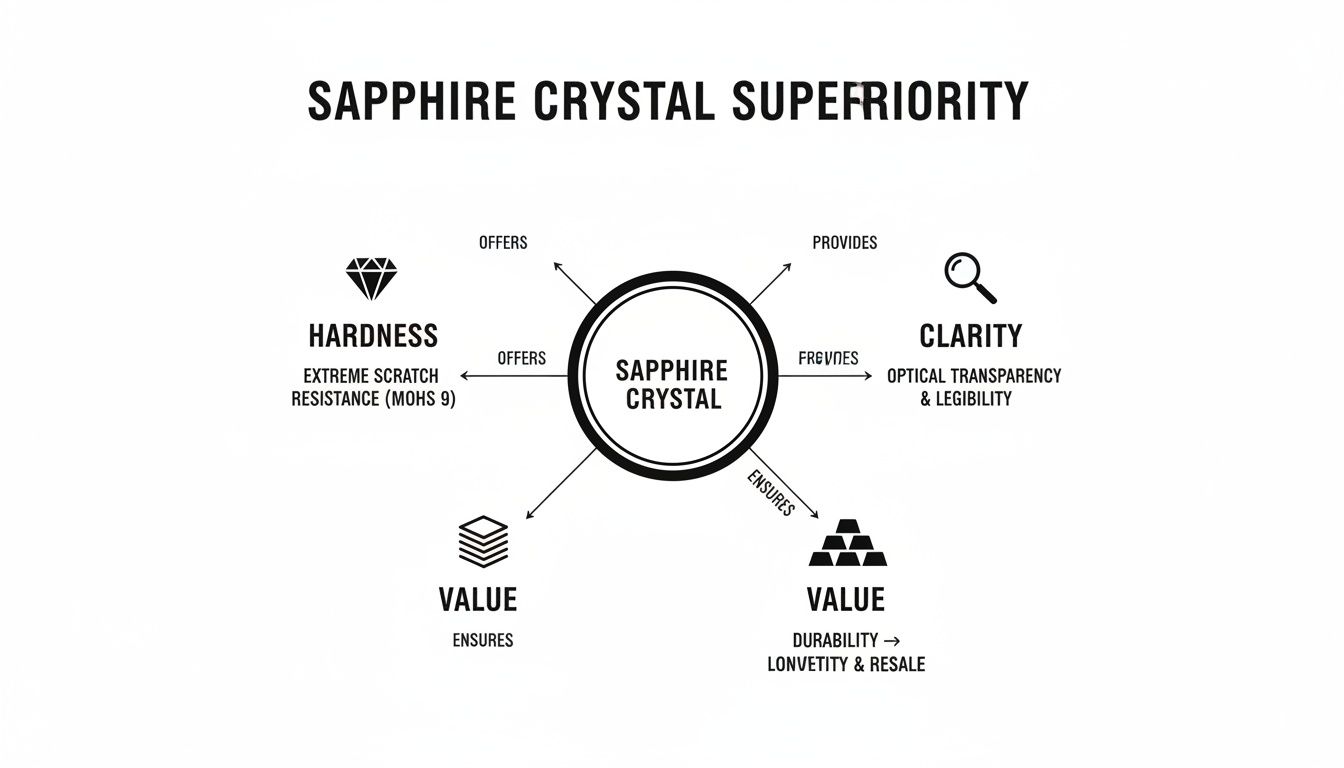
As you can see, sapphire’s incredible hardness, optical purity, and contribution to a watch's value create a trifecta of excellence that the other materials just can't compete with.
Performance Under Pressure
The true personality of each crystal comes out when you put it under stress. Sapphire's insane hardness—ranking a 9 on the Mohs scale right behind diamond—is both its greatest asset and its main vulnerability. While it shrugs off scratches that would ruin lesser materials, a very hard, direct impact can cause it to shatter.
Acrylic’s softness, however, allows it to absorb shocks much better. This is why it was used in military and dive watches for decades; a cracked but whole crystal was better than one that could shatter and let water into the movement. Mineral glass sits in the middle, offering more scratch resistance than acrylic but less impact toughness than a properly engineered sapphire crystal.
While acrylic had its place in the history of rugged tool watches, the evolution of material science and watchmaking has made sapphire the uncompromising modern standard. Its ability to remain flawless through years of wear is what today’s collectors expect.
This trade-off is why the brands offered by ECI Jewelers have poured so much engineering into perfecting how sapphire crystals are mounted and shaped. The goal is to maximize that scratch resistance while minimizing the risk of shattering from extreme force—a balance that today's luxury watchmakers have mastered.
A Head-to-Head Material Showdown
To really get it, a side-by-side comparison makes it clear where each material excels and where it falls short. Each has a purpose, but only one is truly suited for a high-value, long-lasting luxury watch.
Here’s how they stack up:
- Scratch Resistance: Sapphire is the undisputed champ. It’s virtually immune to everyday scratches, keeping the watch looking brand new for years. Mineral glass will pick up marks over time, and acrylic scratches if you look at it wrong.
- Impact Resistance: Acrylic actually has the edge here, since its flexibility helps it absorb direct blows. Sapphire is tough, but its hardness makes it brittle against sharp, extreme impacts. Mineral glass can crack or shatter more easily than acrylic.
- Clarity and Aesthetics: A sapphire crystal provides brilliant, superior optical clarity, often boosted with anti-reflective coatings that make the dial pop. Mineral glass is clear, but acrylic can distort the view from an angle and sometimes yellows over time.
- Cost and Repair: Acrylic is the cheapest to replace, and you can often buff its scratches out at home. Mineral glass is moderately priced but can't be repaired. Sapphire is the most expensive to replace, but you’ll rarely, if ever, need to.
Ultimately, the choice of crystal says a lot about the watch's intended use and value. For a luxury sapphire crystal watch, you're investing in long-term beauty and durability, ensuring your timepiece stays as pristine as the day you bought it.
The Real Pros and Cons of a Sapphire Crystal Watch
In watchmaking, every material choice is a careful balancing act, and sapphire crystal is no different. While its benefits are immense, especially for a luxury watch, it’s worth looking at both sides of the coin. Understanding the complete picture shows exactly why a sapphire crystal watch is still the undisputed king for quality and longevity.
The advantages are significant and directly affect how you experience your watch day-to-day. They are precisely why this material is considered a hallmark of premium craftsmanship.
The Unmistakable Advantages
First and foremost is its legendary toughness against scratches. Ranking a 9 on the Mohs scale, a sapphire crystal is like an invisible shield protecting your watch dial. Those accidental scrapes against a wall, a zipper, or a countertop that would mar lesser materials? Sapphire just shrugs them off, keeping the view of your dial perfectly clear for years.
That hardness is matched by incredible optical clarity. Sapphire gives you a crisp, undistorted view of the dial, which is often made even better with anti-reflective (AR) coatings. This clarity makes every detail—from the sweep of the hands to the polished hour markers—pop with vibrancy, elevating the entire look of the watch.
Finally, there’s that premium feel you can’t fake. The cool, solid touch of sapphire and its flawless surface scream quality. It’s a component that doesn’t just perform a function; it enhances the value and luxury of the entire timepiece.
Understanding the Trade-Offs
Of course, no material is perfect, and sapphire has two main considerations. The most common concern is its cost. If you manage to damage a sapphire crystal, replacing it is more expensive than swapping out a mineral or acrylic one. That’s because the process of growing and shaping the synthetic crystal is complex and energy-intensive.
But let's put that cost in perspective. The incredible durability of sapphire means you will likely never need a replacement. For the vast majority of owners, the crystal will easily outlast the watch itself, making the higher initial cost a smart investment for long-term peace of mind.
The second thing to know is its brittleness. While sapphire is almost impossible to scratch, it can shatter from a severe, direct blow. Think of it like a ceramic plate: you can’t scratch it with a fork, but it will crack if you drop it hard on a tile floor. This kind of impact is far beyond what a watch typically goes through in daily life.
A common point of confusion comes from Anti-Reflective (AR) coatings. Sometimes, what looks like a scratch on the crystal is actually just a mark on the softer AR coating applied to the exterior. This is a much simpler and less serious issue to fix.
A Note on Modern Manufacturing
The demand for synthetic sapphire crystal is a testament to its importance in the industry. In fact, the market is projected to more than double in the coming years. A big reason for this is that manufacturers can now produce it for 70-80% less than the cost of natural sapphire. This efficiency allows brands to include near-invincible crystals without dramatically inflating watch prices—a key factor that helps the experts at ECI Jewelers provide fair valuations for clients. You can learn more about the synthetic sapphire market's expansion and its impact on the industry.
Ultimately, choosing a sapphire crystal watch is a vote for lasting beauty and resilience. Its pros—unmatched scratch resistance, stunning clarity, and a premium feel—easily outweigh the cons, making it the clear choice for any serious timepiece.
How Sapphire Crystal Protects Your Watch's Value
For any serious collector, a luxury watch is much more than an instrument for telling time—it's a tangible asset. When you're thinking about its long-term investment potential, every single component matters. But none is more front-and-center than the crystal protecting the dial.
A pristine, flawless crystal is the very first thing a buyer or appraiser notices. It's an instant signal of a well-maintained timepiece.
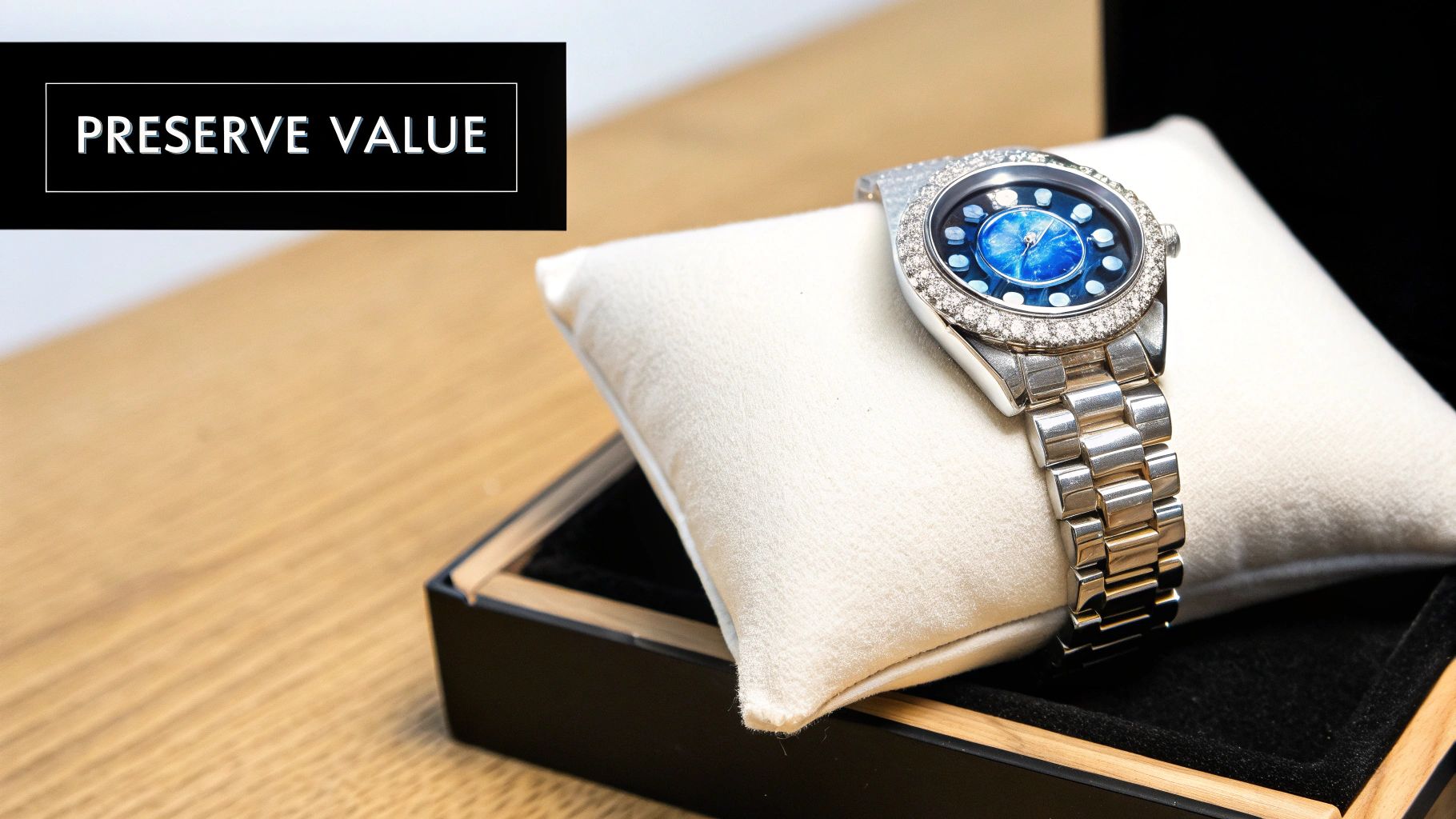
This is where a sapphire crystal watch really sets itself apart as a smart investment. Its incredible scratch resistance keeps the watch face immaculate through years of wear, preserving that "like-new" appeal so critical for holding value. In contrast, a watch with a scratched mineral or acrylic crystal takes an immediate and significant hit to both its look and its price tag.
The First Impression Is Everything
Imagine you’re looking at two pre-owned watches. One has a sapphire crystal that's perfectly clear, not a single mark on it. The other, with a mineral crystal, is covered in a fine web of scratches that dull the dial and show its age. Which one would you choose? It’s obvious. The sapphire-equipped watch just looks superior, better cared for, and inherently more valuable.
That visual impact translates directly to resale value. In the pre-owned market, condition is king, and a flawless crystal is non-negotiable for getting top dollar. It’s the gatekeeper to the dial—if that gate is marred, the perceived value of everything behind it drops.
When we evaluate a watch at ECI Jewelers, the state of the crystal is one of the first things we check. A clean, original sapphire crystal suggests the owner took meticulous care of their investment, which is a strong signal for the watch’s overall mechanical health and authenticity.
Choosing a watch with sapphire isn't just about durability. It's a deliberate decision to shield your asset from the most common killer of value: visible wear and tear.
A Tangible Impact on Resale Price
Let's take a real-world example. A pre-owned Audemars Piguet Royal Oak is a highly sought-after watch, and its value is almost entirely dependent on its condition. An example with a pristine, factory-original sapphire crystal will command a much higher price than one with a chipped, scratched, or aftermarket replacement.
The immaculate face is fundamental to its high resale price because it preserves the integrity and original beauty of the watch. Even minor flaws on a lesser crystal can lead to appraisal deductions of hundreds or even thousands of dollars—far more than the initial cost difference between sapphire and mineral glass. For those who want to dive deeper into collecting, we've covered more about investing in luxury watches in another guide.
This rule holds true across all luxury brands, from a Rolex Submariner to a Patek Philippe Calatrava. The crystal's condition is a direct reflection of its investment grade. The luxury watch market continues to grow, partly because 70% of premium buyers see these timepieces as important status symbols. A sapphire crystal is a key feature that protects the investment value of these high-end accessories, reinforcing that choosing a sapphire crystal watch is a crucial part of a smart buying strategy.
Maintaining and Replacing a Sapphire Watch Crystal
Owning a luxury watch with a sapphire crystal is an investment in durability and pristine clarity. While these crystals are built tough, a little bit of care goes a long way in keeping them perfect. Luckily, it's pretty straightforward.
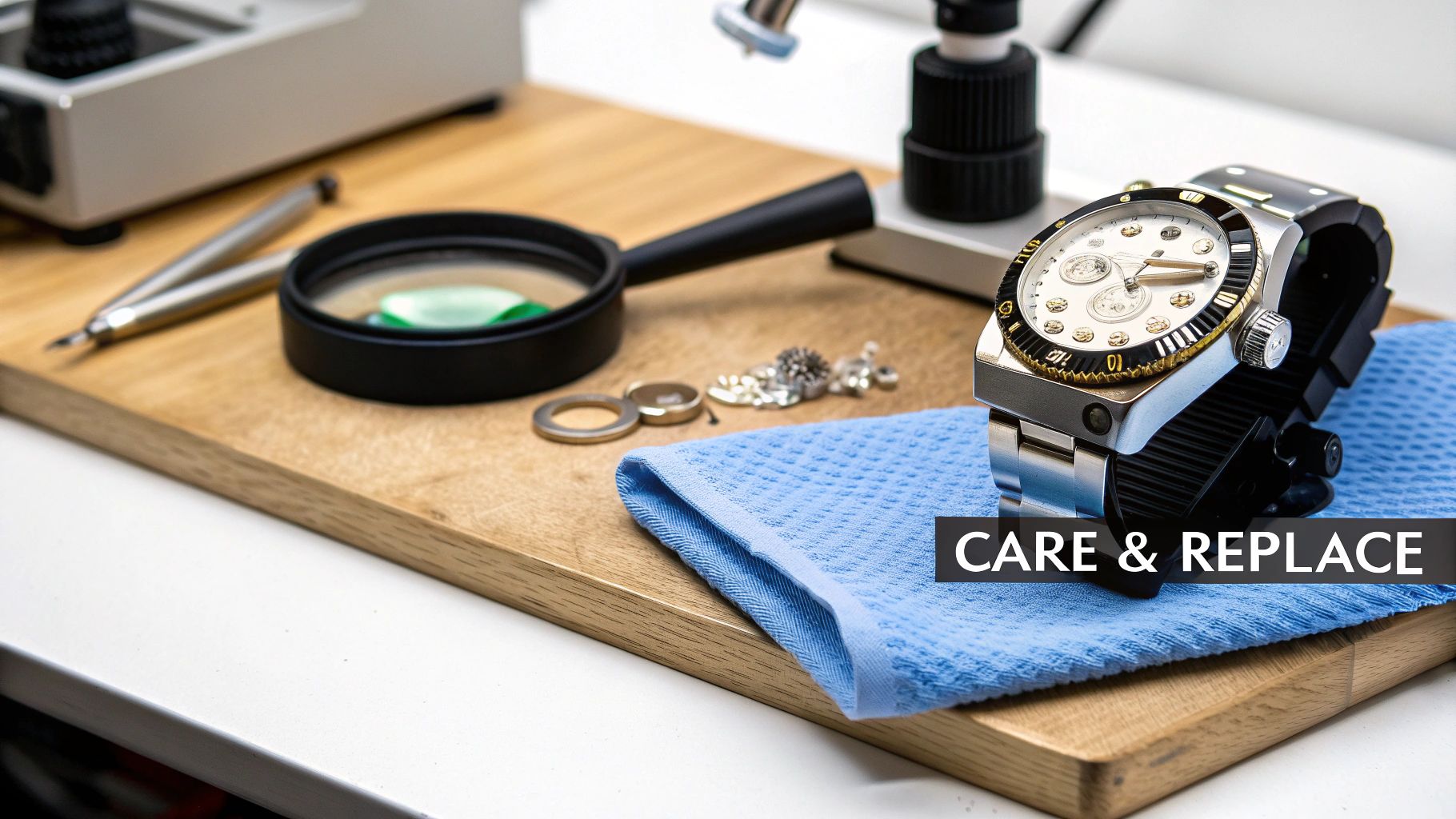
For daily smudges and fingerprints, a soft microfiber cloth is your best friend. A gentle wipe is usually all it takes to bring back that brilliant shine. If you've got some stubborn grime, a touch of mild soap and water will do the trick. Just be sure to rinse it well and dry it carefully with a clean cloth afterward.
The one thing to always avoid? Harsh chemicals or anything abrasive. Many sapphire crystals have an anti-reflective (AR) coating on the outside, and harsh cleaners can damage it, leaving marks that look just like scratches on the crystal itself.
Identifying and Addressing Damage
Sapphire may be incredibly scratch-resistant, but it's not bulletproof. A hard, direct hit can still cause damage, and it usually shows up in one of two ways: a chip or a crack.
A chip is typically a small nick, most often right along the edge of the crystal where it's most exposed. A crack, on the other hand, is a much more serious problem—a fracture that runs across the surface.
Any break in the crystal, no matter how tiny, immediately compromises your watch's water resistance. Moisture can sneak in and cause catastrophic damage to the dial, hands, and the delicate movement inside. If you spot any damage at all, you need to get it to a professional right away.
A compromised crystal is more than a cosmetic issue—it’s an open door for moisture and dust. Addressing it quickly by visiting a trusted specialist like ECI Jewelers can prevent a minor repair from turning into a major, costly restoration.
If your crystal is damaged, stop wearing the watch. Keep it in a dry place until a certified watchmaker can take a look. Continuing to wear it is just asking for trouble.
The Professional Replacement Process
When a sapphire crystal needs to be replaced, this is a job for a pro. It’s not a DIY project. The process requires specialized tools and a deep understanding of how to properly disassemble, clean, and reassemble a watch to factory specifications.
Here's what a professional service typically looks like:
- Assessment: A watchmaker first inspects the damage to the crystal and the watch case to check for any other harm from the impact.
- Disassembly: The movement is carefully removed from the case to protect it from any dust or microscopic shards of the old crystal.
- Crystal Removal and Fitting: The old, damaged crystal and its gasket are removed. A brand-new, genuine manufacturer-approved crystal is then fitted with a new gasket to ensure a perfect, water-tight seal.
- Reassembly and Testing: The watch is meticulously put back together. Finally, it undergoes pressure testing to confirm its water resistance is fully restored.
For brands like Omega or Breitling, using a genuine, factory-spec crystal is absolutely essential. An aftermarket part might not fit perfectly, which can compromise the seal and hurt the watch's value. The cost will vary depending on the brand and model, but it's a critical expense to protect your investment. To get some context, looking at the UK broken phone screen repair costs can show how precision component replacement is a necessary investment.
And for those dealing with less severe scuffs on more forgiving materials, our guide on how to polish a watch crystal might offer a simpler solution: https://www.ecijewelers.com/blogs/recent-posts/how-to-polish-a-watch-crystal.
Expert Tips for Buying a Sapphire Crystal Watch
Stepping into the world of luxury watches is exciting, but knowing what to look for is what separates a good purchase from a great one. When you’re ready to invest in a sapphire crystal watch, there are a few expert checks you can do to make sure you’re getting the quality and authenticity you deserve.
These are the exact techniques our specialists at ECI Jewelers use to verify every single watch that comes through our doors. We believe every collector should be just as empowered. Before you finalize any purchase—especially a pre-owned model—take a moment to get hands-on. This is your chance to spot the tiny details that tell the real story of the watch's condition.
Start with the Edges
The edge of the crystal is its most vulnerable spot. Run your finger gently around the circumference where the crystal meets the bezel. What you're feeling for are any tiny nicks, chips, or what collectors call "flea bites" that happen from accidental impacts.
Even a minuscule chip can compromise the watch’s water resistance, creating a tiny opening for moisture and dust to wreck the delicate movement inside. A perfectly smooth, flawless edge is a fantastic sign of a well-cared-for timepiece.
Check for an Anti-Reflective Coating
Many modern sapphire crystals have an anti-reflective (AR) coating to cut down on glare and make the dial easier to read. This coating has a distinct look you can spot pretty easily.
Just tilt the watch under a light and look at the reflections. An AR coating will usually give off a subtle blue, purple, or sometimes greenish tint across the crystal's surface. If you don't see it, that doesn't automatically mean it's not sapphire—especially on older watches. But its presence is a common hallmark of a high-quality, modern sapphire crystal watch.
At ECI Jewelers, we meticulously inspect both the integrity of the crystal and its AR coating. A scratch on the coating can easily be mistaken for a damaged crystal. It's a critical distinction for an accurate appraisal and for giving a buyer total confidence.
Verify Originality on Vintage Pieces
For anyone collecting vintage watches, confirming that all the parts are original is absolutely crucial for protecting its value. An aftermarket crystal, even one made of sapphire, can seriously diminish a vintage watch’s worth and historical integrity.
So, what should you look for?
- Fit and Finish: An original crystal will sit perfectly flush with the case. There should be no gaps or unevenness at all.
- Magnification: On models like a Rolex Datejust, pay close attention to the cyclops lens over the date. A genuine crystal’s magnification is precise and crisp, while fakes are often distorted or just have the wrong magnification level.
- Laser-Etched Crown: Many modern Rolex watches have a tiny, laser-etched crown logo right in the sapphire crystal at the 6 o'clock position. It’s nearly impossible to see without a loupe, but it's a key sign of authenticity.
These checks are vital whether you're a seasoned collector or just starting out. If you're building your collection, our comprehensive Rolex buying guide offers even more insight for making a confident purchase. Arming yourself with this knowledge ensures your next timepiece is not just beautiful, but also a sound, lasting investment.
Frequently Asked Questions
When you're dealing with a sapphire crystal watch, a few practical questions always come up. Whether you're a seasoned collector or a first-time buyer, here are some straightforward answers to the most common things we get asked.
Can a Sapphire Crystal Ever Get Scratched?
While sapphire is incredibly tough—ranking a 9 on the Mohs scale—it's not completely scratch-proof. For all practical purposes, it’s highly resistant to the scuffs and scratches you’d get from everyday life. Keys, zippers, and countertops won't leave a mark.
So, what can scratch it? Only materials that are equally hard or harder. The most common culprit would be a diamond, but another piece of sapphire could do it, too. This is exactly why it's the gold standard for luxury watches; it's built to stay pristine through daily wear.
How Can I Tell If My Watch Has a Real Sapphire Crystal?
Telling real sapphire from a convincing fake without professional tools can be tricky, but there are a couple of at-home tests you can try. First, sapphire tends to feel distinctly cool to the touch. Another popular trick is the "water drop test"—a drop of water will bead up and hold its shape on a genuine sapphire crystal because of its surface properties.
The only surefire way to know is to have it professionally appraised. At ECI Jewelers, our experts can quickly verify the material, giving you complete confidence that your watch is 100% genuine and its value is protected.
Keep in mind that visual cues, like the subtle purple or blue tint from an anti-reflective coating, often suggest sapphire, but they aren't a guarantee.
Is Sapphire Better Than Gorilla Glass?
This question comes up a lot, especially with smartwatches in the mix. Gorilla Glass is engineered for one primary purpose: impact resistance. It’s designed to keep a screen from shattering when a device gets dropped. Sapphire, on the other hand, is all about scratch resistance.
For a traditional timepiece, where a flawless, unobstructed view of the dial is essential, sapphire is the clear winner. Its ability to fend off daily wear and tear is what keeps a luxury watch looking immaculate for years, even decades—something Gorilla Glass just can't match.
Will a Chipped Sapphire Crystal Affect My Watch?
Yes, absolutely. A chip, crack, or fracture—no matter how small—is a serious problem because it compromises the watch's watertight seal. Once that seal is broken, moisture and dust can get inside the case and wreak havoc on the dial, hands, and the delicate movement.
If you ever spot damage on your sapphire crystal watch, stop wearing it immediately. Bring it to a professional for service as soon as possible. Taking quick action can prevent a minor issue from turning into a major, and very expensive, repair.
At ECI Jewelers, we offer expert servicing and a curated selection of the world's finest timepieces, all featuring the unparalleled protection of sapphire crystal. Explore our collection of luxury watches and find the perfect piece to last a lifetime.


