


Rolex mother-of-pearl dials are naturally unique, with hues that can be white, pink, black, or yellow. Rolex uses them on models such as the Lady-Datejust, Datejust 31, Datejust 36, and Day-Date. If you're comparing pre-owned watches, don't expect two examples with the same reference to show the same shimmer or pattern. That variation is the appeal, but it also means you need to inspect the actual watch, not rely on a stock photograph.
We'll explain what mother-of-pearl is, how white and black dials differ, which Rolex models offer this material, and what to check before buying pre-owned. We'll also cover care, authentication, and how natural variation can influence your decision.
What Makes a Rolex Mother of Pearl Dial Unique
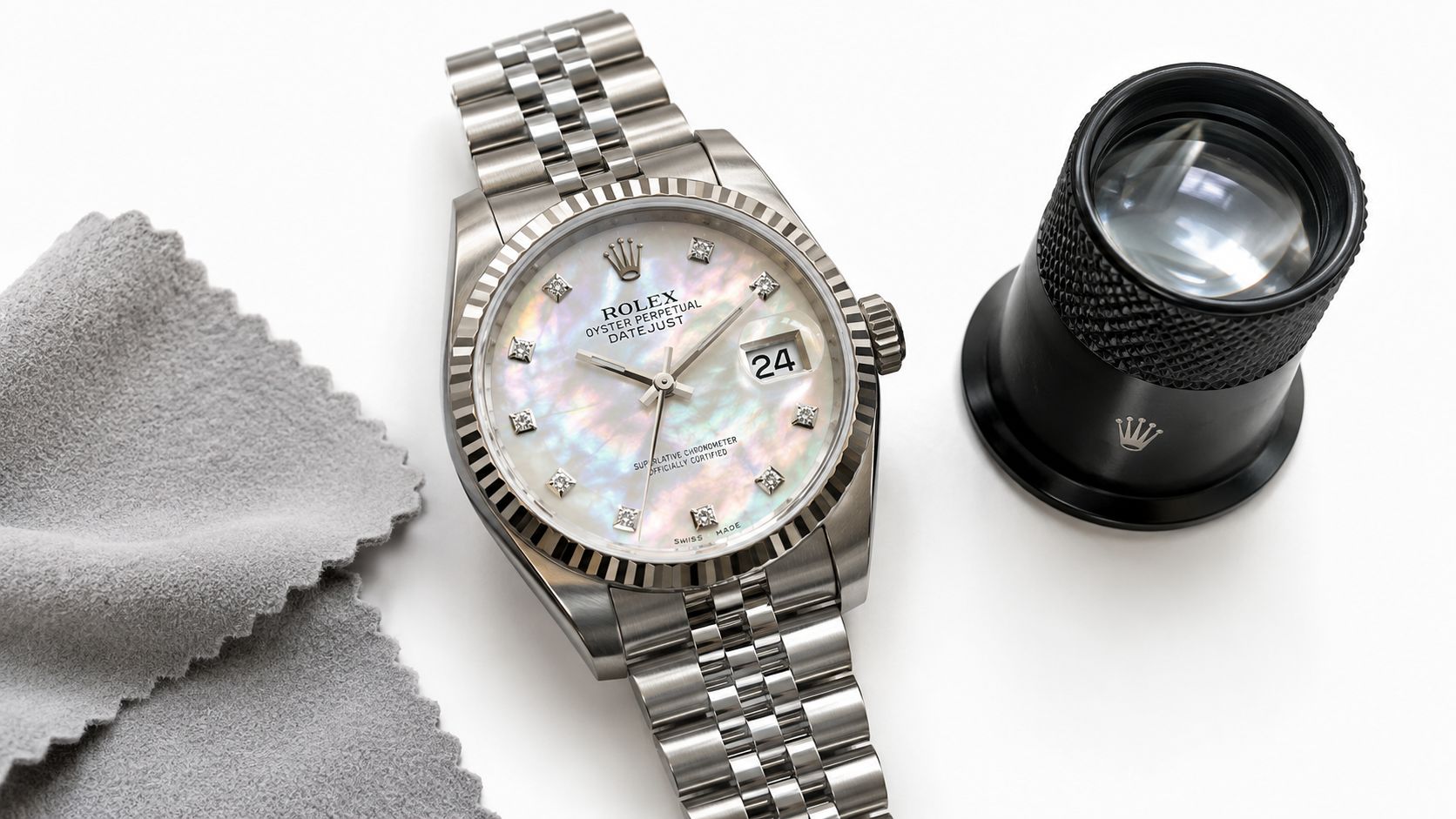
You're looking at a pre-owned Rolex in a case or online listing, and the dial seems to change as you move it under the light. One moment it looks white and silver. The next, it shows pink, green, or darker reflections. That effect comes from the natural structure of mother-of-pearl, not from a painted sunburst finish.
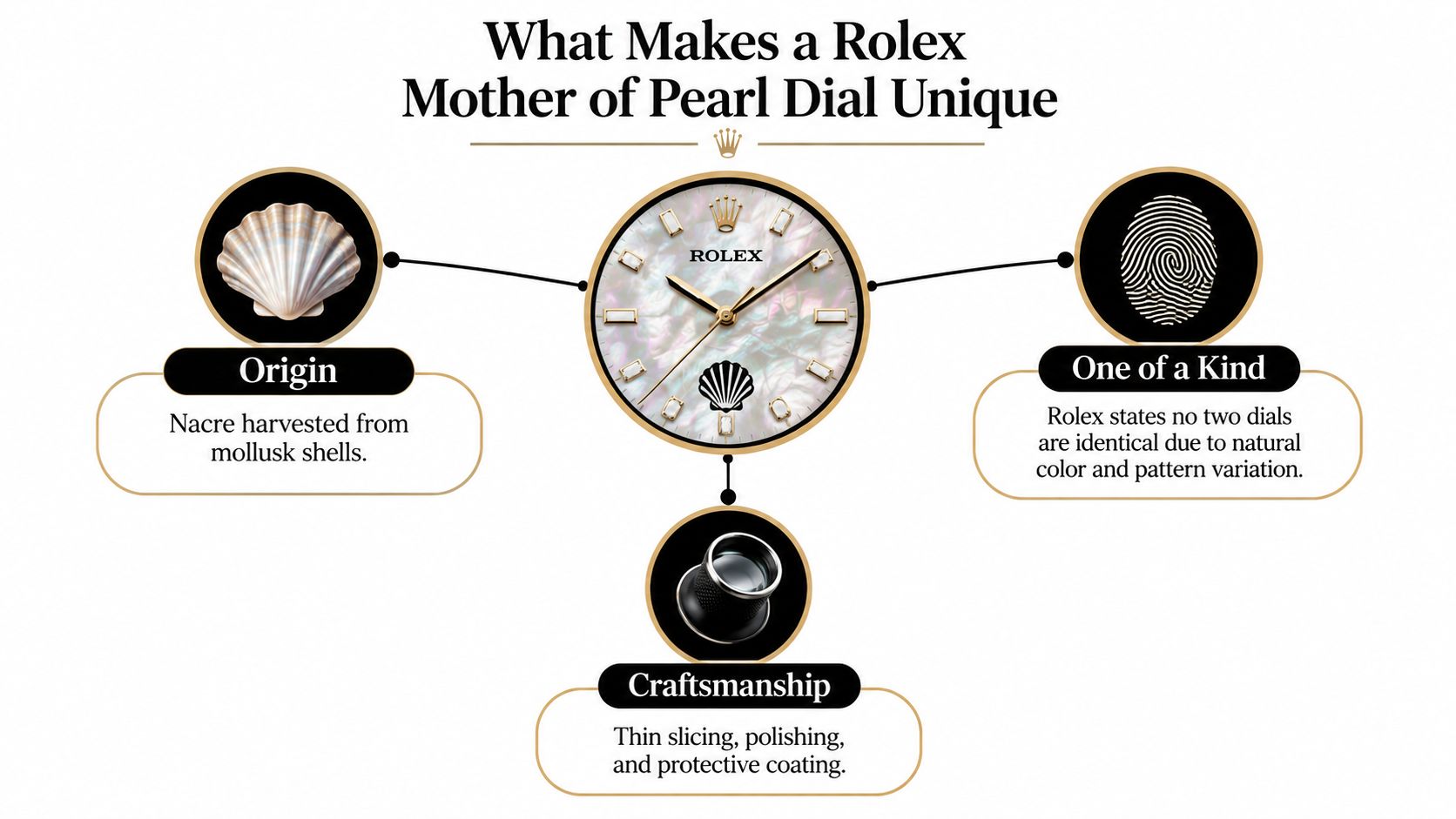
Mother-of-pearl, also called nacre, comes from the inner shell of a mollusk. Rolex cuts and prepares the material for use as a dial, then selects pieces for their natural color and iridescence. The shell section matters. So do the material's origin, thickness, structure, and orientation.
Rolex states that no two mother-of-pearl dials are identical because color, intensity, and structure change depending on the part of the shell used. The brand also says it never artificially colors the material, choosing instead to preserve its original hue and natural shine. You can read Rolex's description of the material in its Day-Date mother-of-pearl information.
Why uniqueness matters when buying pre-owned
A natural dial shouldn't look mechanically identical to another dial from the same reference. You may see one example with a soft, even white surface and another with stronger pink, gray, or darker movement. Neither is automatically better. The right choice depends on whether you prefer a restrained appearance or a more expressive pattern.
Look for photographs taken from several angles. A single straight-on image can hide the dial's character. Ask for close images of the markers, rehaut, hands, and dial edge. Those details help you judge whether the watch has its original factory configuration and whether the dial appears damaged, refinished, or replaced.
Practical rule: Buy the individual watch you can inspect, not an idealized version of the reference.
White, Pink, Black, and Yellow Mother of Pearl Options
Rolex describes mother-of-pearl as available in pink, white, black, and yellow hues, with the final appearance influenced by the shell's origin and the section selected. These colors aren't interchangeable finishes. Each creates a different relationship between the case, markers, bracelet, and surrounding diamonds.
White mother-of-pearl is the easiest starting point for most buyers. It can read as bright white, silver, or softly iridescent depending on the light. With diamond hour markers, it creates a dressier look, but it can also remain understated when paired with a simpler bezel.
Black mother-of-pearl has more contrast and usually feels more deliberate on the wrist. It works especially well with white gold, platinum, or diamond accents because the dark background gives the metal and stones a sharper visual outline. It isn't always a flat, uniform black. Natural structure can create lighter flashes across the surface.
Pink mother-of-pearl tends to suit buyers who want a warmer, more traditionally feminine presentation. The tone may be subtle rather than obviously pink, particularly under indoor lighting. It pairs naturally with Everose gold and can soften the appearance of diamond-set details.
Yellow mother-of-pearl is less predictable in the way it presents. Depending on the shell material and surrounding metal, it may look creamy, golden, or softly luminous. Confirm the actual dial color from photographs and the listing description rather than assuming every yellow example has the same shade.
| Color | Typical origin influence | Common on models |
|---|---|---|
| White | May show silver, pink, or other iridescent reflections | Lady-Datejust, Datejust, Day-Date |
| Black | Can range from deep dark tones to lighter reflective areas | Lady-Datejust, Datejust, dressier configurations |
| Pink | May appear soft and warm, with changing iridescence | Lady-Datejust and precious-metal configurations |
| Yellow | Can read creamy or golden depending on natural structure | Datejust and precious-metal configurations |
Diamond settings change the balance. Diamond markers add points of light, while a diamond bezel makes the watch more jewelry-focused. If readability matters most, compare the dial in direct and indirect light before deciding.
Which Rolex Models Feature Mother of Pearl Dials
Rolex places mother-of-pearl primarily on dress-oriented models and selected women's references. The material appears across several case sizes and metal combinations, so you should choose the watch family first, then compare dial treatments.
Lady-Datejust
The Lady-Datejust is the natural place to begin if you want a smaller Rolex with a decorative dial. Mother-of-pearl appears with different metal choices and gem-set configurations. A diamond-marker version feels more formal, while a simpler bezel can make the watch easier to wear every day.
Size matters here. If you're comparing Lady-Datejust case proportions, our guide to Lady-Datejust 26, 28, and 31 sizing can help you focus on wrist presence rather than dial color alone.
Datejust 31 and Datejust 36
Rolex lists mother-of-pearl options for Datejust 31 and Datejust 36 models, giving buyers a middle ground between a compact dress watch and a larger modern profile. These references can pair the dial with Oystersteel, Rolesor, or precious-metal cases. Rolesor means Rolex's combination of Oystersteel and gold in the same watch.
The Datejust 31 can be a strong choice for someone who wants a noticeable dial without the visual weight of a larger case. Datejust 36 offers a more traditional unisex proportion and gives the mother-of-pearl surface a little more presence.
Rolex's Datejust reference information shows how the material appears across multiple sizes and metal combinations. For a broader explanation of Rolex families, see our guide to different Rolex models.
Day-Date
The Day-Date places mother-of-pearl in a more formal setting. Rolex showcases the material on precious-metal Day-Date configurations, including versions with diamond-set hour markers and baguette-cut diamond details. The dial therefore becomes part of a larger high-jewelry design rather than a standalone color choice.
The Rolex Day-Date mother-of-pearl configuration illustrates how the brand combines natural dial material with precious metal and factory gem-setting. Buyers should inspect the complete configuration, including case metal, bezel, markers, bracelet, and condition, because those elements shape both appearance and price.
How Natural Variation Impacts Value and Buying Decisions
A pre-owned Rolex mother-of-pearl dial can look different in every listing. The surface may shift from pale to vivid as the angle changes, so judge the actual watch rather than relying on a color name or stock image. The right question is whether this dial's tone, pattern, and contrast suit your taste.
Natural variation adds character, but it does not excuse damage or uncertain history. Ask for clear, angled photographs and inspect the dial for cracks, chips, lifting, discoloration, residue, or marks near the edges. Confirm that the dial is original to the reference and ask whether Rolex or another watchmaker replaced it during earlier service.
What to compare between listings
Start with the watch itself. Then check the paperwork, reference, and configuration. Photos should support the description, not stand in for an inspection.
- Dial appearance: Request angled images that show how the iridescence changes in different light.
- Marker alignment: Check that the hour markers sit evenly and match the stated reference.
- Dial condition: Look for cracks, chips, lifting, discoloration, residue, and unusual edge marks.
- Factory configuration: Compare the bezel, markers, case metal, bracelet, and clasp with known Rolex specifications.
- Documentation: Review the reference and serial information in the listing and supporting papers, when provided.
- Seller communication: A reliable seller should answer specific questions and explain the watch's service history.
Authentication matters because a natural-looking dial can still be incorrect for the reference or replaced with a non-original part. Rolex's Day-Date technical brochure shows how mother-of-pearl appears with factory gem-setting and detailed metal finishing. Use that type of specification detail when comparing a candidate watch.
Prices vary significantly between models and configurations. A steel Datejust generally occupies a lower price tier than a full-gold, diamond-set piece, while the dial's natural variation remains only one part of the evaluation. Reference, case metal, gemstones, condition, completeness, and service history all affect the asking price. Our guide to pricing differences between Rolex watches with the same reference explains why similar listings can still command different prices.
Care Tips for Protecting Your Mother of Pearl Dial
Mother-of-pearl rewards careful handling. Treat the watch as a precision instrument with a natural decorative surface, not as an indestructible fashion accessory.
Daily care
Keep the watch away from harsh chemicals, abrasive materials, and unnecessary impacts. Perfume, hairspray, cosmetics, cleaning products, and saltwater can leave residue or create avoidable exposure around the case, crystal, and bracelet.
After wearing it, wipe the exterior gently with a soft, clean cloth. Don't press hard over the crystal or try to polish the dial through the crystal. If the watch needs more than light surface cleaning, take it to a qualified watch professional.
Storage and cleaning
Store the watch separately from jewelry that could scratch its case or crystal. A stable, dry storage space is preferable to a bathroom, where humidity changes frequently. Keep the crown secured as designed and don't operate it when the watch is wet.
Avoid household polish, abrasive cloths, ultrasonic cleaning, and DIY attempts to remove marks from the dial. Mother-of-pearl has a natural surface and cannot be treated like stainless steel. Our guide to cleaning a Rolex watch offers additional general care guidance.
Care advice: If you see a mark under the crystal, don't assume it's dirt. Have the watch examined before anyone attempts to clean or open it.
Care also supports authentication. A damaged or mismatched dial can indicate replacement, mishandling, or an incorrect configuration. It doesn't prove a watch is fake by itself, but it gives you a reason to pause and request a detailed inspection.
Featured Mother of Pearl Rolex Watches Available at ECI
Availability changes quickly, and each pre-owned watch is an individual piece. At the time of writing, the clearest product example connected to this topic is the Rolex Datejust 36 ref. 126281RBR with an 18K rose gold and white mother-of-pearl diamond dial, Jubilee bracelet, box, and papers. The current listing provides the live price and availability.

Rolex Datejust 36 ref. 126281RBR
A 36 mm Datejust with an 18K rose gold and white mother-of-pearl diamond dial, Jubilee bracelet, box, and papers. The natural dial variation makes the actual example important to review before purchase.
Price: See current listing
View the Rolex Datejust 36 ref. 126281RBR listing →
For fallback browsing, compare the Rolex Datejust collection, since another mother-of-pearl configuration may be available after this individual watch sells.
A video can help you see how a mother-of-pearl surface reacts to movement and light. Use it as a supplement to detailed listing photographs, not as a substitute for confirming the exact reference and condition.
ECI Jewelers offers pre-owned luxury watches and lists the reference, configuration, and available materials on individual product pages. If you're considering a different Lady-Datejust, Datejust, or Day-Date, request photographs of that exact watch before making a decision.
How Can You Pay for It
Financing may be available through Affirm, Synchrony, Acima, and Snap Finance, with approval and terms set by each provider. Review the provider terms before choosing a payment option through ECI's financing and leasing options.
You can also ask about trading in a luxury watch through ECI's luxury watch trade-in page. The value depends on the watch you offer, its condition, configuration, and current evaluation.
Frequently Asked Questions
Is every Rolex mother-of-pearl dial different?
Rolex states that no two mother-of-pearl dials are identical. The color, intensity, and structure change according to the shell section used, so two watches with the same reference can still look different.
Is white or black mother-of-pearl better?
Neither is universally better. White mother-of-pearl is more versatile and softer in appearance, while black mother-of-pearl creates stronger contrast with metal and diamonds. Choose based on your wardrobe, jewelry, and preference for subtle or pronounced contrast.
Which Rolex models use mother-of-pearl dials?
Rolex lists mother-of-pearl options on the Lady-Datejust, Datejust 31, Datejust 36, and Day-Date. The material appears in different metal and gem-set configurations, so the reference must be checked individually.
Can a mother-of-pearl dial be refinished?
Don't assume it can be refinished like a metal component. If the dial has a mark, crack, or suspected alteration, have it assessed by a qualified watch professional before purchasing or authorizing work.
Does mother-of-pearl make a Rolex more valuable?
It can contribute to desirability, particularly when paired with precious metal or factory-set diamonds, but it doesn't determine value by itself. Reference, condition, originality, configuration, completeness, and actual market demand all matter.
Final Thoughts Before You Buy
A Rolex mother-of-pearl dial is a poor choice if you want perfect uniformity. It's an excellent choice if you appreciate a natural surface that changes from one watch to the next. The dial's individuality is part of the specification, not a defect.
Start by choosing the model family that fits your wrist and lifestyle. The Lady-Datejust offers a smaller, jewelry-oriented profile. Datejust 31 and Datejust 36 provide broader proportions. Day-Date takes the material into a more formal precious-metal setting.
Then inspect the actual pre-owned example. Confirm the reference, case and bracelet configuration, dial condition, diamond setting, available paperwork, and seller's answers. Don't buy solely from a generic image or assume that a dial's unusual appearance means it has been damaged.
Our Rolex buying guide can help you organize those checks before you commit. The most important question remains simple: does this particular dial appeal to you in natural light, and does the watch's condition support the asking price?
ECI Jewelers offers pre-owned Rolex Datejust, Lady-Datejust, and other luxury watch configurations for buyers comparing natural mother-of-pearl dials, precious metals, and diamond settings. Visit ECI Jewelers to review current listings and contact the team about the exact watch you're considering.


