


A tennis bracelet should usually be about 0.5 to 1 inch larger than your actual wrist circumference. Add about 0.5 inch for a snug fit, about 0.75 inch for standard comfort, or up to 1 inch for a looser style. If you're comparing a chart at the counter or choosing a gift without a measurement, remember that wrist circumference and finished bracelet length are different measurements.
The right choice also depends on diamond weight, link flexibility, clasp design, and whether you'll wear the bracelet alone or beside a watch. Use the chart below as a starting point, then confirm the bracelet's actual inside length before buying.
How to Choose the Right Tennis Bracelet Size
At the counter, a bracelet marked 7 inches can still feel wrong on a 6.5-inch wrist. The reason is simple: wrist circumference and finished bracelet length are different measurements. Start with the wrist measurement, then choose how much movement you want instead of relying on labels such as “women's” or “men's.”
Use three fit options as practical starting points. A snug fit adds about 0.25 to 0.5 inch, a standard everyday fit adds about 0.5 to 0.75 inch, and a relaxed fit adds about 0.75 to 1 inch. These allowances are guidelines, not a universal sizing standard. Your stacking preference matters too. A bracelet worn beside a watch or other bangles generally needs more room than one worn alone.
A bracelet that matches your wrist circumference exactly will often feel tight as your hand bends. Extra length gives articulated links space to move without pressing into the skin. Too much length can make the bracelet rotate, slide over the hand, or place more impact on the clasp.
Stone weight and construction can change the fit. A heavier diamond bracelet, rigid section, or large clasp may feel tighter than a flexible plain-link design with the same stated length. Check whether the listed measurement includes the clasp, safety chain, and removable links before comparing options.
For a gift, ask a jeweler to confirm the finished inside circumference and whether links can be added or removed. ECI Jewelers' bracelet size guide offers another practical reference. For setting comparisons, this guide to bezels for gift shoppers explains how a raised setting can affect the way a bracelet sits.
Measuring Your Wrist Accurately
Measure at the point where you'll wear the bracelet, normally just below the wrist bone. Keep your hand relaxed. If you clench your fingers or stretch your hand, you'll change the wrist's shape and may choose a size that binds during ordinary movement.
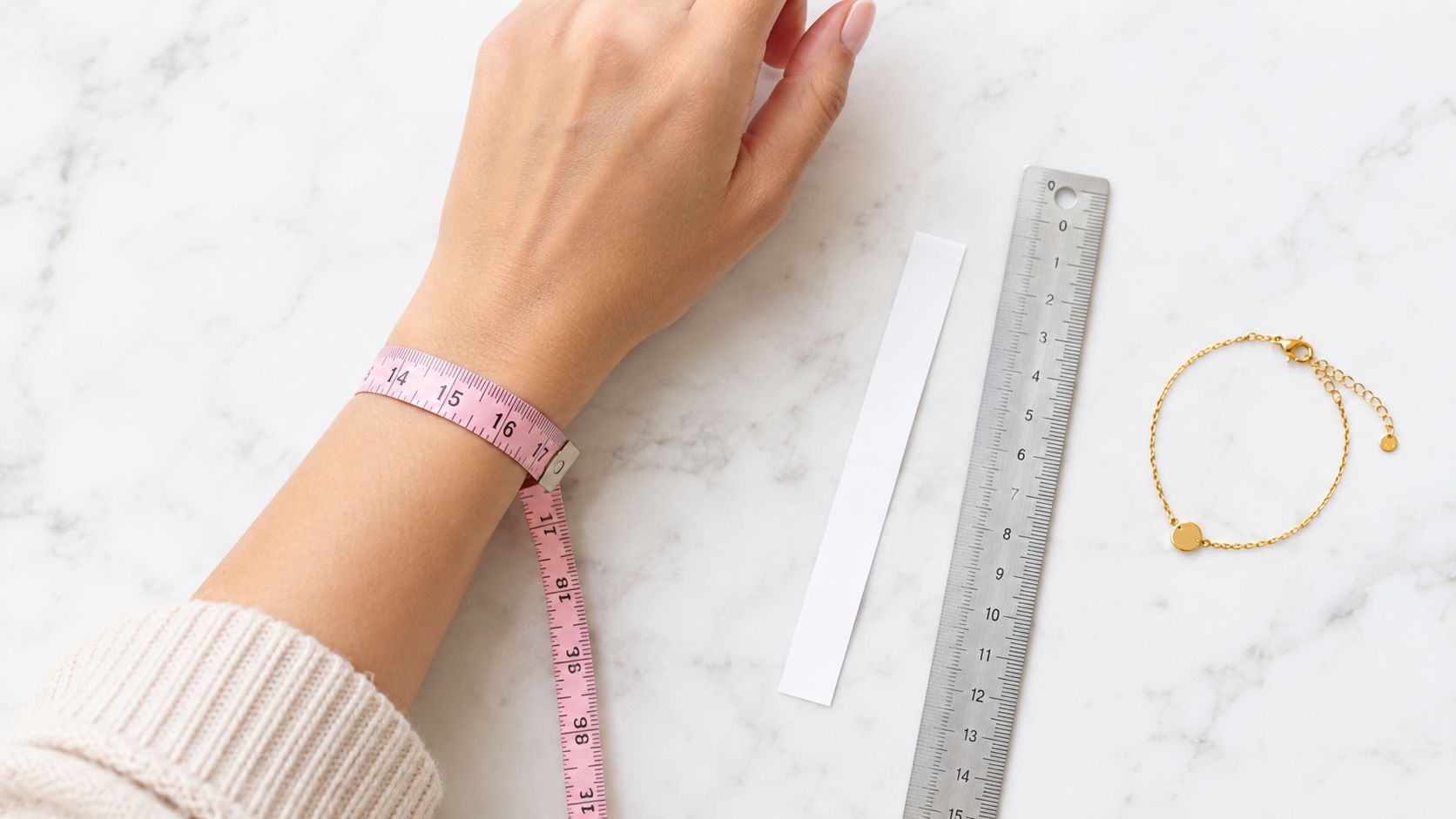
A reliable measuring method
- Wrap a non-stretch tape around the wrist. Keep it close to the skin without pulling it tight. A strip of paper works well if you don't have a tape measure.
- Mark the meeting point. If you're using paper, place it against a ruler and record the circumference. Fabric tape can stretch or sit unevenly, so it can introduce error.
- Record the measurement where the bracelet will rest. The narrowest point of the wrist isn't always the correct point, particularly if you plan to wear the bracelet below the wrist bone.
- Apply the desired allowance. Add approximately 0.5 inch for a close fit, about 0.75 inch for comfortable drape, or up to 1 inch for more movement.
Measure more than once if the result seems unusual. Wrist circumference can change with heat, exercise, travel, pregnancy, and fluid retention, so take a second measurement when your hand is relaxed and lightly flexed. For a related approach to measuring a wearable band, see our guide to sizing a watch bracelet.
The Practical Tennis Bracelet Size Chart
The table below gives common wrist-to-bracelet starting points. It maps wrist circumference to finished bracelet length, so the two numbers don't get treated as interchangeable.
| Wrist circumference | Recommended bracelet length |
|---|---|
| 5.0 to 5.5 inches | 5.5 inches |
| 5.6 to 6.0 inches | 6 inches |
| 6.1 to 6.5 inches | 6.5 inches |
| 6.6 to 7.0 inches | 7 inches |
| 7.1 to 7.5 inches | 7.5 inches |
These ranges can apply to both women's and men's tennis bracelets. If your measurement falls between ranges, the larger length generally gives a more comfortable fit, but the design still matters. A heavy, less flexible bracelet may need a different adjustment from a slim bracelet with many small articulated links. (The Brilliant Earth sizing chart provides these wrist and bracelet length ranges)
A useful example is a 6-inch wrist, which commonly suits a bracelet around 6.5 to 7 inches. A 7-inch wrist commonly suits approximately 7.5 to 8 inches, depending on whether you want close contact or visible movement. (The history and sizing guidance for tennis bracelets also distinguishes practical benchmarks from universal standards)
Before purchasing, compare the chart with the bracelet's actual end-to-end length. For pre-owned jewelry, ask whether the measurement includes removable links and how the clasp contributes to the wearable circumference. You can also browse the tennis bracelet collection while checking each listing's construction details. A separate hidden jewelry bracelets shop can be useful for comparing how different bracelet forms measure, though a tennis bracelet requires a closer check of its clasp and articulated line.
How Fit Style Changes the Calculation
A bracelet can match your wrist measurement and still wear poorly if the allowance does not suit your routine. Start with your measured wrist circumference, then choose how much extra length you want for movement, stacking, and daily comfort.
| Fit preference | Allowance | How it wears |
|---|---|---|
| Snug | About 0.25 inch | Sits close and moves less |
| Standard comfort | About 0.5 inch | Allows everyday movement |
| Relaxed | About 0.75 inch | Offers more drape and mobility |
For a 6.25-inch wrist, these options indicate approximately a 6.5-inch snug bracelet, a 6.75-inch standard bracelet, or a 7-inch relaxed bracelet. The wrist measurement and the finished bracelet length are different measurements, so compare both before ordering.
Choose snug when you want the stones to stay in a fairly consistent position and intend to wear the bracelet alone. The fit should remain comfortable as you bend your wrist. A bracelet that leaves a mark, pinches, or limits movement is too short, regardless of what the chart suggests.
Standard comfort is the practical starting point for everyday wear. It allows some movement without making the bracelet feel loose. Relaxed fit creates more visible drape and can suit stacking or a preference for movement, provided the bracelet remains securely below the hand.
Practical rule: Choose the allowance for the complete setup, not the bracelet by itself. Wearing a tennis bracelet beside a watch or other bracelets may call for more room than wearing it alone.
Stone placement can shift as the bracelet moves, so consider whether you want the line of diamonds centered or allowed to rotate. For background on the design and construction, see what a tennis bracelet is.
The Impact of Diamonds and Clasp Design
Diamond weight changes how a bracelet behaves. A lighter total-carat design usually drapes more easily, while a heavier total-carat design can rotate toward the underside of the wrist or feel less flexible. That doesn't mean a heavier bracelet always needs a loose fit. It means the allowance should account for the stones, settings, link articulation, and the way you plan to wear it.
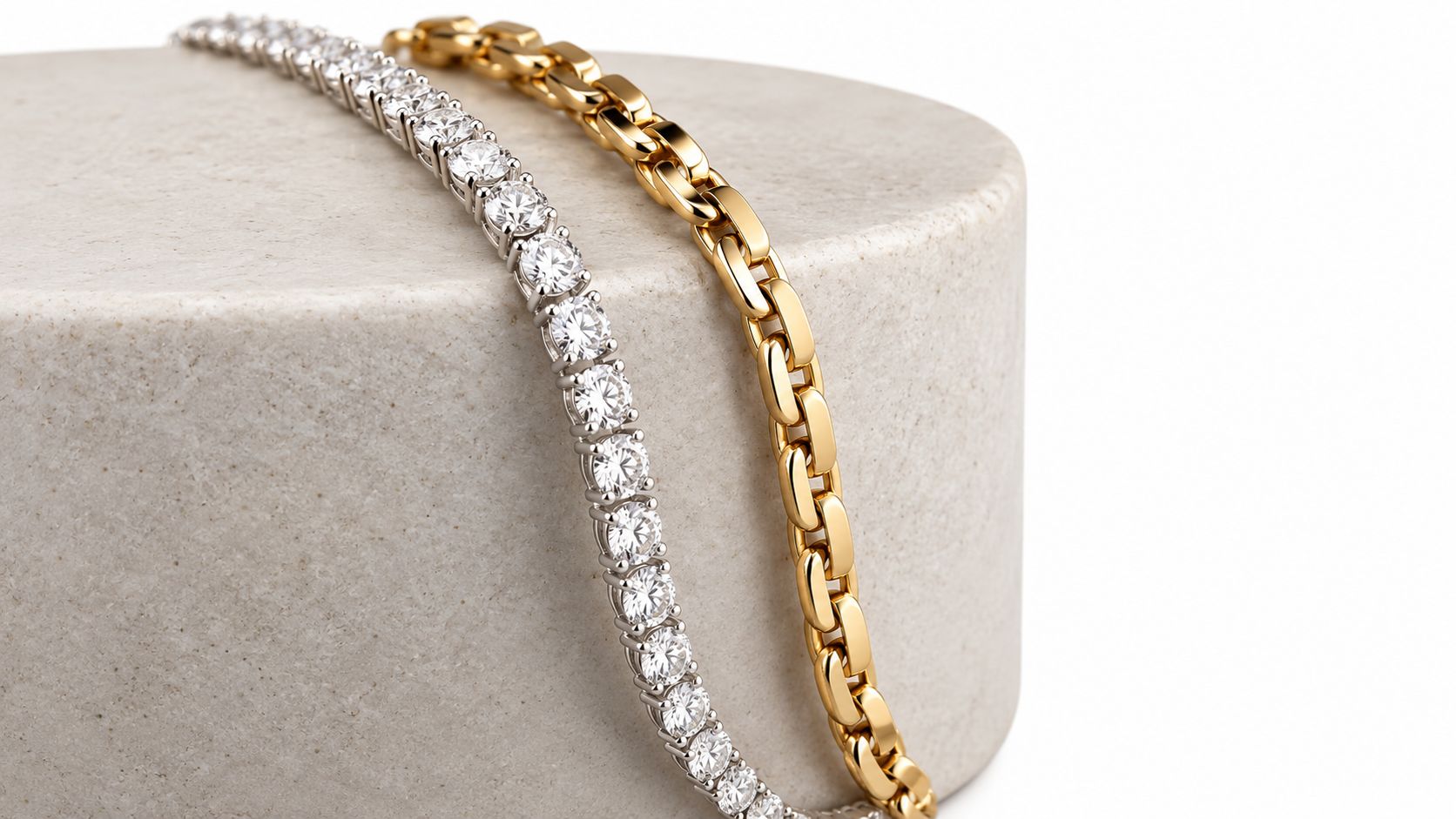
Compare the three fit choices
A snug fit keeps the bracelet close to the skin. It can suit a flexible design with moderate stone weight, provided you can bend your wrist comfortably and the clasp doesn't press into the skin.
A standard fit balances security and movement. This is often the most practical choice for daily wear because the bracelet can shift slightly without sliding over the hand.
A loose fit creates more visible movement. It can work for a fashion-forward look or stacking, but excessive length increases rotation and may expose the clasp to knocks.
The clasp occupies part of the finished length and can create a stiff section in an otherwise flexible line. A safety clasp or safety chain adds security, but it can also affect how the bracelet bends. Ask for the finished inside circumference, not only the nominal bracelet size.
Watch how the bracelet behaves while the hand is relaxed, bent, and lightly flexed. The diamonds should move with the wrist rather than binding at the clasp. For buyers comparing a heavier stone look with a more delicate design, our diamond clarity and color guide provides useful context for evaluating the stones beyond total carat weight.
Considerations for Gifting a Bracelet
Gifting removes the most useful piece of information, the recipient's wrist measurement. A casual guess based on height, age, or gender isn't reliable. The better approach is to find an existing bracelet or watch they wear and measure its inside length, then ask a jeweler whether that measurement represents the bracelet's wearable circumference.
You can also involve a trusted friend or family member who knows the recipient's usual fit. Ask whether the person prefers jewelry close to the wrist or with visible movement. That preference may matter as much as the measurement itself.
Check the hardware before wrapping the gift
Ask these questions before you commit:
- What does the listed length include? Confirm whether it includes the clasp, end pieces, and safety chain.
- Can links be added or removed? Some bracelets are easier to adjust than others.
- What is the return or adjustment process? Make sure the recipient has a clear way to correct the fit.
- Will it be stacked? A bracelet worn beside a watch may need more room than one worn alone.
If you're buying without an exact measurement, a design with practical adjustment options can reduce the risk of an uncomfortable gift. A professional jeweler can also confirm whether the clasp position changes the effective length.
When to Adjust or Custom Size
A bracelet may look right on paper and still feel wrong on the wrist. One common example is a piece that matches the chart but feels tight because the buyer measured at the narrowest point. Another is a bracelet that feels loose because the wearer intended to stack it with a watch, but the original allowance was chosen for solo wear.
Start by inspecting the bracelet's hinge flexibility, clasp alignment, and safety mechanisms. The links should articulate without binding, and the clasp should close evenly without forcing one side of the bracelet downward.
What a jeweler should confirm
- Finished inside circumference: This is the wearable measurement, not just the advertised length.
- Adjustment method: Links may be added or removed, depending on the construction.
- Balance after resizing: A change should not leave the clasp or diamond line sitting unevenly.
- Stone security: The jeweler should inspect settings and hinges during the service.
Pre-owned bracelets deserve extra attention because prior resizing, removable links, and clasp position can change the difference between stamped size and actual wearable length. A professional jeweler can advise whether the bracelet should be adjusted or whether a different size is safer.
Don't resize a valuable tennis bracelet at home. Cutting, soldering, or altering a tightly set diamond line can affect the structure and the way the stones face up. The right service plan preserves both comfort and the bracelet's balance.
Frequently Asked Questions
Should I choose a larger bracelet for stacking?
Usually, yes, if you'll wear the tennis bracelet beside a watch or other substantial bracelets. Choose enough room for the full stack, but don't add length blindly. The bracelet still needs to remain below the hand and secure around the wrist.
Can my wrist measurement change during the day?
Yes. Heat, exercise, travel, pregnancy, and fluid retention can affect wrist circumference. Measure at more than one time when possible, then use the largest comfortable measurement rather than sizing from a single unusually narrow reading.
Is the one-finger rule universal?
No. One finger fitting beneath the bracelet is a useful starting check, but it isn't a universal standard. A heavy diamond bracelet, rigid section, or bulky clasp can require a different fit from a lightweight flexible bracelet.
How should I check a pre-owned tennis bracelet?
Record both the stated size and the actual inside length. Ask whether links were removed, whether the clasp has been replaced, and whether the safety mechanisms and hinges work correctly.
Can a jeweler add or remove links?
Often, yes, but the answer depends on the bracelet's construction. A jeweler should confirm whether the links are removable and whether an adjustment will preserve the diamond spacing, clasp alignment, and overall balance.
ECI Jewelers offers pre-owned fine diamond jewelry and practical sizing guidance for buyers comparing tennis bracelet length, clasp construction, and fit. Visit ECI Jewelers with your wrist measurement or an existing bracelet's inside length so the finished fit can be checked before purchase.


