


That sales receipt for your Rolex isn't the financial shield you think it is.
For insurance purposes, its value is often limited to the day you bought it. As the watch's market value appreciates over time, this can leave you dangerously underinsured. An official watch appraisal for insurance is the only document that reflects its true, current replacement cost.
Why a Sales Receipt Is Not Enough for Insurance
Relying on an old purchase receipt to insure a luxury watch is one of the most common and costly mistakes a collector can make. The price you paid five years ago is a historical fact, not a reflection of its current worth.
Insurers need to know what it would cost to replace your exact timepiece today. A dated invoice just doesn’t provide that information.
The Reality of Market Appreciation
Imagine you purchased a Patek Philippe Calatrava for $20,000 a few years back. Due to brand prestige, inflation, and collector demand, that same model might now trade on the secondary market for $35,000 or more.
If your watch is lost or stolen and you only have that original receipt, your insurance payout will likely be capped near the $20,000 you paid. That leaves you with a $15,000 financial gap to cover out of pocket. This scenario highlights the critical difference between retail price and today's replacement value.
A professional appraisal closes this gap by providing a legally recognized valuation based on current market data.
A professional appraisal is your financial defense against market volatility. It ensures that if the worst happens, you are compensated for what your watch is truly worth now, not what it was worth then.
Understanding Market Value vs. Purchase Price
Grasping why a sales receipt falls short means understanding the concept of current fair market value, much like learning how to price estate sale items.
The pre-owned luxury watch segment is a major economic force, projected to hit $35 billion by 2030. This market operates on real-time data from auctions, dealer sales, and condition-specific trends—not outdated invoices. Basing your insurance on a retail price from years ago can undervalue sought-after vintage pieces by as much as 25%.
Without a current watch appraisal for insurance, you are essentially self-insuring the appreciated value of your timepiece. An updated valuation is the only way to secure comprehensive protection and ensure you can fully replace what you've lost.
How to Prepare Your Timepiece for Appraisal
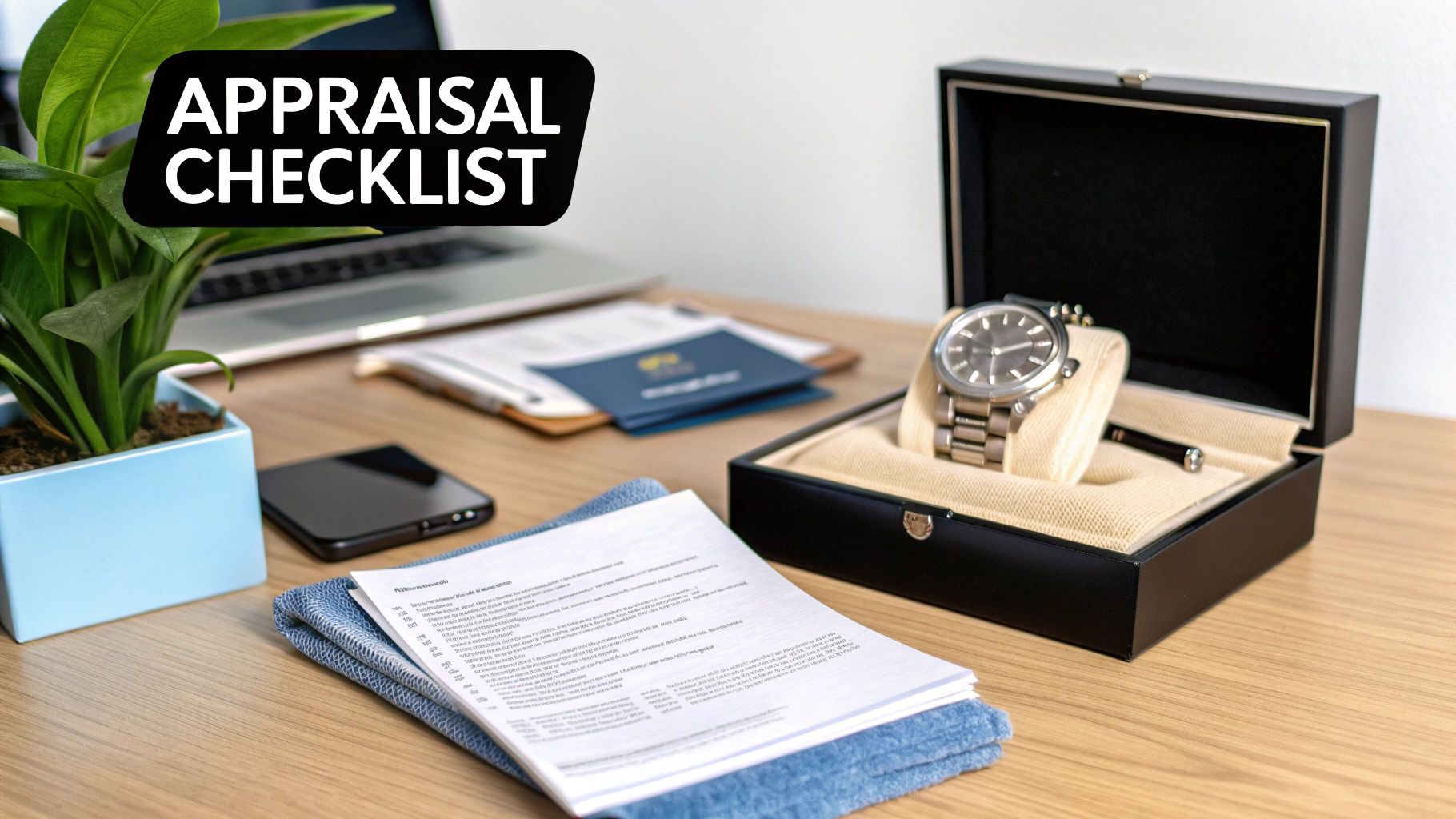
Before you even think about meeting an appraiser, a little homework goes a long way. Taking a few minutes to prepare can make the entire process smoother, faster, and ultimately, more accurate.
Think of it as building a case for your watch's value. The more verifiable information and history you can provide, the stronger and more precise that final valuation will be for your insurance company.
Assemble Your Watch Documentation
The first and most important job is to gather every bit of paperwork you have. These documents are your watch’s biography, establishing its history and authenticity beyond a shadow of a doubt.
Your goal is to present what collectors call a “full set.” Each piece of paper adds another layer of provenance, which can directly impact its value. Don't stress if you're missing an item or two, but the more you have, the better.
Here’s a quick checklist of what to dig up:
- Original Box and Papers: This means everything—the inner and outer boxes, user manuals, and even the original hang tags.
- Warranty Card or Certificate: This is the big one. Usually stamped by the original authorized dealer, it's a cornerstone of authenticity.
- Original Sales Receipt: While not enough for an insurance appraisal on its own, it’s great for establishing the purchase history and timeline.
- Service Records: Has the watch been professionally serviced? Any receipts or documents from authorized service centers are pure gold.
Having these materials doesn't just confirm that your watch is the real deal; it shows it's been cared for. If you want to dive deeper into why this matters so much, you can learn more about the importance of a Rolex box and papers in our guide.
I’ve seen firsthand how a complete set—box, papers, and service history—can increase a vintage watch's appraised value by as much as 20-30%. For insurance, this means your coverage will more accurately reflect the true cost of replacing not just the watch, but a collector-grade example.
Prepare the Watch Itself
Once your paperwork is in order, it’s time to prep the watch. A word of caution: never attempt a deep clean or polish yourself. This can actually tank the value, especially on vintage pieces. Leave that to the professionals.
A gentle surface cleaning, however, is a great idea.
Just take a soft, dry microfiber cloth and carefully wipe away any fingerprints and dust from the case, crystal, and bracelet. It’s a simple step that allows the appraiser to get a clear, unobstructed look at the watch’s true condition. Honestly, it’s just a small detail that shows respect for your watch and the appraiser's time.
Finally, before you head to your appointment, snap a few clear photos of your watch on your phone. Get good shots of the dial, case back, clasp, and any unique engravings or serial numbers. Having your own visual record is just smart practice and gives you a personal backup before handing your timepiece over.
Finding a Truly Qualified Watch Appraiser
Getting a proper watch appraisal for insurance isn't as simple as walking into the nearest jewelry store. While plenty of jewelers offer appraisal services, a high-end timepiece requires a true specialist—someone who lives and breathes horology, market trends, and the tiny details that define a specific brand.
Think about it this way: a general jeweler might value your Rolex based on its gold content and basic model number. A real specialist, on the other hand, will spot the subtle difference in a "flat 4" bezel on a vintage Submariner. That one detail could add thousands to its replacement value. Your goal is to find that specialist.
Credentials That Actually Matter
First things first, you need to look past generic titles and focus on certified credentials from respected industry organizations. These aren't just fancy acronyms; they represent years of rigorous training, a commitment to ethical standards, and a deep knowledge base.
When you're vetting an appraiser, keep an eye out for these key affiliations:
- Gemological Institute of America (GIA): While famous for diamonds, a Graduate Gemologist (GG) diploma is a fantastic baseline, proving expertise in valuing the precious materials in your watch.
- National Association of Jewelry Appraisers (NAJA): Members are held to a strict code of ethics and professional conduct, often specializing in specific areas like vintage watches.
- American Society of Appraisers (ASA): This group offers a specific "Gems and Jewelry" designation that requires extensive experience and a tough peer-review process.
Choosing an appraiser with credentials from the ASA or NAJA is a critical step. Their valuations are far more likely to be accepted without question by insurance underwriters, which can save you a world of headaches if you ever need to file a claim.
The Right Questions to Ask
Once you have a shortlist of appraisers with solid credentials, it's time for a quick interview. A five-minute conversation can tell you everything you need to know about whether they have the specialized knowledge your watch demands. Don't be shy—you're hiring them for a vital financial service.
Come prepared with a few pointed questions to gauge their expertise:
- "What's your experience with my specific watch brand, like Audemars Piguet or Omega?" You're looking for a confident and specific answer, maybe even mentioning recent models they've handled.
- "How do you determine the current market value for a vintage piece?" A qualified pro will talk about using multiple data sources—auction results, private dealer sales, industry marketplaces—not just pulling a number from a single price guide.
- "Can you walk me through your valuation methodology?" This confirms they're doing a detailed analysis, not just a quick estimate. If they can't explain their own process clearly, that's a red flag.
The table below summarizes the key credentials to look for and what they mean for you as a collector.
Key Credentials for Watch Appraisers
| Credential/Organization | What It Means for You | Specialty |
|---|---|---|
| GIA Graduate Gemologist (GG) | Guarantees expertise in the gemstones and precious metals of your watch. | Gemology & Materials |
| NAJA Member | Signifies adherence to a high ethical code and ongoing education. | Jewelry & Watch Appraisal |
| ASA Accredited Senior Appraiser | A top-tier designation requiring extensive experience and peer review. | Gems, Jewelry, & Horology |
Ultimately, finding an appraiser with these qualifications ensures your valuation is credible, accurate, and respected by insurers.
Authenticity is the absolute foundation of any appraisal. For a deeper dive, check out our guide on how to authenticate a Rolex watch, which covers the critical details an expert appraiser will be looking for.
And one final tip: be wary of any appraiser who wants to charge a fee based on a percentage of your watch's value. That's a huge conflict of interest. Reputable professionals charge a flat fee or an hourly rate for their time, guaranteeing an unbiased and accurate watch appraisal for insurance.
What to Expect During the Appraisal Process
So, you’re ready to get your watch professionally appraised. Knowing what goes on behind the scenes can take the mystery out of it and help you feel more confident. This isn't just a quick once-over; a proper appraisal is a deep dive into your watch's physical condition and its place in the current market.
The first thing an appraiser will do is a thorough hands-on inspection. They’ll get out the loupe and examine every single detail—from the dial's patina and the case's polish to the stretch in the bracelet. They will also need to open up the watch to get a good look at the movement, which is essential for verifying its authenticity and overall health.
The Inspection and Research Phase
After the physical check is complete, the real research begins. This is where an appraiser's market knowledge really shines. They’ll dig into databases of recent sales from major auction houses, private dealer networks, and trusted secondary market sites to see what your specific model is actually selling for right now.
This isn't guesswork. It's about grounding the final number in hard data. For instance, if you have a Patek Philippe, they might pull recent results from a Sotheby's auction. For a vintage Omega, they'd be looking at sales from specialized online marketplaces. The goal is to land on a realistic replacement value so you're not left underinsured.
Getting this number right is critical. The global personal valuables insurance market, valued at around $7.5 billion, is projected to climb to $12.3 billion by 2032. A big reason for this growth is that many collectors have policies based on outdated retail appraisals that don't reflect today's market, which can lead to major shortfalls when a claim is filed. You can learn more about these valuable insurance market trends and why accurate valuations matter.
This handy visual breaks down the key steps, from vetting an appraiser to getting the final report in hand.
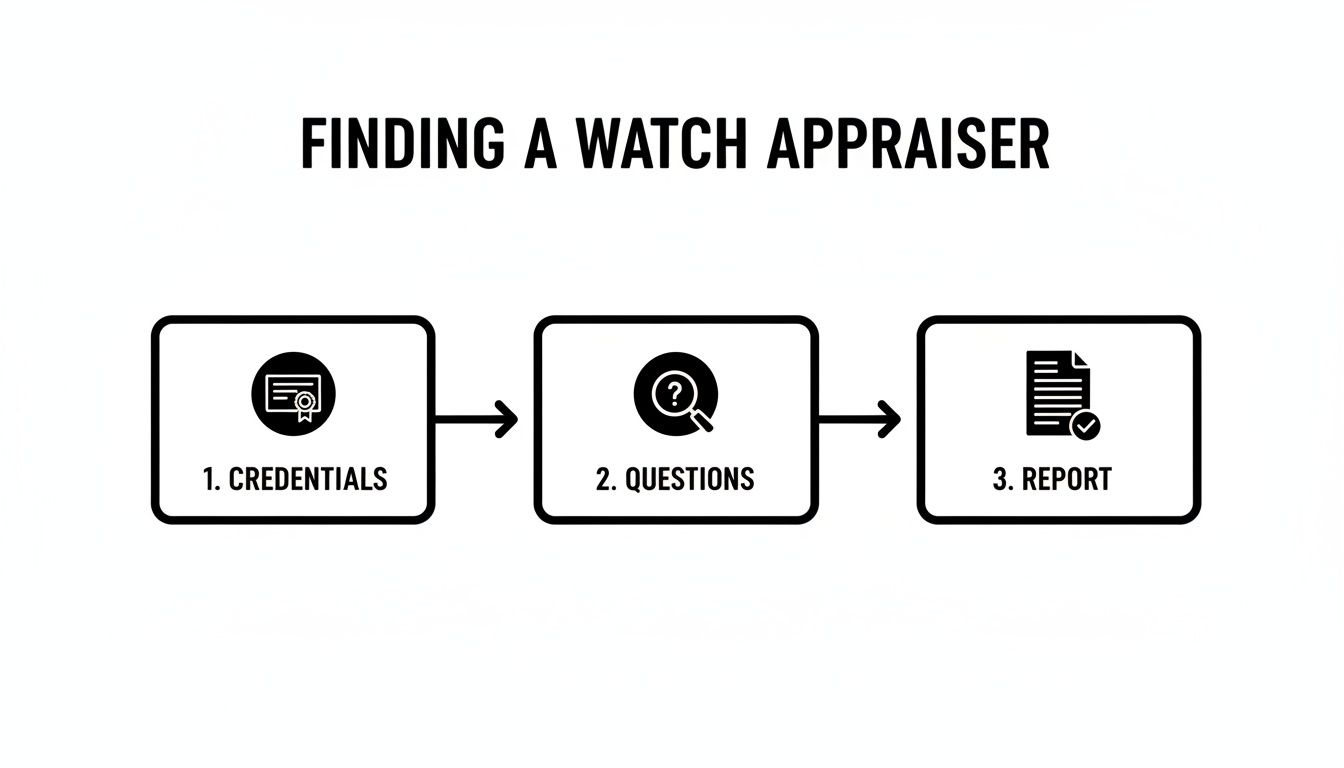
As you can see, it’s a clear process: check credentials, ask the right questions, and then receive a detailed report you can trust.
The Final Appraisal Document
The whole process wraps up with the formal appraisal document. This is the official report you’ll give your insurance company, and a legitimate watch appraisal for insurance is a comprehensive, multi-page document, not just a one-page certificate.
Here’s what you should expect to find inside a professional report:
- Detailed Description: It will list the brand, model, reference number, and serial number, along with a complete breakdown of the case, dial, bracelet, and movement.
- Condition Grade: A clear rating of the watch's condition (like Mint, Excellent, or Good) that notes any wear, damage, or repairs.
- Valuation Type: The document will specifically state the "Retail Replacement Value"—this is the number your insurer needs.
- High-Quality Photographs: Sharp, clear photos from multiple angles are included to provide a visual record for your insurance provider.
As for cost, you can expect to pay either a flat fee or an hourly rate, which usually falls between $150 and $500. This depends on how complex your watch is and the appraiser’s level of expertise. Turnaround time can be anywhere from a few days to a couple of weeks. If you're wondering how valuations work in general, check out our guide on how much a watch is worth.
Getting Your Watch Covered and Keeping It That Way
You've got the appraisal in hand—the hard part is over. Now it's time to turn that piece of paper into real financial protection for your timepiece. This is the moment all that prep work pays off, as you submit the document to your insurance provider to lock in an agreed-upon value for your watch.
Generally, you have two ways to go about this. Many collectors simply add a rider (sometimes called a "floater" or "scheduled personal property endorsement") to their existing homeowners or renters insurance. The other option is a standalone valuables policy from a specialized insurer.
Rider vs. Standalone Policy: Which Is Right for You?
Adding a rider is often the path of least resistance; it's convenient and rolls the cost into a single premium you're already paying. Easy enough.
But a standalone policy is built specifically for items like yours. It usually offers much more tailored protection, often with broader coverage terms and even a zero-deductible option. Here's the real kicker: if you have to file a claim on a standalone policy, it won't impact your primary home insurance premiums or your claims history. That's a huge benefit.
Whichever route you take, make sure the policy explicitly covers the big three risks:
- Theft: Obvious, but essential. This protects you if the watch is stolen from your home or while you're out and about.
- Damage: For all the accidental drops, dings, and mishaps that can happen in daily life.
- Mysterious Disappearance: This one is critical. It covers those baffling situations where the watch is just… gone, with no clear explanation.
The market for this kind of protection is growing fast, projected to hit $5.1 billion by 2034. Why? More and more collectors are waking up to the risks of being underinsured. As market data on valuables insurance shows, an old policy that doesn't reflect today's values can lead to a nasty financial shock when it's time to file a claim.
Why Your Insurance Isn't a "Set It and Forget It" Deal
Getting your watch insured is the first step, not the last. The luxury watch market is anything but static. Values for certain models can swing wildly in just a year or two. A watch appraisal for insurance from three years ago might be completely out of touch with what it would cost to replace that same watch today.
Think of it this way: An outdated appraisal puts you in the same boat as just using the original sales receipt. If your watch has jumped in value by 30% since it was last appraised, you're essentially self-insuring that extra amount.
To stay protected, you need to get your high-value pieces reappraised every two to three years. It’s the only way to ensure your coverage keeps up with the market. Set a reminder in your calendar and treat it just like any other essential part of maintaining your collection. It prevents any painful surprises down the road.
Common Questions About Watch Appraisals for Insurance
Even with the best plan, you're bound to have a few questions when getting a luxury watch appraised for insurance. The process has its own quirks, and knowing what to expect can save you a lot of headaches down the road.
We’ve heard just about every question in the book from collectors over the years. Here are the answers to the most common ones we get.
How Much Does a Watch Appraisal Cost?
This is always the first thing people ask. The good news is that a reputable appraiser will never charge you based on a percentage of your watch's value—that's a massive conflict of interest.
Instead, they charge a flat fee or an hourly rate. For a single timepiece, you can expect to pay anywhere from $150 to $500. A modern Rolex Submariner will likely fall on the lower end of that range, while a vintage Patek Philippe that requires deep research into auction records will cost more.
How Long Does an Appraisal Take?
It really depends on the complexity of the watch and the appraiser's current workload. A straightforward appraisal for a popular, modern watch might only take a couple of business days.
However, if you have a rare or vintage piece, be prepared to wait a week or more. The appraiser needs time to dig into historical sales data and market trends to pin down the correct replacement value. Always ask for a timeline upfront so you know what to expect.
Remember, a rushed appraisal is rarely a thorough one. It's better to wait a few extra days for a well-researched, accurate document that your insurance company will accept without issue.
Can I Insure a Watch Without an Appraisal?
Technically, yes, but you really, really shouldn't. Your standard homeowners or renters policy usually has a tiny sub-limit for jewelry coverage, often capped at just $1,500 to $2,500. That's not even close to the value of most luxury watches.
Without a formal appraisal, you can't add your watch as a "scheduled item" to your policy for its full value. If it gets lost, damaged, or stolen, you’ll only get back that small, generic limit. The appraisal is the key that unlocks proper, full-value coverage.
What’s the Difference Between Replacement Value and Fair Market Value?
This is a critical point that trips a lot of people up. For insurance, you only need to worry about one figure: Retail Replacement Value.
- Retail Replacement Value: This is the big number. It reflects the full, current retail price to walk into an authorized dealer and buy a brand-new, identical replacement. This is what insurers use to make you whole.
- Fair Market Value: This is what a willing buyer would likely pay a willing seller for your exact watch in its current pre-owned condition. This number is almost always lower and is used for things like estate sales, not insurance.
Your insurance policy is designed to replace your lost or stolen watch with a new one. That's why they rely on the higher replacement value to ensure you're fully covered.
At ECI Jewelers, we provide expert, certified appraisals that give you the documentation you need to protect your investment. Whether you're buying, selling, or insuring a luxury timepiece, our specialists offer transparent valuations based on current market data. Visit us online or at our New York showroom to ensure your collection is properly valued and protected. https://www.ecijewelers.com


