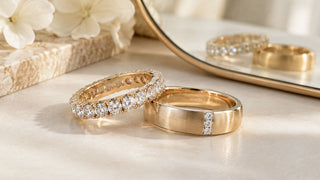

An eternity band can be a wedding band. The surprise is that you're not choosing between two competing categories, you're choosing how much gemstone coverage and long-term upkeep you want. Our default is a plain or half-eternity band for everyday flexibility, and a full eternity band for someone who values sparkle from every angle and accepts tighter sizing limits.
The useful eternity band vs wedding band comparison starts with your hands, not the occasion. We'll help you weigh coverage, fit, maintenance, and cost so you don't buy a beautiful ring that's awkward to live with.
What Separates an Eternity Band from a Wedding Band
An eternity band is defined by gemstones around its full circumference, while a wedding band is defined by its role in the marriage and may be plain metal. One ring can be both.
An eternity band has a continuous line of gemstones, most commonly diamonds, around the whole band. Pavé describes small stones set close together and held in place by tiny metal beads. Pavé is a setting technique, not a promise that diamonds continue underneath the finger.
A traditional wedding band might be polished gold, textured platinum, or a diamond-set design with a plain lower section. Don't let the product category substitute for a close look at the construction.
What each ring means
A plain band puts the emphasis on the vow. A full eternity design adds the symbolism of continuity and is often chosen for an anniversary, a milestone, or the ceremony itself.
Neither choice carries more commitment. We'd rather see you buy a ring you'll enjoy wearing than stretch for a design because it sounds more significant.
| Criterion | Eternity band | Traditional wedding band |
|---|---|---|
| Gemstone coverage | Diamonds or gemstones around the full circumference | Plain metal, partial stones, or no stones |
| Symbolism | Continuity; anniversaries, milestones, and sometimes the ceremony | The ring that marks the marriage role |
| Resizing | Usually difficult or impossible; normally made to an exact size | Usually possible through the plain metal section |
| Daily-wear upkeep | Every side exposed to contact; setting checks matter more | Lower for plain or minimally set designs |
| Main cost driver | Stone count, total carat weight, and setting labor | Metal weight, karat, and design work |
| Best fit | Buyers wanting all-angle sparkle with a stable ring size | Buyers wanting flexibility and low maintenance |
A full eternity band gives uninterrupted sparkle from every angle at the cost of sizing flexibility and simpler upkeep. That's the central trade-off, not a difference in how meaningful the ring is.
Compare specifications, not labels
The Federal Trade Commission's Jewelry Guides require truthful descriptions of material characteristics, including metallic content, weight, quality, durability, and serviceability. Those details deserve more attention than a romantic collection name.
Our guide to choosing a wedding band helps you compare the ring's profile and relationship to the engagement ring. Start there if you haven't decided whether the band should blend in or stand on its own.
Keep ceremony styling separate from the ownership decision. Fiore's luxury wedding flower arrangements can help you coordinate the look of the celebration, but your ring should suit ordinary weekdays as well as wedding photographs.
Coverage, sizing, and upkeep should decide the purchase more than the label. A simpler band isn't a compromise if it's the one that fits your life.
How Do Full, Three-Quarter and Half Eternity Designs Differ?
Start with the underside of the ring. That's where these designs differ most, even when they look similar from above.
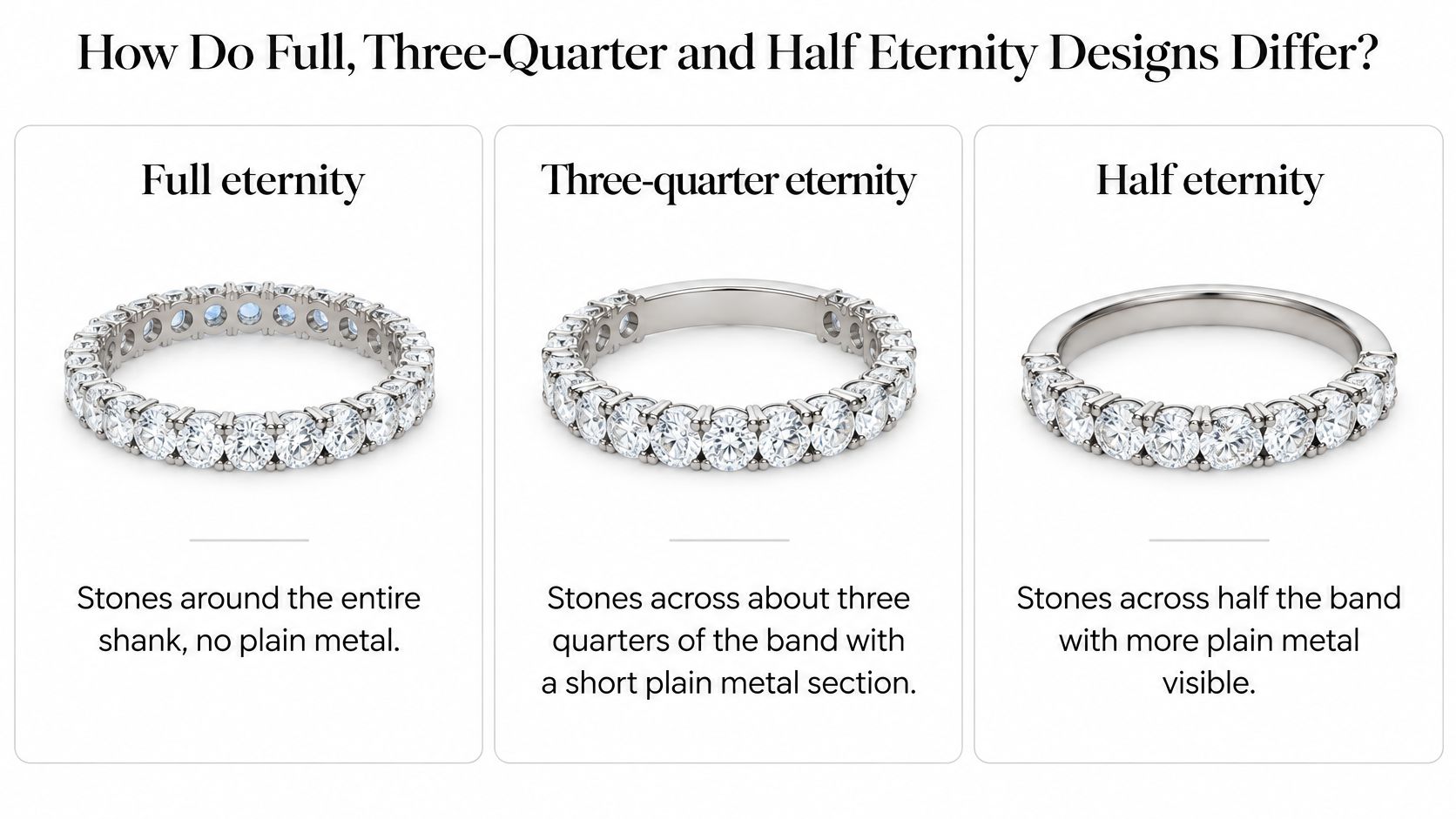
The coverage chart makes the distinction easy to see.
What you see and what remains underneath
A full eternity keeps gemstones visible as the ring turns. There's no plain sizing section underneath, although metal still supports and holds the stones.
A three-quarter eternity extends the diamond appearance farther down the sides, leaving a short plain section beneath the finger. A half eternity concentrates the stones across the visible upper portion, with more uninterrupted metal below.
| Style | Stone placement | Plain metal left | Sizing outlook | Best for |
|---|---|---|---|---|
| Full eternity | Entire shank | No plain sizing section | Usually made to an exact size | Maximum all-angle sparkle |
| Three-quarter eternity | Most of the circumference | Short section underneath | Design must permit alteration; confirm before buying | Extended sparkle with some flexibility |
| Half eternity | Visible upper portion | Plain lower shank | Usually resizable through the metal | Front-facing sparkle and practical wear |
| Plain wedding band | No stones, or a small accent | Uninterrupted metal except at any accent | Usually resizable | Minimal upkeep and simple symbolism |
For most buyers who want diamonds without committing to full coverage, half eternity is our starting recommendation. You retain the diamond appearance when looking down at your hand, while a jeweler has a plain section to work with.
Coverage isn't the only comfort factor
Width and setting height change how the same coverage style feels. A low-profile half-eternity band and a taller full-eternity design may feel quite different between neighboring fingers.
The International Gem Society's eternity-band buying guide explains that full-circle stone coverage exposes more of the ring to contact, abrasion, and debris. Inspect the sides as carefully as the top, especially exposed stone edges and prongs.
- Check rotation: Turn the sample on your finger and decide whether seeing a plain section bothers you.
- Check contact: Close your fingers gently and notice pressure from adjacent settings.
- Check serviceability: Get the sizing outlook for the exact three-quarter design in writing.
More coverage means more settings to inspect. Don't assume a short plain section automatically makes every three-quarter band easy to alter.
Can an Eternity Band Be Resized?
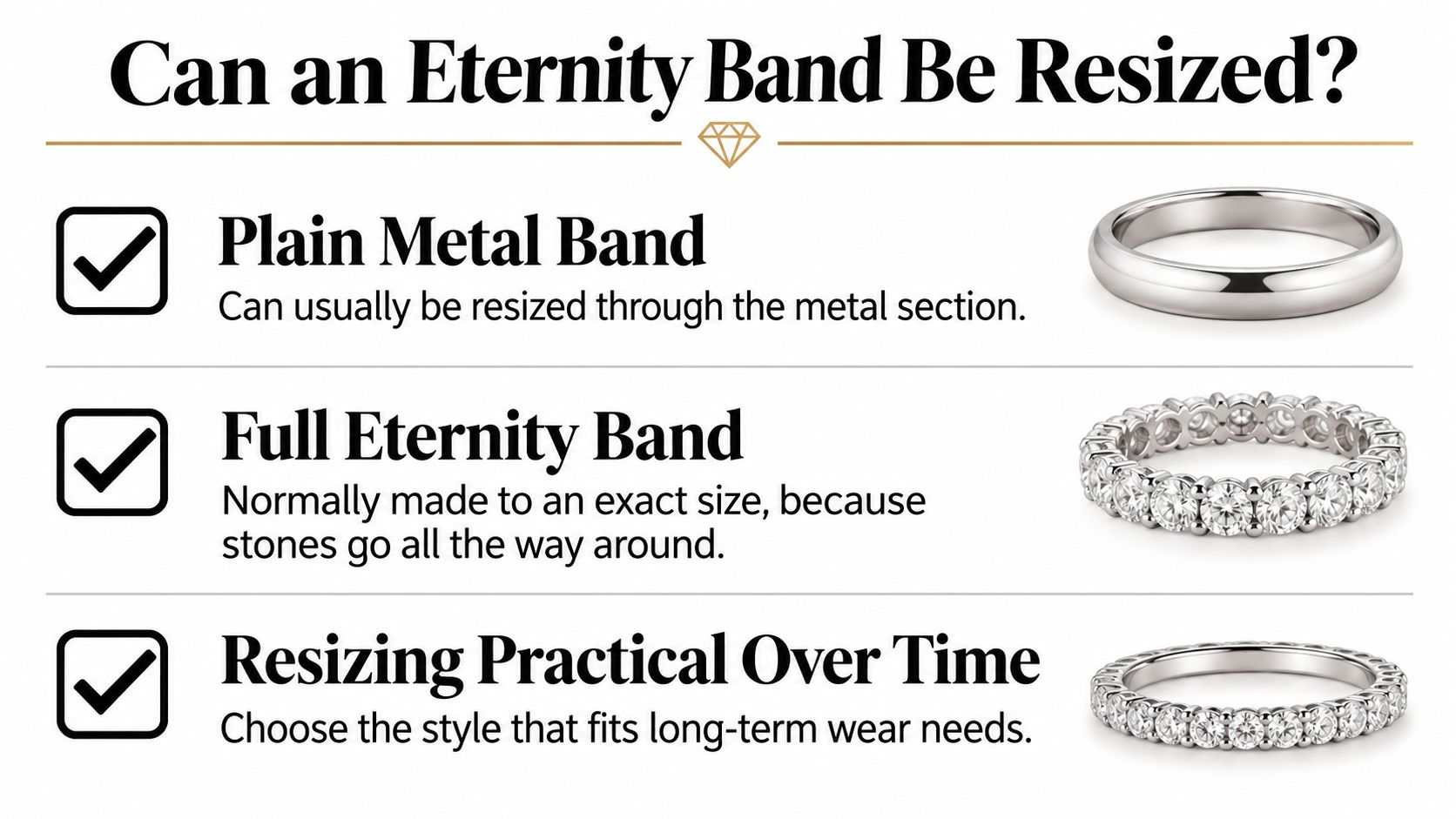
A full eternity band is usually made to an exact size. Don't buy one on the assumption that a jeweler can adjust it later.
A plain precious-metal band can generally be altered through its uninterrupted metal section. With a full eternity design, cutting or stretching can disturb stone spacing, weaken settings, or leave stones loose.
The International Gem Society's wedding-band matching guide cautions that eternity bands can be “very difficult, if not impossible” to size. Treat any proposed exception as a design-specific service question, not a general promise.
This checklist shows why the construction matters.
Get measured for the ring you're buying
A wider band covers more finger and can feel tighter than a narrow band carrying the same printed size. The Emerson Fine Jewelry fit-check guide references GIA sizing practice recommending a wide sizing gauge for rings wider than 4 mm.
Try a gauge or sample close to the final width and interior profile. Measure on a typical day, with your hands at a normal temperature, and check that the ring passes the knuckle without feeling loose at the base.
Our at-home ring-size guide is useful for preparation. For a full eternity purchase, we recommend an in-person fitting rather than relying on string or a paper strip.
Fit rule: Don't choose a fixed-size diamond band from a measurement taken with a much narrower ring.
Get the service details in writing
Before paying, request a clear record of the ring's construction and fit.
- Inside diameter and ring size: Confirm both, together with band width and interior profile.
- Permitted alterations: Establish whether the manufacturer allows modification and what happens if the ring no longer fits.
- Inspection plan: Agree on a practical stone-security and tightening schedule.
- Diamond documentation: Obtain the stated quality characteristics for the stones, including whether grading describes the group rather than individually graded diamonds.
- Care and disclosure details: Retain written information on gemstone size or weight, treatments, origin where represented, and special-care requirements.
Those written gemstone details also follow the FTC's consumer-disclosure guidance. Don't assume that a total carat weight alone tells you everything needed for future repair or replacement.
If your finger size shifts with weight changes, temperature, pregnancy, or joint swelling, choose a plain or half-eternity band. A fixed-size ring should be a deliberate choice, not a problem you discover after purchase.
Which Band Suits Your Life and Wear Habits?
We'd choose the ring around your ordinary week before thinking about the anniversary photograph. A band that interferes with work or feels uncomfortable won't become easier to wear because it has more diamonds.
These everyday settings are a useful reminder to consider how you use your hands.

Our recommendations for real situations
- Nurse or hands-on worker: Choose a low-profile plain band when workplace rules permit jewelry, because it has no diamond settings to catch gloves or collect debris.
- Frequent traveler with changing finger comfort: Start with a plain or half-eternity design rather than making full coverage the priority.
- Anniversary buyer wanting a statement: Choose full eternity if the wearer enjoys substantial diamond coverage and accepts the maintenance commitment.
- Couple wanting matching bands: Match the metal, finish, or silhouette first, then choose coverage separately if your daily routines differ.
- Buyer wanting practical and dressier options: Wear a plain band for everyday use and reserve an eternity band for occasions.
An eternity band worn beneath an engagement ring occupies the same position as a wedding band. Try the whole stack together, not each ring in isolation, and check for rubbing between exposed stone edges and neighboring settings.
Our wedding-band metal guide can help you narrow the material choice. Metal color alone won't tell you whether a particular setting feels comfortable.
Let the occasion guide the gift, not dictate it
For a milestone anniversary, an eternity band makes sense when the wearer wants a celebratory addition. For a first wedding band, we'd begin with the ring that works best alongside the engagement ring and daily routine.
Don't make a fixed-size eternity ring a surprise unless you've confirmed the fit. The measurement steps belong in the resizing decision, before the gift is ordered.
For another visual reference while comparing ring styles, watch the video below.
What Drives the Cost of Each Band?
Stone count and total carat weight are the first comparison points. A full eternity band requires stones around the entire ring, so width and circumference can increase the amount of diamond material and setting work.
Each stone also needs secure placement. A ring with many small diamonds isn't priced as a lump of diamond weight, because matching and labor are part of the finished piece.
Compare the construction before the price
Metal weight, gold karat, and design work also matter. A substantial plain band can cost more than a delicate diamond-set ring, so “plain” doesn't automatically mean inexpensive.
| Band type | Main cost driver | Price direction |
|---|---|---|
| Full eternity | Stone count and total carat weight | Rises fastest with width and circumference |
| Half eternity | Stones across the visible upper portion | Rises with stone count and setting work |
| Three-quarter eternity | Stones across most of the band | Between comparable half and full designs |
| Plain wedding band | Metal weight and karat | Usually the lowest entry point |
These comparisons assume similar metals, widths, and diamond quality. Compare unlike designs and the price order can reverse.
Where lab-grown diamonds help
We offer natural diamonds and lab-grown diamonds for engagement rings and custom settings. For a band comparison, use the origin stated on the individual listing or written quote, and leave it unspecified if the documentation isn't clear.
JCK reports that lab-grown diamonds represented 53% of diamond engagement rings sold in 2025 but only 27% of sales value. That's engagement-ring market context, not an eternity-band price forecast.
Lab-grown diamonds can make broader coverage accessible within a fixed budget. They don't remove the need to compare matching, setting quality, repair costs, or uncertain resale expectations.
Use our diamond clarity and color guide to understand the specifications. Across a band, a consistent appearance matters more than chasing one impressive grading term.
Compare the complete ring, not just total carat weight. Ask what a matching replacement stone and setting repair would involve.
We won't attach an unverified price to an eternity or wedding band. Request current options with written specifications, then compare a full-eternity quote against a plain or partial-pavé alternative using the same budget.
Choose the Band That Fits Your Life
Choose full eternity for all-angle sparkle. Choose plain or half eternity for flexibility and easier daily wear. Choose three-quarter coverage when you want extended diamond coverage and the exact design has an acceptable service plan.
If both partners want the same full-diamond look and can accept fixed sizing, matching full-eternity bands are a reasonable choice. If either person is unsure about fit, don't force identical construction.
Start with the practical default
For a ring you expect to wear every day, we'd put a plain band and a half-eternity band on the counter first. Compare those before moving to full coverage.
A plain band can give the engagement ring room to stand out. Half eternity suits someone who wants a diamond band as part of the daily stack without covering the underside in stones.
Our wedding jewelry includes custom engagement rings, engagement rings, and wedding bands. A useful consultation compares the entire bridal set rather than treating the wedding band as an afterthought.
- For coordinated wedding jewelry: Bring the engagement ring so you can judge height, spacing, and contact.
- For a diamond-led look: Compare the coverage options in our eternity band guide.
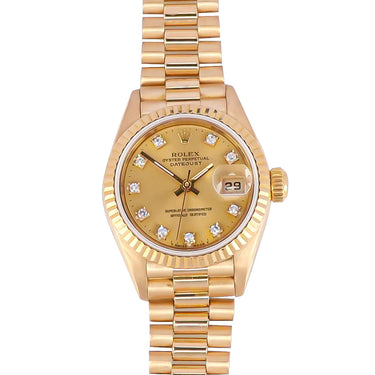
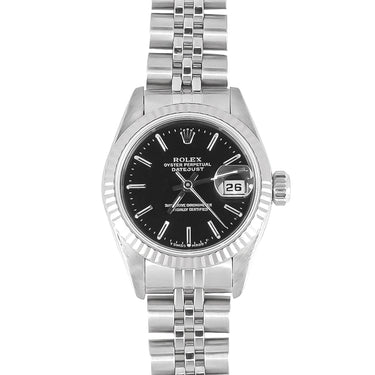
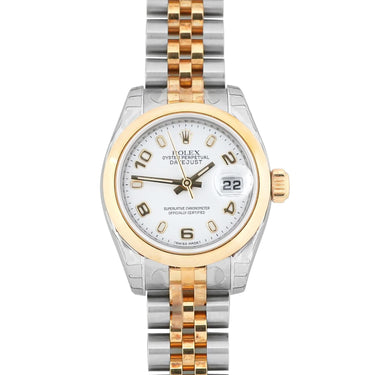
- For matching accessories beyond rings: Our his and hers Rolex guide addresses coordinated watches without requiring identical models.
Separate style browsing from purchase verification
You can gather ideas from different types of rings without treating them as equivalent products. If you're exploring an additional fashion ring rather than the marriage band itself, you can shop Binah at Cedar & Lily Clothier as a separate styling reference.
For the wedding band, return to the exact item's metal, stone description, measurements, and serviceability. A photograph can show a look, but it can't confirm how a ring feels between your fingers.
We recommend a fitting in person. Close your hand, hold a bag handle, and wear the engagement ring beside each sample before deciding.
Your next steps
- Measure on a typical day. Use a sample close to your intended width and profile.
- Choose the coverage. Decide whether all-angle diamonds matter enough to accept the ownership trade-offs.
- Get the specifications in writing. Include metal, stone characteristics, inside diameter, and permitted size changes.
- Compare current listings or quotes. Keep the budget and quality criteria consistent.
Don't buy more coverage just because it sounds like an upgrade. Buy the ring you'll be glad to put on each morning.
How Can You Pay for It?
A well-made band shouldn't have to wait on a single paycheck. We offer financing through Affirm, Synchrony, Acima, and Snap Finance, with approval and terms set by each provider. Review our flexible financing and leasing options for the band you choose.
Monthly amounts, fees, and approval depend on the provider and your application. Read the agreement and compare the total payment obligation, not just the monthly amount. A low monthly figure stretched over a long term can cost more than a shorter plan on the same ring.
Financing doesn't change which construction suits your hand. A financed full eternity still resists resizing the same way a paid-in-full one does, so settle the design first and the payment plan second.
Keep the ring budget separate
- Understand the application: Our guide to no-credit-check jewelry financing can help you prepare questions, but the provider's agreement controls.
- Plan other wedding spending separately: Wedding Studio's Digital wedding registry can help organize registry planning without mixing it into the ring-financing decision.
- Know what can offset the cost: If a luxury watch is part of your plan, it can be bought, sold, or traded in. Confirm any value you intend to put toward the ring before you set a number.
Frequently Asked Questions
Can a full eternity band be resized?
A full eternity band is usually made to an exact size because changing its circumference can disturb stone spacing and settings. In Can an Eternity Band Be Resized?, the key purchase check is written confirmation of what alterations the exact design permits.
Can one ring be both a wedding band and an eternity band?
Yes. “Wedding band” describes the ring's marriage role, while “eternity band” describes gemstone coverage. What Separates an Eternity Band from a Wedding Band explains why you don't have to choose one label over the other.
Is a half eternity easier to live with than a full eternity?
Usually, because its plain lower shank offers more opportunity for resizing and leaves fewer settings underneath the finger. How Do Full, Three-Quarter and Half Eternity Designs Differ? compares the construction choices, but you should still test the actual ring for comfort.
Which band is better for daily wear?
Our default is a plain band or a low-profile half eternity because there are fewer exposed settings to manage. Which Band Suits Your Life and Wear Habits? applies that recommendation to work, travel, stacking, and occasional wear.
Does a lab-grown stone change the choice?
It can make diamond coverage more accessible within your budget, but it doesn't change the ring's sizing mechanics or remove maintenance needs. What Drives the Cost of Each Band? explains why origin, matching, repair economics, and uncertain resale expectations belong in the comparison.
We offer wedding bands, engagement rings, and custom bridal jewelry to help you build a set that suits your hands and daily routine. Visit ECI Jewelers and bring your engagement ring so we can help you compare plain, partial-diamond, and eternity styles with fit and upkeep in mind.