


A white gold wedding band is yellow gold mixed with metals such as nickel or palladium, then often finished with rhodium for a bright, silvery look. The common choices are 14K and 18K, and ECI Jewelers' plain white gold bands typically range from about $400 to $2,500, depending on width, karat, and weight.
You may be comparing a band on your screen with an engagement ring already on your hand, while trying to work out whether the two will sit comfortably together. We'd judge the purchase by more than how it looks on the wedding day. The alloy, skin sensitivity, upkeep, fit, and total cost over years of wear all matter.
What to Know Before You Buy a White Gold Wedding Band
Start with the karat mark, then ask what metals make up the rest of the alloy. A white finish doesn't tell you whether a band contains nickel, how much gold it holds, or whether it relies on rhodium plating to look bright.
Next, decide whether you're comfortable maintaining that finish. Rhodium wears with use, so a white gold ring may need professional attention as its surface changes. If you have sensitive skin, ask about the alloy and any nickel-release documentation before you buy.
Matching the engagement ring comes after those checks. Compare the metal color, profile, and width, and try the rings together if possible. Our guide to choosing a wedding band covers the practical fit questions. For inspiration beyond a metal comparison, you can also browse wedding band styles for Italy.
What White Gold Actually Is
White gold isn't a naturally white metal. It's an alloy made by blending yellow gold with other metals, such as nickel, palladium, silver, or zinc, to lighten its color. Many bands then receive a rhodium coating, which creates the bright, reflective finish shoppers often associate with white gold.
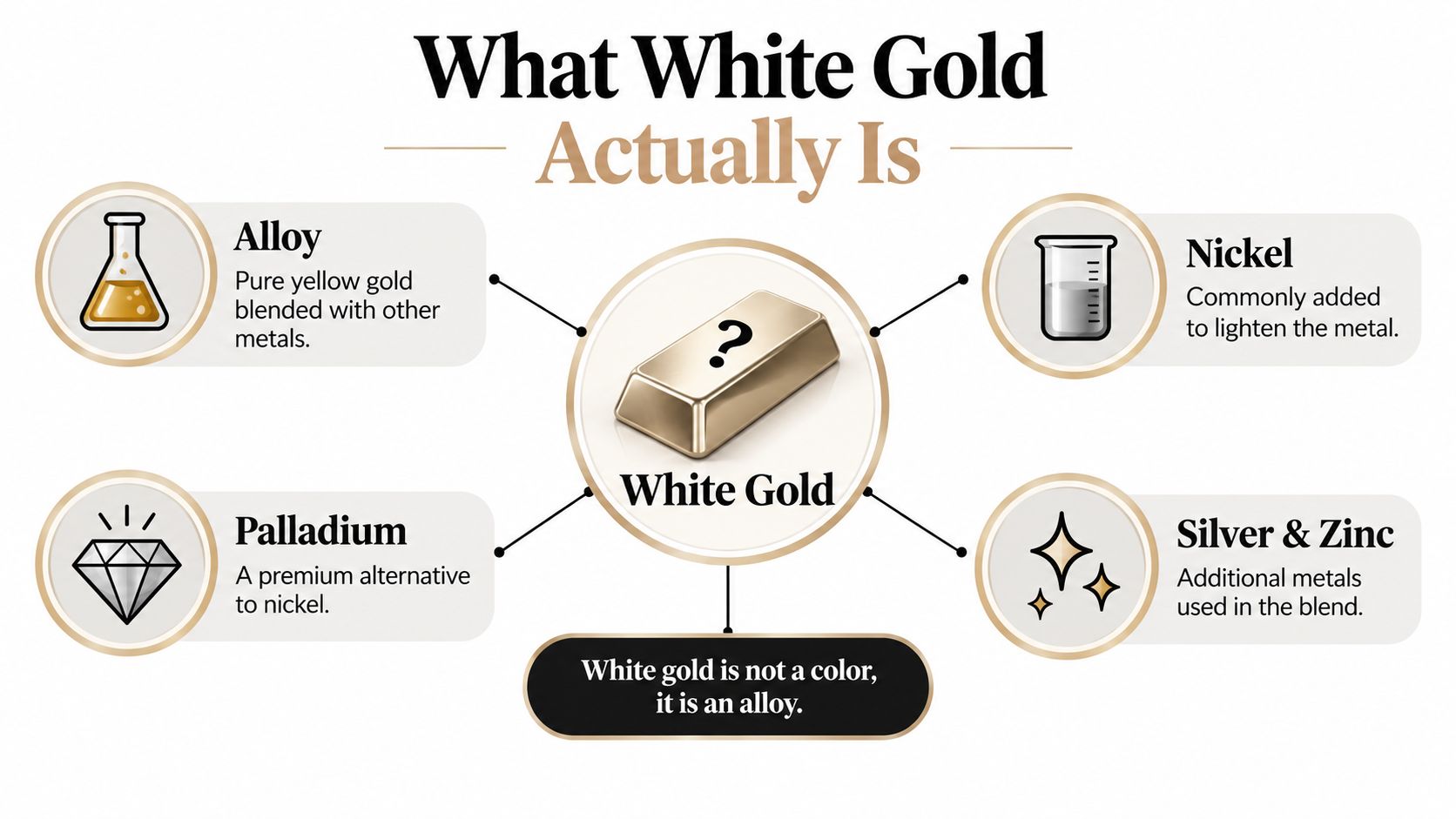
The karat mark tells you the proportion of gold, not the color. 14K white gold contains about 58.3% gold, with the remaining parts made up of other metals. 18K contains 75% gold. The Federal Trade Commission explains that pure 24K gold is relatively soft, so makers combine it with other metals to improve its suitability for jewelry. Its guidance also addresses disclosure when gold products have a rhodium surface coating. You can consult the FTC's jewelry guides when checking how the product's gold content and coating are described.
That alloy matters because the karat stamp alone can't tell you what's touching your skin. It also doesn't identify the exact metals used to lighten the gold. Ask the jeweler for the alloy specification, especially if nickel sensitivity is a concern. A clear answer is more useful than choosing by color alone.
Choosing Between 14K, 18K, and Platinum
For a band worn every day, 14K white gold is a practical choice. It has more alloying metals than 18K, and is commonly chosen for its everyday wear resistance. Choose 18K if you value its higher gold content and don't mind a softer metal that can be more susceptible to scratching. Platinum is naturally white, heavier, and doesn't need rhodium plating. It costs more and develops a soft patina with wear rather than showing a warmer gold tone beneath a worn coating.
| Metal | Gold content | Durability | Color and finish | Maintenance | Typical price band |
|---|---|---|---|---|---|
| 14K white gold | About 58.3% | Often selected for everyday wear resistance | Usually rhodium plated for a bright white look | Inspect and replate as the finish wears | ECI plain white gold bands typically range from about $400 to $2,500, depending on width, karat, and weight |
| 18K white gold | 75% | More susceptible to scratching than 14K | Often rhodium plated; the alloy beneath may look warmer | Inspect and replate as the finish wears | Varies by design and weight |
| Platinum | Not gold | Dense and durable; develops a patina | Naturally white | No rhodium plating required | Costs more than white gold |
If you're weighing those trade-offs, our comparison of wedding band metals can help you focus on what suits your lifestyle. Don't choose by karat alone. Decide which matters more to you: gold content, wear characteristics, a naturally white surface, or less dependence on replating.
How Rhodium Plating Works Over Time
Rhodium is a separate precious metal applied over a white gold alloy. It gives the ring its bright, near-colorless finish, but that surface isn't permanent. Daily contact with hard surfaces and other jewelry gradually wears the coating, particularly along the underside and edges of the band.
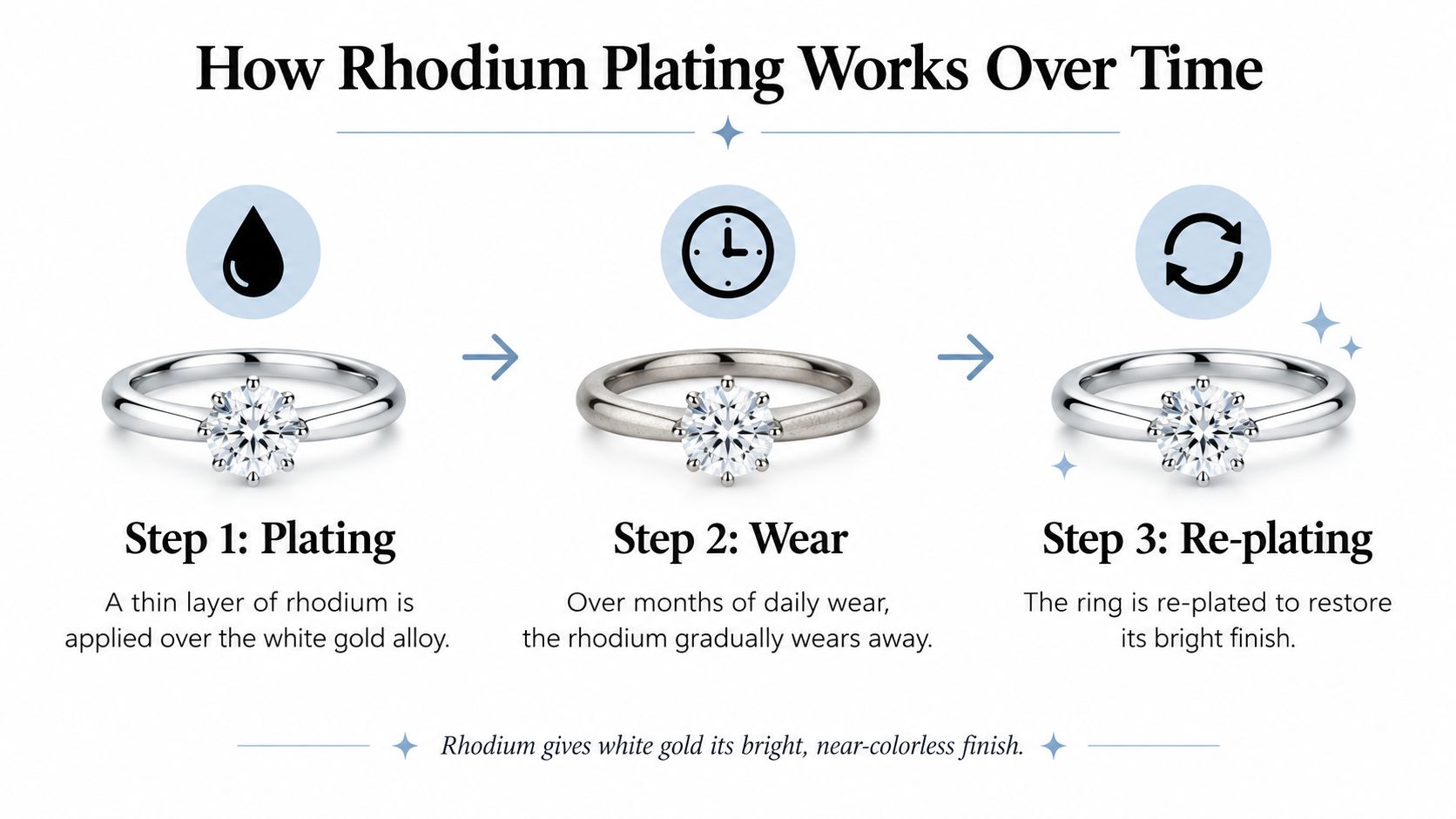
As the plating thins, the base alloy may show through as a warmer gray or yellow tone. For regular wear, replating is commonly needed around every one to three years, though the interval depends on how and where you wear the ring. Treat that as a general guide, not a fixed appointment schedule.
Check the shank and underside during routine cleaning. If the finish looks uneven or the base color is visible, ask a jeweler to assess whether cleaning, polishing, or replating is appropriate. A palladium-based white gold alloy may look whiter beneath the coating and reduce reliance on rhodium. Platinum avoids the white-gold plating system, but it has different cost, weight, repair, and appearance considerations.
Practical rule: Choose white gold if you're comfortable maintaining its bright finish. Choose platinum if avoiding rhodium upkeep matters more than weight and price.
Nickel Allergy and Sensitive Skin
A 14K or 18K stamp can't tell you whether a white gold band is safe for your skin. Some white gold alloys use nickel, and when the rhodium surface wears, nickel-bearing alloy may have more direct contact with skin. Ask what the alloy contains before deciding.
In a study of 770 white gold items tested under artificial sweat, 30.6% of pieces at 14K or lower exceeded the European nickel-release limit of 0.5 µg/cm² per week, compared with 7.4% of 18K pieces. The study also found that karat alone wasn't a reliable predictor of nickel release. Read the study of nickel release from white gold for the test details.
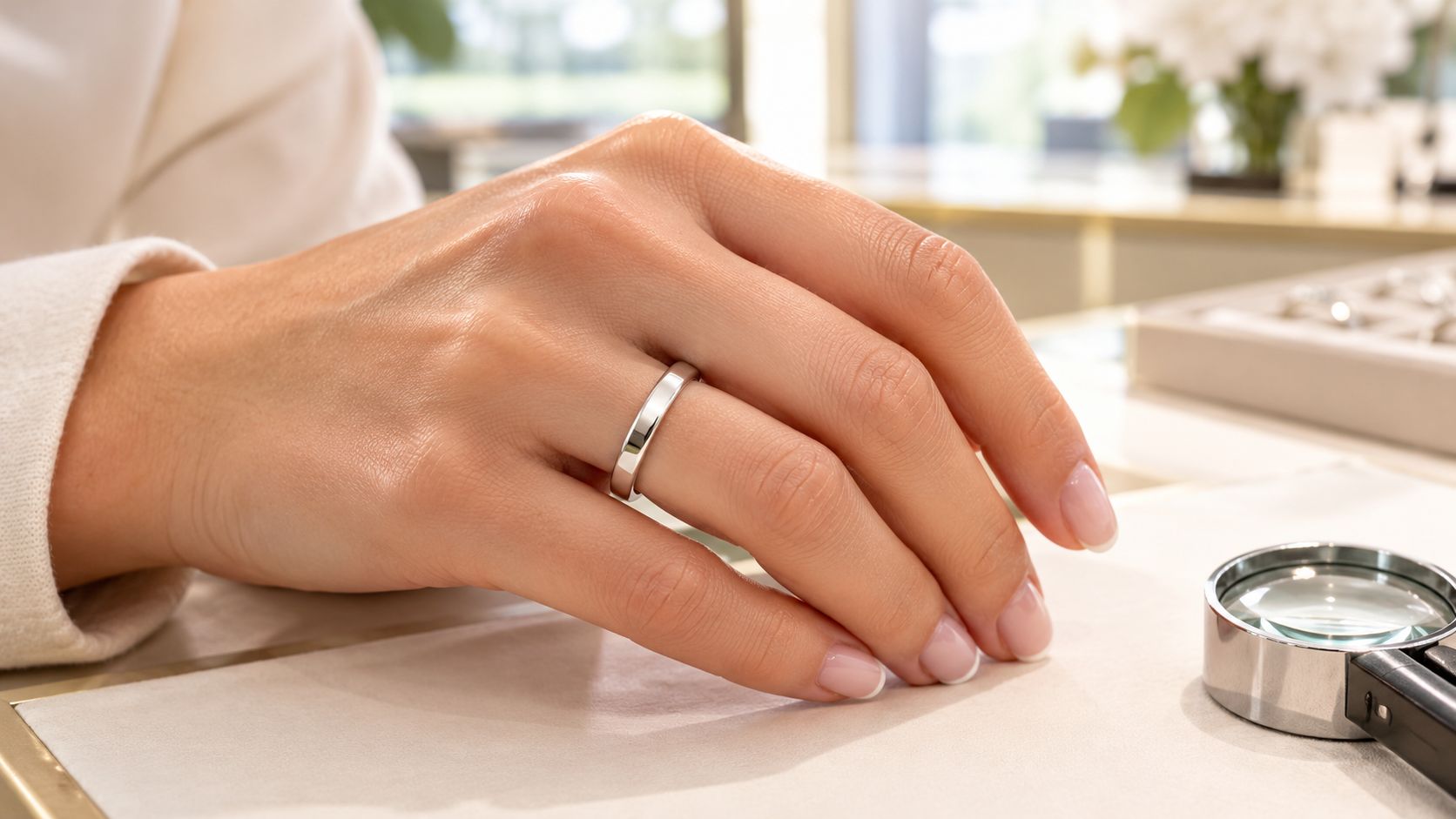
If you have sensitive skin, use this decision path:
- Ask about the alloy: Find out whether it's nickel-based or palladium-based.
- Request documentation: Ask for written alloy details and any available nickel-release compliance information.
- Compare alternatives: Consider palladium-alloy white gold or platinum if you'd rather avoid nickel-containing alloys.
“Nickel-free” and “low nickel” don't mean the same thing. Ask the jeweler to explain the exact claim and how it applies to the finished band, including its joints and surface treatment.
Matching a White Gold Band with an Engagement Ring
Bring the engagement ring into the decision if you can. Two rings that look similar in a case may sit differently on the hand, especially when their profiles or settings don't line up.
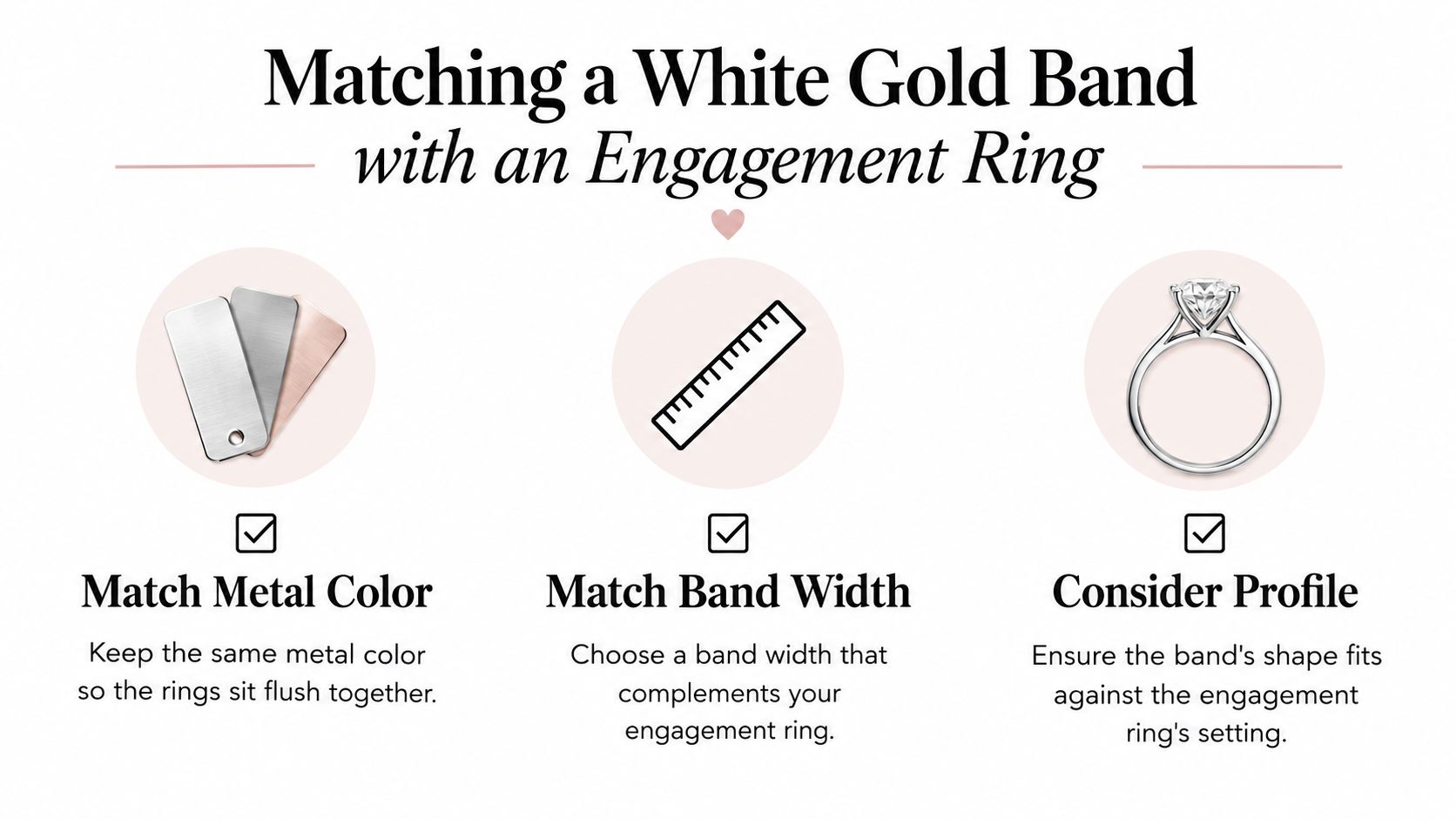
Check these points together:
- Metal color: Matching white gold with white gold gives the pair a consistent look, but the engagement ring's finish and alloy can affect how close the colors appear.
- Profile: A domed, flat, or beveled band changes how the rings meet. A contoured band can fit around a low-set solitaire; a straight band may work better beside a wider engagement-ring shank.
- Width: A band should feel balanced next to the engagement ring. Try different widths on your hand rather than choosing from a photo alone.
- Diamonds: A diamond band adds sparkle without making the full ring a continuous row of stones. For that all-around diamond look, explore our guide to diamond eternity bands.
If your engagement ring and wedding band are both rhodium plated, their surfaces may wear at different rates. Ask how to keep their finishes looking consistent over time. For shape-specific ideas, see our advice on choosing a band for an oval engagement ring.
White Gold Wedding Bands to Look at First
The right band depends on who's wearing it and what needs to fit beside it. ECI's selection includes options for women and men, including 14K white gold men's diamond bands and 18K white gold eternity wedding bands. Inventory changes, so check the current product listing for exact details and availability.
We won't guess at product names, reference numbers, or prices when a listing isn't provided here. Use the current ECI wedding band collection to compare the available white gold styles and their listed prices. Before settling on a width, consult our wedding band width guide and try the leading options beside the engagement ring.
A Simple Buying Checklist and How to Pay
Take these questions to the jeweler or use them while reviewing a product listing:
- Karat mark: Does the ring carry a clear gold purity mark, such as 14K or 18K?
- Alloy composition: Does the alloy include nickel, palladium, or other metals? If skin sensitivity is a concern, request the details in writing.
- Surface finish: Is the band rhodium plated? Ask what the base alloy looks like and what care the finish may need.
- Resizing: Can the band be resized without affecting its shape, pattern, or stones? A plain band and a fully diamond-set design may have different limitations.
- Service terms: Ask what the jeweler's warranty covers and whether cleaning or replating service is available. Get the terms before purchase.
- Fit: Measure carefully and try the band on, since width and profile affect comfort. Our guide to measuring your ring size at home can help you prepare.
For couples planning the ring purchase alongside other wedding expenses, these wedding installment payment tips offer another perspective on budgeting. ECI Jewelers offers financing through Affirm, Synchrony, Acima, and Snap Finance, with approval and terms set by each provider. Review the available financing options at ECI Jewelers and confirm the terms that apply to your purchase.
Frequently Asked Questions
How often should a white gold wedding band be replated?
For regular wear, replating is commonly needed around every one to three years, but the timing depends on your habits and how the ring contacts hard surfaces. Have a jeweler inspect the band when its finish looks patchy or the warmer alloy becomes visible.
Will a white gold band turn yellow?
The gold alloy doesn't change into yellow gold. As rhodium wears away, the warmer tone of the underlying alloy may show through. A jeweler can assess whether replating is the right fix.
How can I tell if a white gold band is nickel-free?
Ask the jeweler for the alloy specification in writing and request any available nickel-release documentation. The karat mark alone doesn't identify the metals used in the alloy.
Can a white gold wedding band be resized?
Many plain bands can be resized, but the design and setting matter. Ask the jeweler to confirm the limits before buying, especially for bands with continuous patterns or diamonds around the ring.
Is white gold or platinum better for everyday wear?
Both can suit everyday wear, but they behave differently. White gold offers a plated bright finish that may need upkeep; platinum is naturally white, heavier, and develops a soft patina.
ECI Jewelers offers white gold wedding bands for women and men, along with guidance on metal, fit, and matching an engagement ring. Visit ECI Jewelers to compare the available styles and ask about the alloy and maintenance before you choose.


